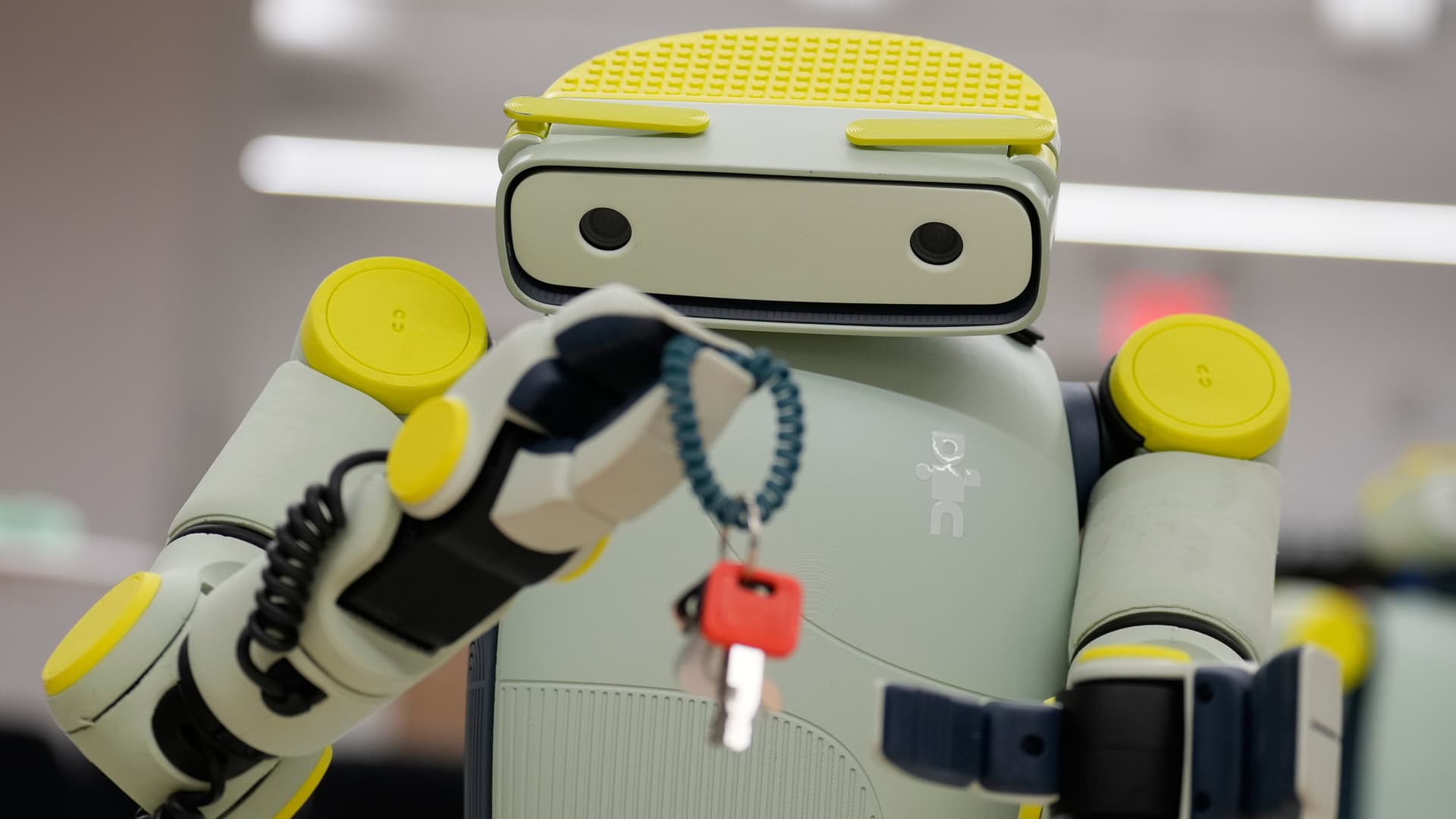
Amazon's first home robot is, by one owner's account, headed for the trash heap. Its second attempt has legs.
The company has spent the past several months assembling a new home-robotics team and is hiring for a "new-to-world robot product," according to CNBC, which analyzed the company's job postings. One since-removed listing promised that "robots are about to step out of the movies and into our homes," for a machine built to navigate "dynamic home environments" and operate autonomously "alongside family members."
The effort is built around Fauna Robotics, the New York startup Amazon acquired in March. Its 3.5-foot humanoid Sprout has so far sold mainly to developers and researchers; Fauna was folded into a newly created Personal Robotics Group, much of the old Astro team moved over, and Amazon hired an MIT roboticist.
That is a blunt admission of what went wrong the first time. Astro, the $1,450 Alexa-equipped tablet on wheels Jeff Bezos ordered up in 2017, never left its invite-only list, shipping to just a few thousand customers; a 2023 business version was shut down within a year. One North Carolina owner told CNBC she still uses hers to check on pets, but otherwise it's a party trick and a "trip hazard." "We spent so much money on this thing," she said. "We'll let it run around the house until it eventually dies, then send it to the trash heap."
Amazon is not the only company betting the home is finally ready: Tesla's Optimus, Figure, 1X, Apptronik and Unitree are all building humanoids, and robotics funding hit $33.4 billion in the first half of 2026 alone — passing all of 2025, per PitchBook data cited by CNBC. Colin Angle, the iRobot co-founder, told CNBC the tools have changed so much in two years that "the toolkit that the Astro team had when they did it was clubs with nails in them, just incredibly primitive."
No product name, price, or launch date has been disclosed, and Amazon has not said whether its next home robot will be Sprout itself or something built from its technology. The honest test is the one an Astro owner in Tucson put to CNBC: "Astro was $1,000 and it was pretty limited, but if it could bring a drink to me or dust furniture, I'd be intrigued by that." Five years after Astro, Amazon is betting a humanoid can finally pass it.
— via CNBC