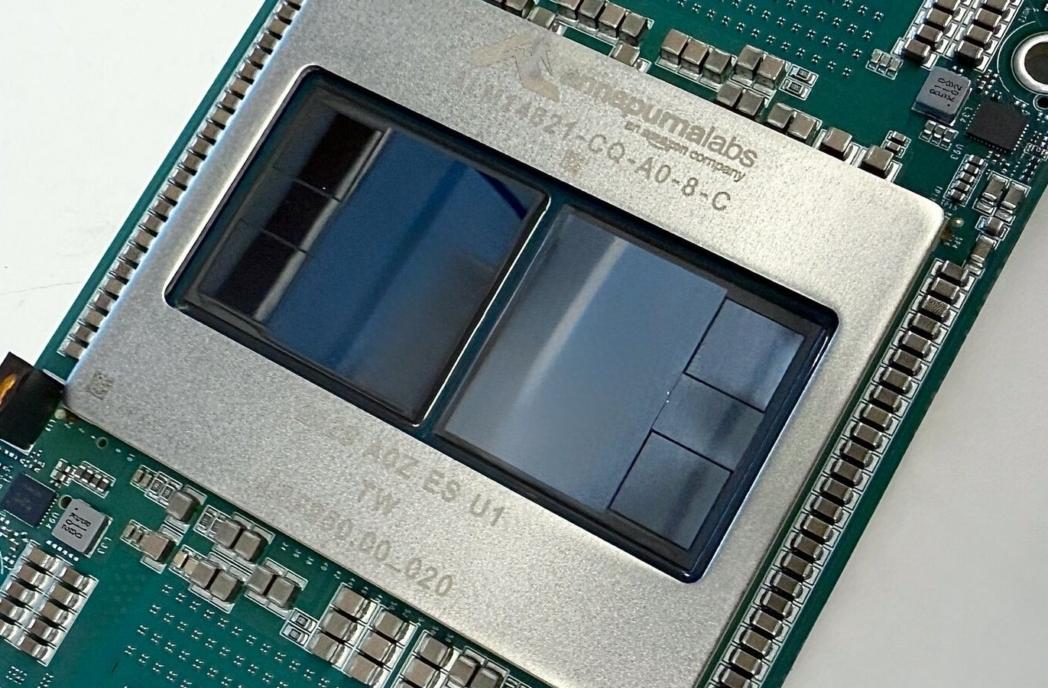
Everyone fighting Nvidia builds a chip. Amazon just shipped something that might matter more: a software tool that lets AI apps written in PyTorch run on its Trainium chips with a single configuration change — no rewrite required. On Monday, AWS released TorchNeuron, and according to TechCrunch, the free, open-source tool is a direct assault on the thing that actually keeps developers on Nvidia hardware. Not the GPUs — the decade-plus of CUDA software welded to PyTorch.
That framing is the whole story. Amazon says roughly 85% of AI apps are written in PyTorch, and Nvidia has spent years making sure its CUDA stack runs that code better than anything else, so thoroughly that Nvidia hardware became the default almost by accident. TorchNeuron plugs into PyTorch's existing hardware-registration mechanism, so the testing, debugging, and scaling tools developers already use just work on Trainium. And Amazon's ambitions go beyond its own silicon: the company is contributing code upstream to PyTorch itself to strip out chip-specific assumptions, per TechCrunch, aiming to make the framework hardware-agnostic rather than Nvidia-centric. The open-source release is timed for this week's PyTorch Conference in San Jose — Reuters reported the same conference stage where CUDA's PyTorch integration first took hold.
Amazon claims more than 30 early customers across robotics, world models, and voice AI. The proof point it's pushing hardest is Deepgram, the voice-AI provider, which moved its inference pipeline to Trainium and is now processing "70% more audio per dollar at production-grade accuracy," according to Annapurna Labs software VP Colin Brace.
Why this matters: a cheaper chip has never beaten Nvidia. Cheaper switching costs just might. The lock-in was always measured in engineering weeks, not dollars — and this is the first time a hyperscaler, rather than a scrappy chip startup, has attacked the software seam itself. Amazon's other pitch is the full cloud: the same Trainium chip handles both training and inference, and it's wrapped in the AWS infrastructure startups already use, which the company argues beats betting on single-purpose compute providers like CoreWeave or Nebius.
Skepticism is warranted. PyTorch ports to AMD and Apple silicon already exist, and as TechCrunch notes, de-centering Nvidia from the framework could trade one kind of lock-in for configuration headaches. But watch the adoption curve: if TorchNeuron spreads past its 30 launch customers, and if the PyTorch community accepts Amazon's de-Nvidia-ing contributions, the chip war moves up the stack. And Amazon won't be alone there — Reuters reports Google is working on similar PyTorch tooling for its own chips. The silicon race was act one. The software race is starting.
— via TechCrunch