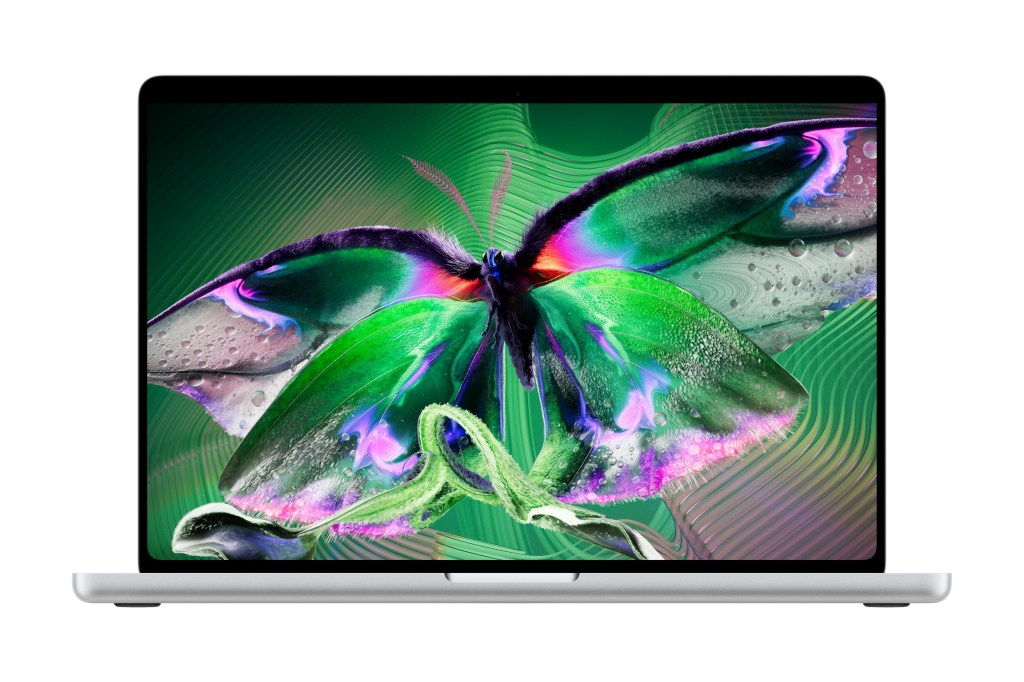
Apple spent more than a decade explaining why Macs don't need touchscreens. Today, at its "Pro and Tell" event in Los Angeles, it stopped explaining and started selling one. The first touchscreen MacBook Pro starts at $2,899 for the 14-inch model — $900 more than the M6 MacBook Pro Apple announced just yesterday — with the 16-inch version at $3,399, according to TechCrunch.
The headline feature is the new PROLED XDR Display, a tandem OLED panel in 14- and 16-inch sizes with 2,000 nits of peak HDR and SDR brightness and a 10,000,000:1 contrast ratio. The machines run on M5 Pro and M5 Max chips, with up to 128GB of unified memory and up to 16TB of storage. Apple redesigned the hinge to keep the screen steady when you tap it — a problem every touchscreen laptop has to solve — and swapped the notch for a Dynamic Island-style cutout.
Here's the wrinkle worth noticing: the cheaper M6 MacBook Pro that went on sale yesterday has the newer chip. The touchscreen models, the ones that cost $900 more, run M5 Pro and M5 Max. Apple is reportedly planning follow-up versions with M7 Pro and M7 Max chips for next fall, according to Bloomberg, which means early buyers are paying a premium for the screen, not the silicon.
On the software side, the updated macOS Golden Gate adds touch-friendly controls — dial-like menus that appear around your finger — while continuing to treat the keyboard and trackpad as the primary way to use the machine. Apple also reworked the cooling system as part of the redesign, reducing weight while improving airflow through the hinge, Bloomberg reports.
The reversal is the real story. Nearly ten years ago Apple tried putting touch on a laptop with the Touch Bar, then quietly removed it. Now touch is back, fully embraced, on the company's most expensive laptop — and it's the second marquee launch for new CEO John Ternus, after the iPhone Duo foldable in September.
Pre-orders open today, with availability expected as early as November 6. The question now is whether the touchscreen earns its $900 in real pro workflows — or whether, a year from now, it quietly becomes standard across the whole MacBook line and the early adopters paid to beta-test Apple's change of heart.
— via TechCrunch