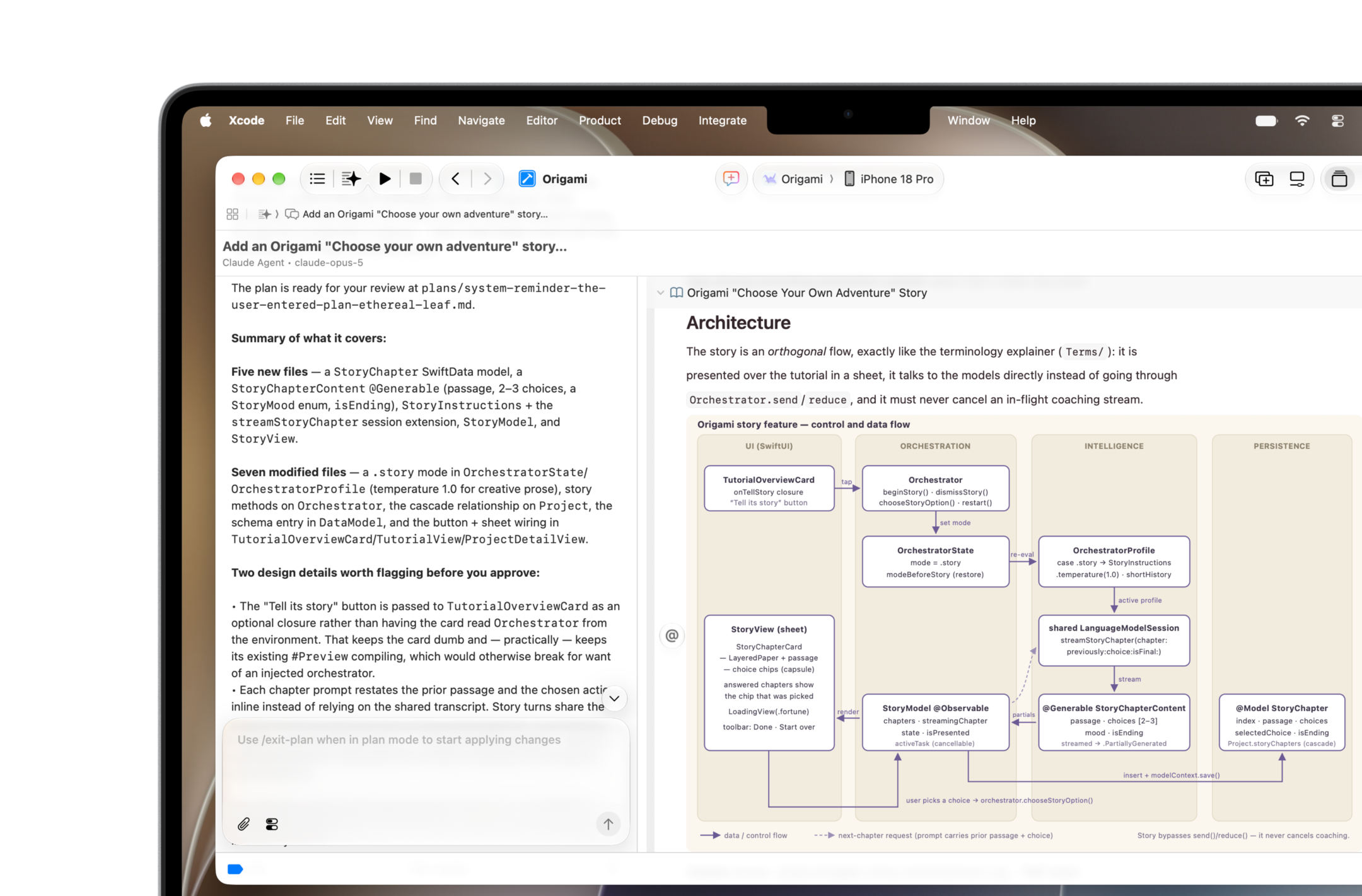
Apple didn't announce it, blog it, or put it in a keynote. On Friday, an official Xcode plugin turned up in Claude Code's official plugin directory, merged into Anthropic's claude-plugins-official repository as pull request #6338. One command installs it: `/plugin install xcode@claude-plugins-official`. It needs a current Xcode on a Mac, and once it's in, Claude Code can build, run, and test a scheme, render SwiftUI previews, drive simulators and real iPhones, read build logs, and search Apple's developer docs — so the agent can see what the app looks like and fix it without you ever tabbing over to Xcode.
The packaging is the tell. The plugin isn't downloaded from the marketplace at all: the entry runs `xcrun agent plugin path --plugin-format claude` on your Mac, so you get whatever version of the plugin your installed Xcode ships. In other words, Apple has been shipping this inside Xcode — the marketplace listing just makes it discoverable where Claude Code users actually look. Apple's own documentation describes the parallel route: `xcrun mcpbridge add claude-code --mode local` wires Claude Code into Xcode's built-in MCP server, after you opt in under Xcode Settings > Intelligence, and Xcode alerts you whenever the agent connects and while it's active.
This is the second time in a week Apple has opened Xcode to somebody else's agent. On Tuesday, Xcode 27.3 added GitHub Copilot as a coding assistant option, and earlier this year Xcode 26.3 brought Claude's Agent SDK inside the IDE itself. The direction has now flipped: first Apple brought agents into Xcode, and now it's putting Xcode inside the agents developers actually live in. That's a concession and a strategy at once — Apple knows the coding-agent war is being fought in terminals and rival tools, not in its own editor, so it's wiring Xcode into the places developers already work rather than demanding they come to it.
What to watch: whether Codex gets the same treatment — Apple's docs already name it as another external agent — whether the plugin stays current with Xcode releases, and whether Apple ever says any of this out loud. The quiet part is the point: the most interesting Apple developer move of the week arrived as a repo merge, not a press release.
— via GitHub