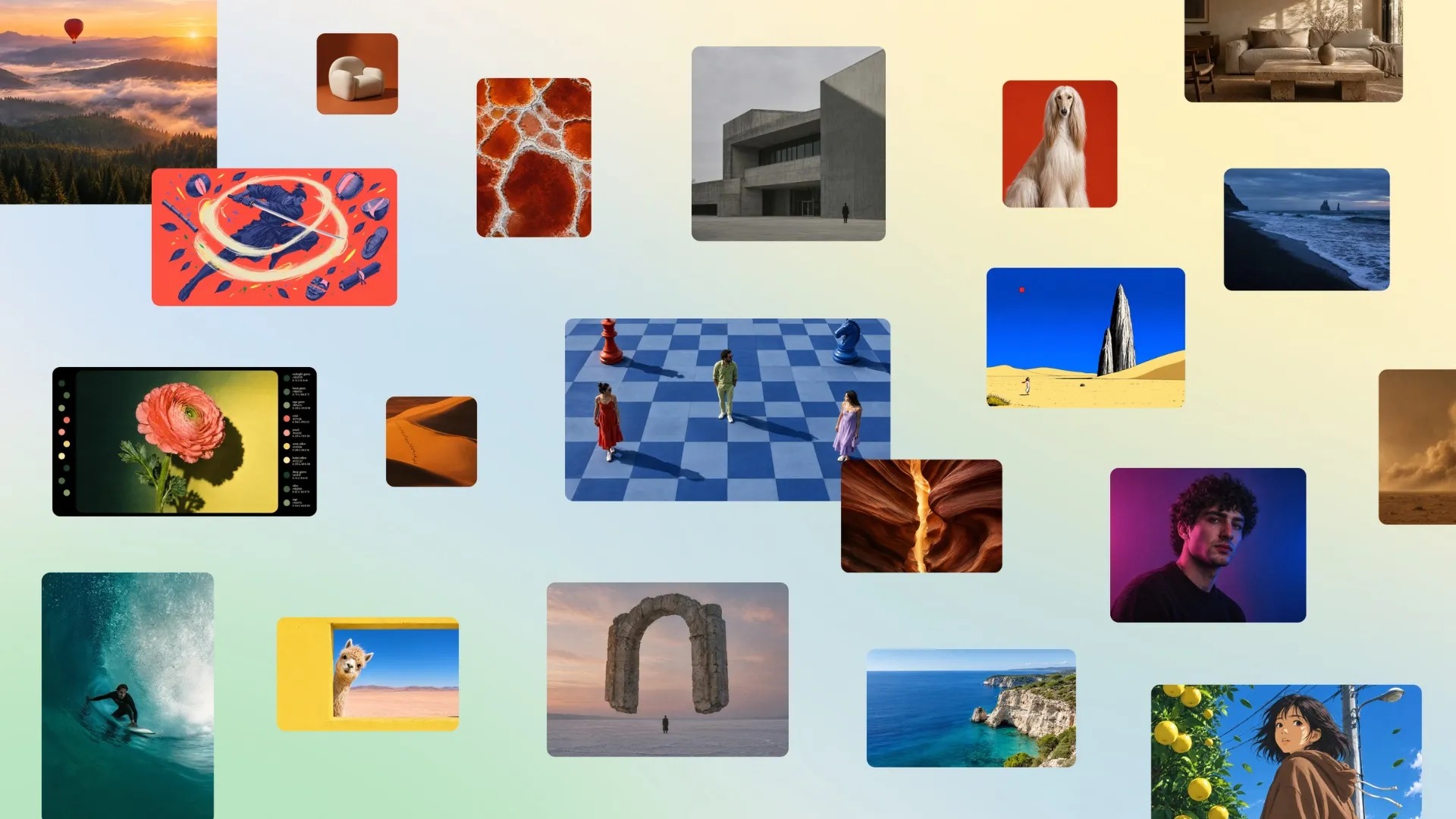
Canva just became an AI lab. The design platform has unveiled Canva Craft, the first image generation model built and trained from scratch by Canva Research, its in-house research team — and it's live right now for every Canva user inside Dream Lab, plus developers through Canva's public API, according to TechCrunch.
Craft's headline trick is that it sketches before it draws. Most image models turn a prompt straight into pixels; Craft splits the job into two stages. A planning model first reads the prompt and writes a detailed composition plan — which elements appear, where they sit, their relative size, the visual hierarchy, and any text that has to land in the image. A separate rendering model then turns that plan into a picture at up to 2K resolution, in more than 30 aspect ratios, with text renderable in 55 languages. Canva says planning first is what gets legible text, objects where you asked for them, and edits to one element without redrawing everything else — and it feeds Magic Layers, Canva's tool for exploding a flat image into editable design elements.
The more interesting choice is the training diet. Where most image models learn mainly from photographs, Craft leaned heavily on millions of human-made templates from Canva's own library — posters, social posts, presentations, infographics, menus, typography-rich layouts. Canva argues templates teach layout, hierarchy, and typography in a way photos can't. Professional designers then fine-tuned it: more than 25,000 image pairs judged head-to-head against rival models, and "when automated evaluations and human judgments differed, we sided with the designer."
Then there's the scoreboard, which should be read with the usual salt. On DesignArena, the crowdsourced leaderboard, Craft debuted as the fourth-best image model overall, took first of 87 in people and portraits and first of 85 in landscapes and nature — and by Thursday evening had climbed to second overall, behind only OpenAI's GPT-Image-2.5 Sunburst. That's Canva's own accounting, but it's enough for the company to call itself the world's second-most-advanced image lab. Researchers from Leonardo.ai, which Canva acquired in 2024, contributed to the work.
Why now is the part that isn't about pixels. In August, CEO Melanie Perkins told shareholders the average cost of serving an AI task had been too high — Canva had been "relying too heavily on frontier models" — and cut the company's 2026 growth forecast from 30% to 20%, a move reported by Startup Daily. People make more than 400 designs on Canva every second; every AI image it generates itself is one it no longer rents from OpenAI or Google. A custom inference engine already makes Craft an order of magnitude faster than its first internal version, and two cheaper variants — Craft-fast and Craft-ultrafast — are on the way at a fraction of frontier-model pricing. A Canva MCP server, arriving soon, will let agents inside ChatGPT and Gemini generate production-ready graphics as a step in a bigger task.
The timing is sharp: Google halved the cost of an image with Nano Banana 2.1 this month. The image-model race is turning into a price war, and Canva would rather own its ammunition than keep buying someone else's. What to watch: whether the design-first edge holds up in real production workflows — early impressions suggest photorealism still trails DALL-E and Midjourney on complex scenes — and what Canva charges for the API, which it hasn't said yet.
— via TechCrunch