The satellite internet race finally has a second player with real scale. The Federal Communications Commission said Tuesday it has approved Amazon Leo's $11.57 billion acquisition of Globalstar, clearing the way for Amazon to build a network that competes with SpaceX's Starlink — not just for home broadband, but for the phone in your pocket, according to Reuters.
The deal is less about the satellites Amazon is buying than the airwaves that come with them. Globalstar operates only about two dozen satellites, a rounding error next to Starlink's 11,000-plus. But it holds 25 MHz of mobile-satellite spectrum, and the FCC said plainly that Amazon's planned direct-to-device system — phones connecting straight to satellites, no dish, no terminal — couldn't run without it. The approval also hands Amazon Globalstar's authorization for C-3, a 48-satellite constellation cleared just last week.
The twist: Amazon is effectively buying Apple's safety net. Around 85% of Globalstar's global capacity is dedicated to iPhones and Apple Watches, powering Emergency SOS and Find My. Apple invested about $1.5 billion in Globalstar in 2024, took a 20% stake, and accounted for roughly 63% of Globalstar's revenue last year. Amazon has signed an agreement to keep serving Apple devices, and plans to acquire Apple's stake as part of the deal.
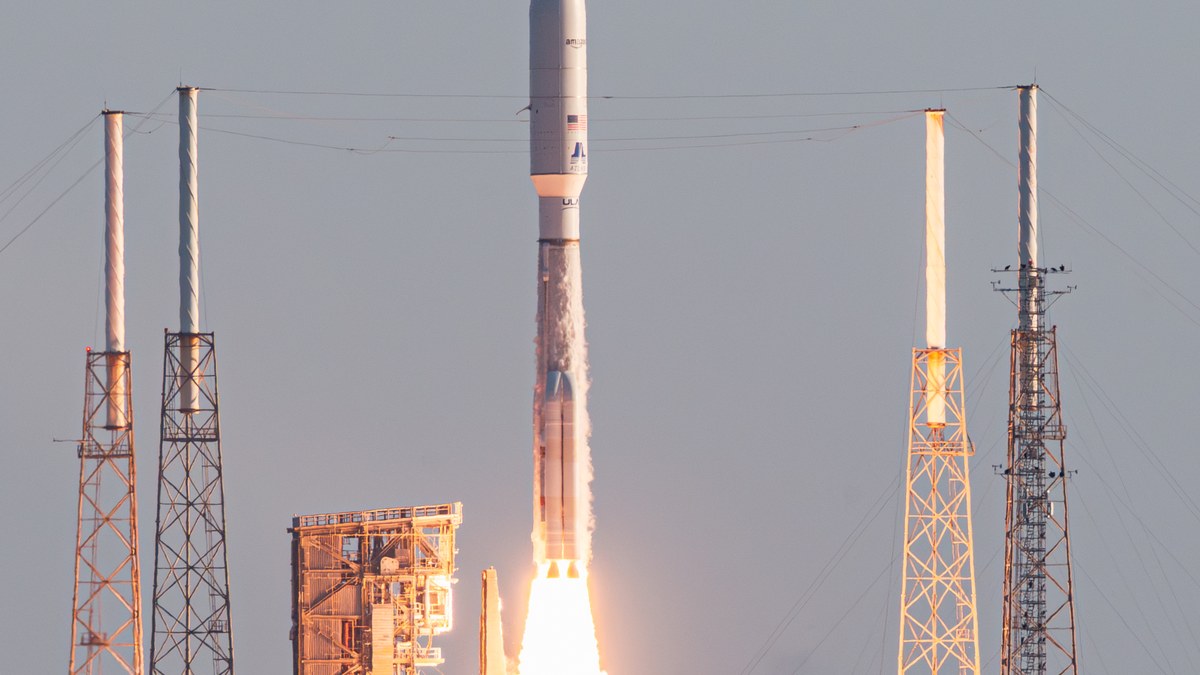
For Amazon, the timing is the point. Leo has launched more than 300 satellites since April 2025 and aims for about 3,200 in low Earth orbit by 2029, with commercial service starting by year's end on more than $10 billion of committed investment. In July it applied to launch up to 5,105 more satellites for that system, with deployment planned for 2028. The FCC votes Thursday on a new spectrum auction for direct-to-device services.
"The FCC has empowered Amazon Leo to deliver fast, next-gen satellite broadband services, increase competition, and help communities stay connected all across the country," FCC Chair Brendan Carr said.
The closing is expected in 2027; then the actual race begins. Starlink has a five-year head start and an order of magnitude more satellites in orbit. Amazon has something Starlink doesn't: a guaranteed anchor customer in Apple, and now the spectrum to sell phone makers and carriers a service that works on the device people already own. The satellite war was a broadband story. It just became a smartphone story.
— via Reuters