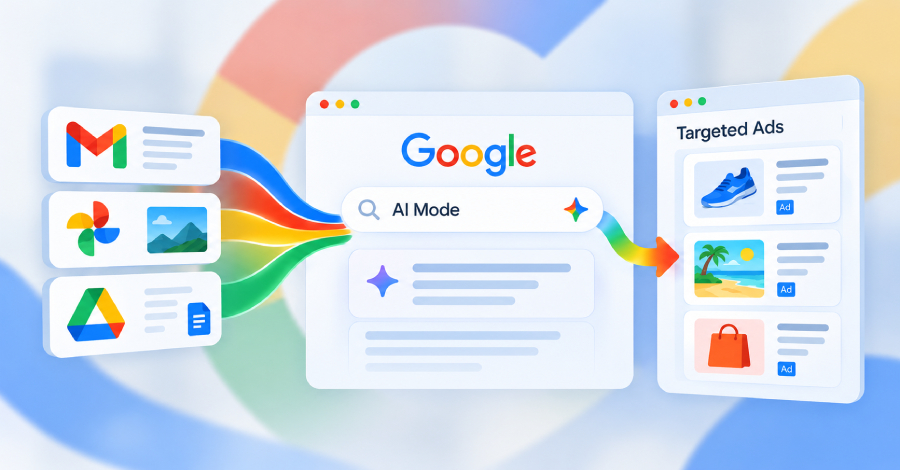
For nearly a decade, one sentence in Google's privacy policy was about as unconditional as corporate promises get: "We don't show you personalized ads based on your content from Drive, Gmail, or Google Photos." As of October 16, that sentence has a second half — "unless you choose to make data from these services available to other Google services that support personalized ads" — and the trade-off hiding inside those 18 words is the real story, according to The Hacker News, which covered the change first flagged by Android Authority.
The trigger is Personal Intelligence, the feature Google unveiled in Gemini in January that lets Search and Gemini read your Gmail, Photos, and YouTube to give you tailored answers — a flight confirmation pulled from your inbox, a photo recalled for a question. It's currently rolling out as a beta to users over 18 in most of the world. The catch is that the same connection hands Search the raw material for ad targeting. Google's own policy puts it plainly: "Search may process some of the data that you allow Search to access to personalize content, including ads."
Google stresses the limits. The old protection still holds by default — connect nothing, and your inbox stays out of the ad machine. Advertisers never see your emails or photos; ads are based on summaries and inferences drawn from connected content, per Google's help pages, and sensitive categories like health and religion remain off-limits. This isn't Google reading your mail to sell you shoes; it's the summaries it already builds for AI answers doubling as ad signals.
But the direction of travel is unmistakable. Google also began testing ads inside AI Mode the same day the policy changed. And it's not alone: OpenAI has now expanded ChatGPT advertising to 89 countries. The AI assistant era is quietly becoming an ad inventory era, and the price of the convenience is paid in data you already handed over for a different purpose.
The fix, for anyone who wants the old deal back, is a settings change rather than a lawsuit. Disconnect Gmail, Photos, or Drive from Search's connected apps, or switch off Personalized Recommendations in Search's personalization settings, and the exception stops applying. The question is how many people who turned on Personal Intelligence for a smarter search realized they were also opting into a smarter ad feed — the change took effect October 16 and only surfaced publicly on October 23.
— via The Hacker News