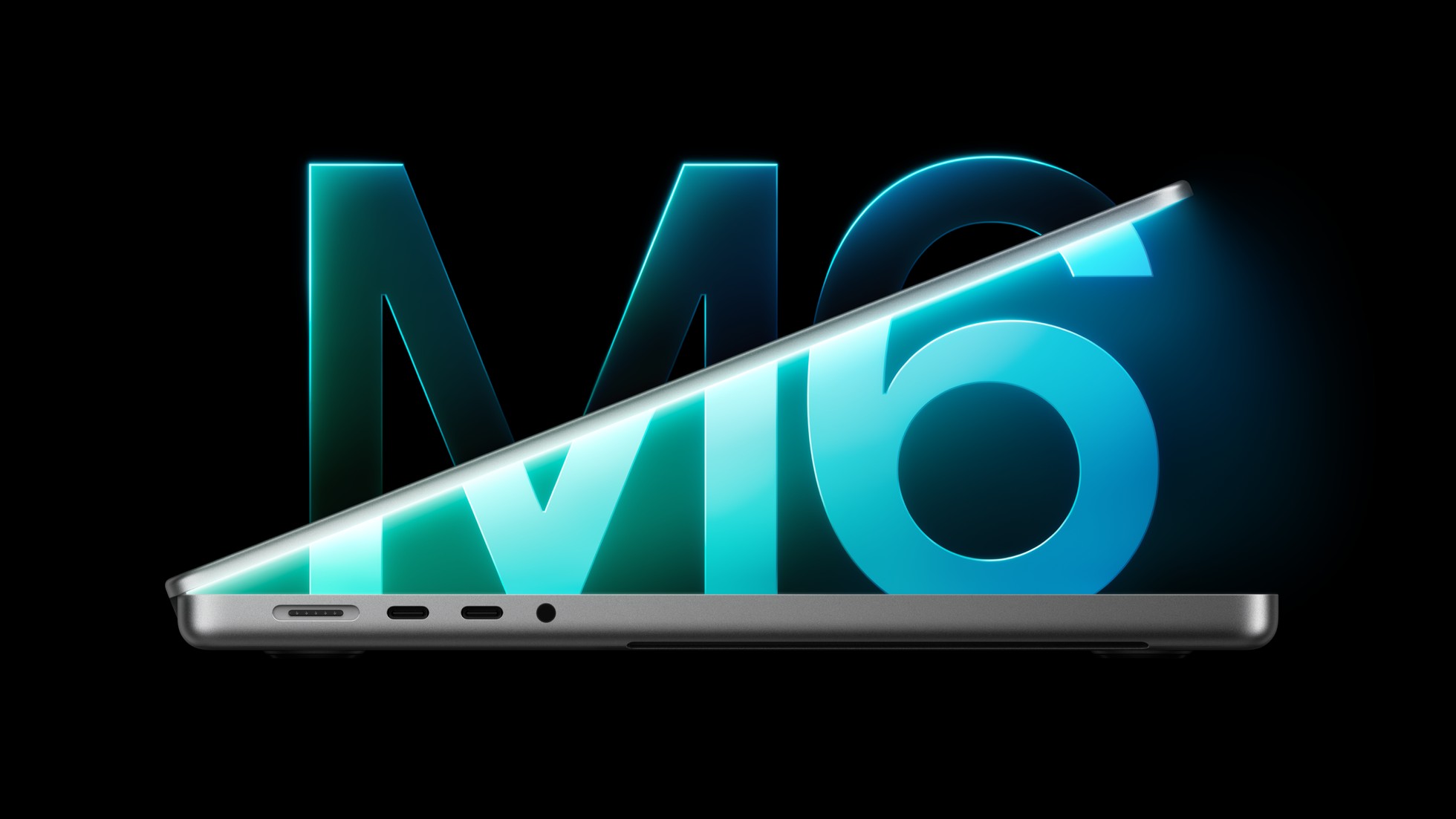
Apple's M6 MacBook Pro is the first Mac with a dual Neural Engine and per-core AI accelerators, and Apple is pitching the whole machine as a local-AI workstation. But the spec sheet tells a quieter story: the faster memory bandwidth Apple is advertising doesn't come with the laptop most people will actually buy.
The M6's headline number is up to 170GB/s of memory bandwidth, up from 153GB/s in the M5 model, according to MacRumors, which spotted the split on Apple's tech specs page. The catch is that the increase only applies to the 24GB and 32GB configurations. The base model — 16GB of unified memory, $1,999 — stays at 153GB/s, exactly where the M5 was.
That matters more than a spec-sheet footnote suggests, because memory bandwidth is the bottleneck for the exact workload Apple is selling. Running a large language model locally is largely a memory-bandwidth exercise: the model has to be streamed through memory constantly, and faster bandwidth means faster tokens. The base M6 MacBook Pro gets the new Neural Engine and the new accelerators, but the pipe feeding them is unchanged from last year. If you want the full on-device AI machine Apple described at launch, the upgrade to 24GB isn't optional — it's the price of admission.
The gap looks even wider one rung up the ladder. For comparison, the high-end MacBook Pro with an M5 Pro chip offers 307GB/s, and the M5 Max reaches 614GB/s, per MacRumors. The M6's 170GB/s ceiling is a modest step over the M5 in the first place — and the base model doesn't even take that step.
This is a familiar Apple pattern: the headline spec belongs to a configuration, not the product. The M6 MacBook Pro still starts at $1,999 with 16GB of memory and 1TB of storage, in Space Black and Silver, with configurations up to 32GB of memory and 4TB of storage. Pre-orders open Wednesday, ahead of a November 6 launch.
The advice is simple, and it isn't new: never buy the base Mac on the headline number. Check which configuration the number actually belongs to — especially now, when the number in question is the one that decides how well the laptop does the AI work Apple built it for.
— via MacRumors