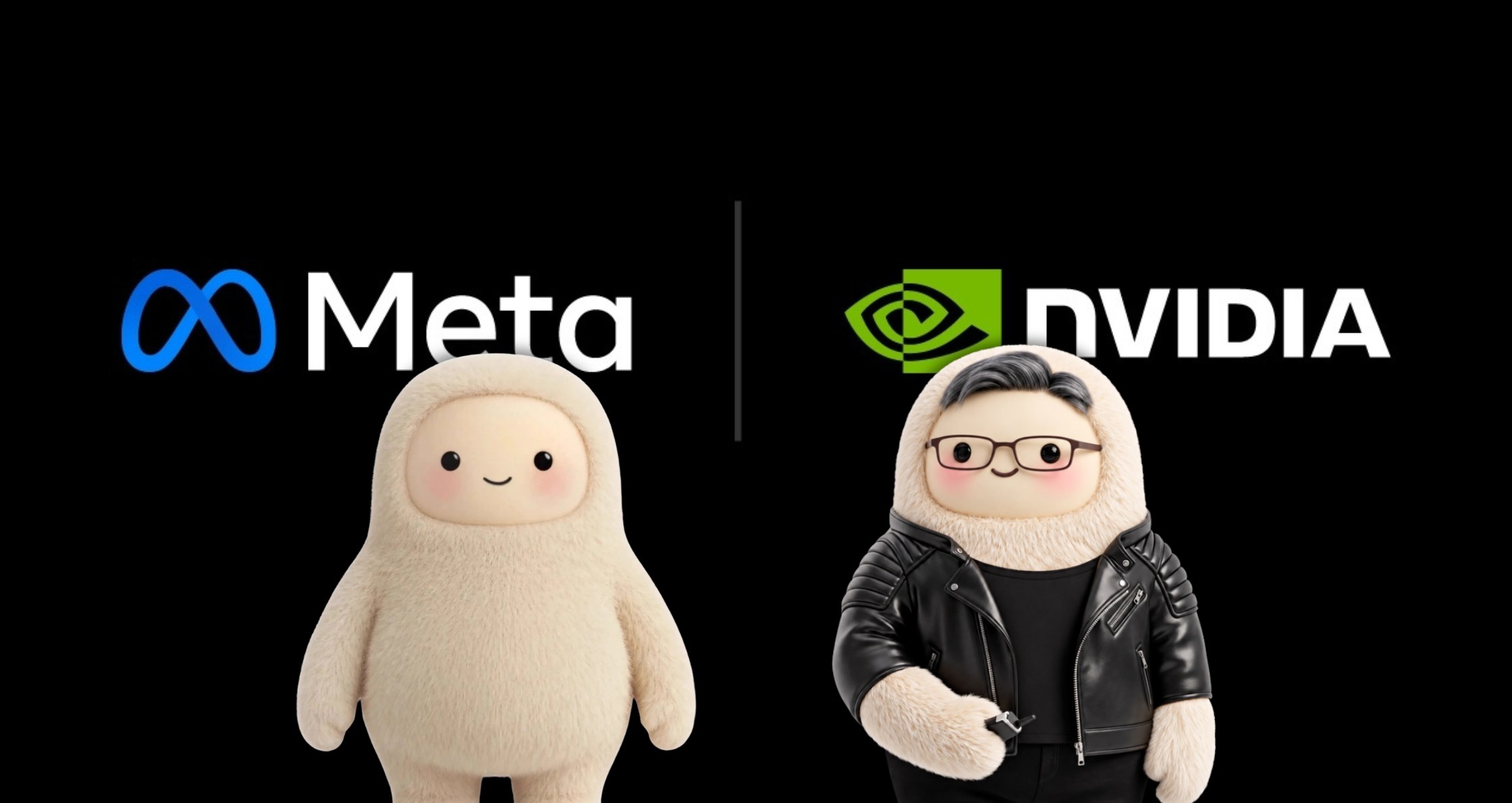
The AI boom has found a new way to pay for itself: the companies selling the picks and shovels are buying shares in the mine. Nvidia and AMD plan to buy a combined $4 billion of Meta stock — $3 billion from Nvidia, $1 billion from AMD — as part of Meta's equity raise, according to SiliconANGLE.
The raise is staggering. Meta's plan starts with $25 billion of common stock — upsized from $22.5 billion after orders ran to roughly five times the shares on offer, at $625 a share — plus $12.5 billion of preferred shares and an up-to-$60 billion share-sale program next year: about $97.5 billion all told, the largest financing in Meta's history. Meta had said Monday that the three chipmakers together had indicated interest in up to $5 billion of shares, implying $1 billion for Broadcom — but Broadcom has announced no commitment, and that missing billion is the deal's most interesting loose end.
This is not charity; it is a hardware order dressed up as an investment. Meta will expand its use of Nvidia's Vera Rubin GPUs and Vera CPUs, plus Spectrum-X networking and BlueField-4, while the two work on making Muse faster and cheaper to run. AMD says Meta has deployed a first set of Helios racks — MI450 GPUs, Epyc CPUs, Pensando processors — and is testing them, with a custom Instinct-based accelerator to follow. "AI agents represent a new computing paradigm — software that understands our goals, reasons, uses tools and gets work done on our behalf," Nvidia CEO Jensen Huang said. "Muse is how we bring personal superintelligence to everyone," Meta CEO Mark Zuckerberg said. "Together, we are building and deploying infrastructure at gigawatt scale," AMD CEO Lisa Su added.
The structure matters more than the headline. In the September quarter, Meta spent $34.91 billion on capital projects, more than the $32.79 billion its operations generated. When suppliers become shareholders, the money loops: they finance the customer, the customer buys the chips, order books look invincible. It mirrors Broadcom's $63 billion Anthropic financing a day earlier. Neither company has disclosed whether the stakes carry supply commitments, and Nvidia's investment is still subject to closing conditions — a promised loop, not yet a closed one.
What to watch: whether Broadcom completes the supplier trio, what terms — if any — attach to these stakes, and whether investors keep rewarding supplier-funded demand.
— via SiliconANGLE