Oppo spent a launch event in Mallorca on Wednesday explaining that 200 megapixels times three is the future of phone photography — then went and launched the whole lineup in India this morning to make it buyable. The Find X10 Pro Max starts at Rs 1,99,999 in India, per Gizbot, with the standard Find X10 from Rs 1,39,999. Europe got its prices too: €1,800 or £1,499 for the Pro Max, according to Gadget Review.
Here's the thing about the headline spec: it's marketing arithmetic. Oppo itself admits the phone captures 26MP images by default, from the ultrawide all the way through 9.9x zoom. You will essentially never produce a 600-megapixel photograph. The three 200MP sensors — a 1/1.28-inch Samsung ISOCELL HPC main camera with a claimed 17-stop dynamic range, a 124-degree ultrawide with autofocus, and a periscope telephoto at f/2.1 that focuses down to 10 centimeters — matter less as pixels than as light-gathering and crop flexibility.
The real story is video. Every one of those three cameras shoots 8K at 30fps and 4K at 120fps with Dolby Vision, a level of focal-length parity that no iPhone, Galaxy, or Xiaomi can match today — plus O-Log2, Open Gate capture, and a partnership with Tilta and Blackmagic Camera for serious rig setups. Oppo also sells an optional Hasselblad teleconverter that adds 3.28x optical magnification to the telephoto — a screw-on accessory for a phone, which is either gloriously nerdy or deeply weird, and either way worth noticing.
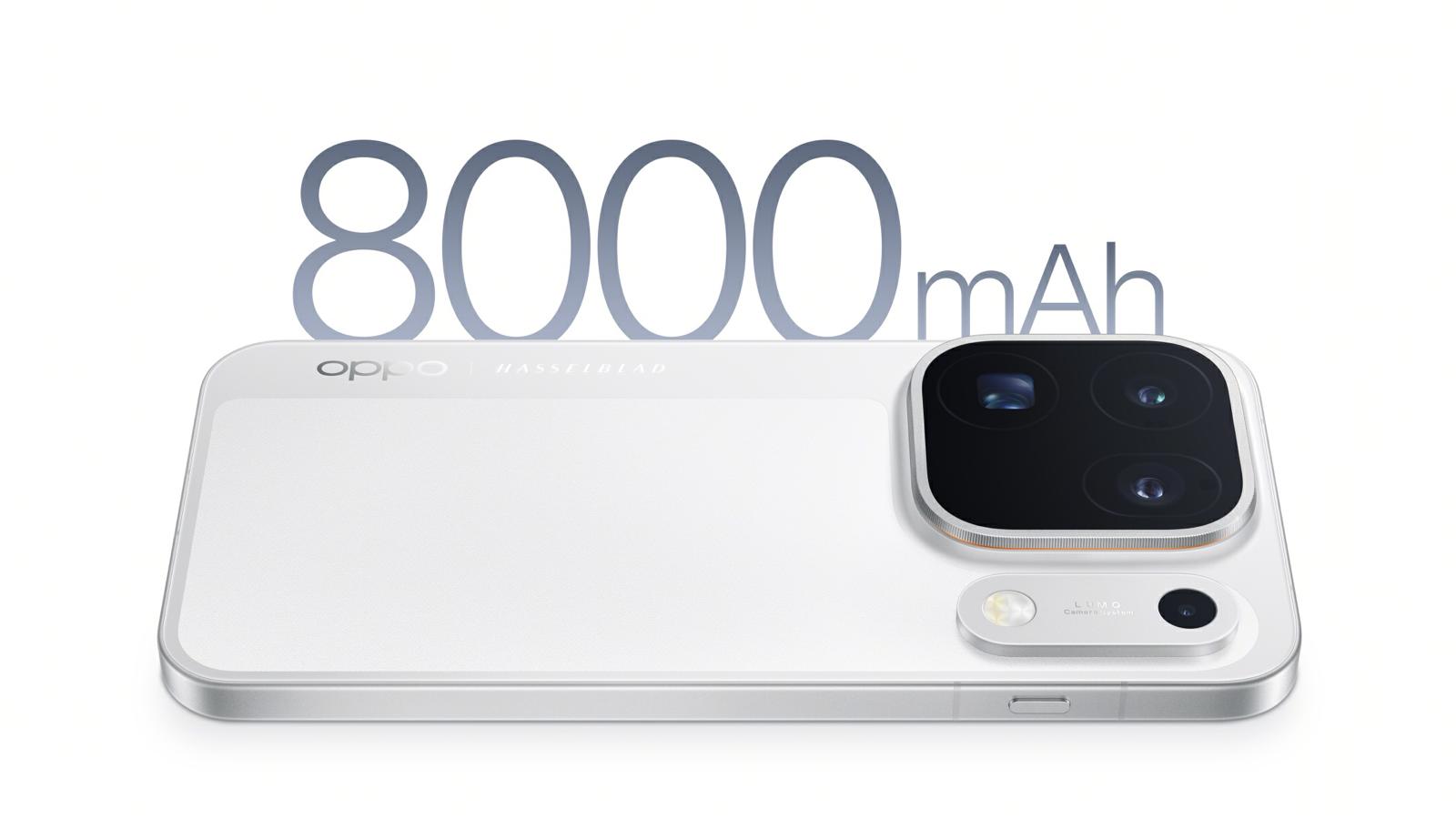
The specs otherwise read like a checklist of everything: a 2nm MediaTek Dimensity 9600 Pro (making this one of the first 2nm phones you can actually buy), a 6.78-inch 144Hz AMOLED, IP66/68/69, and an 8,000mAh silicon-carbon battery — except in Europe, where Oppo's own press release quietly footnotes a 7,150mAh cell instead. Honesty in the fine print, sort of.
"Built to reproduce the world as you see it and keep every shot true to the moment," said Pete Lau, Oppo's SVP and chief product officer, in the company's announcement — which, for once, describes the video specs better than the pixel counts. The cameras are the headline, but parity at every focal length is the bet: that the next flagship camera war is fought on motion, not stills.
— via Gizbot