Amazon has tried this before. Ring is betting the second time is different.
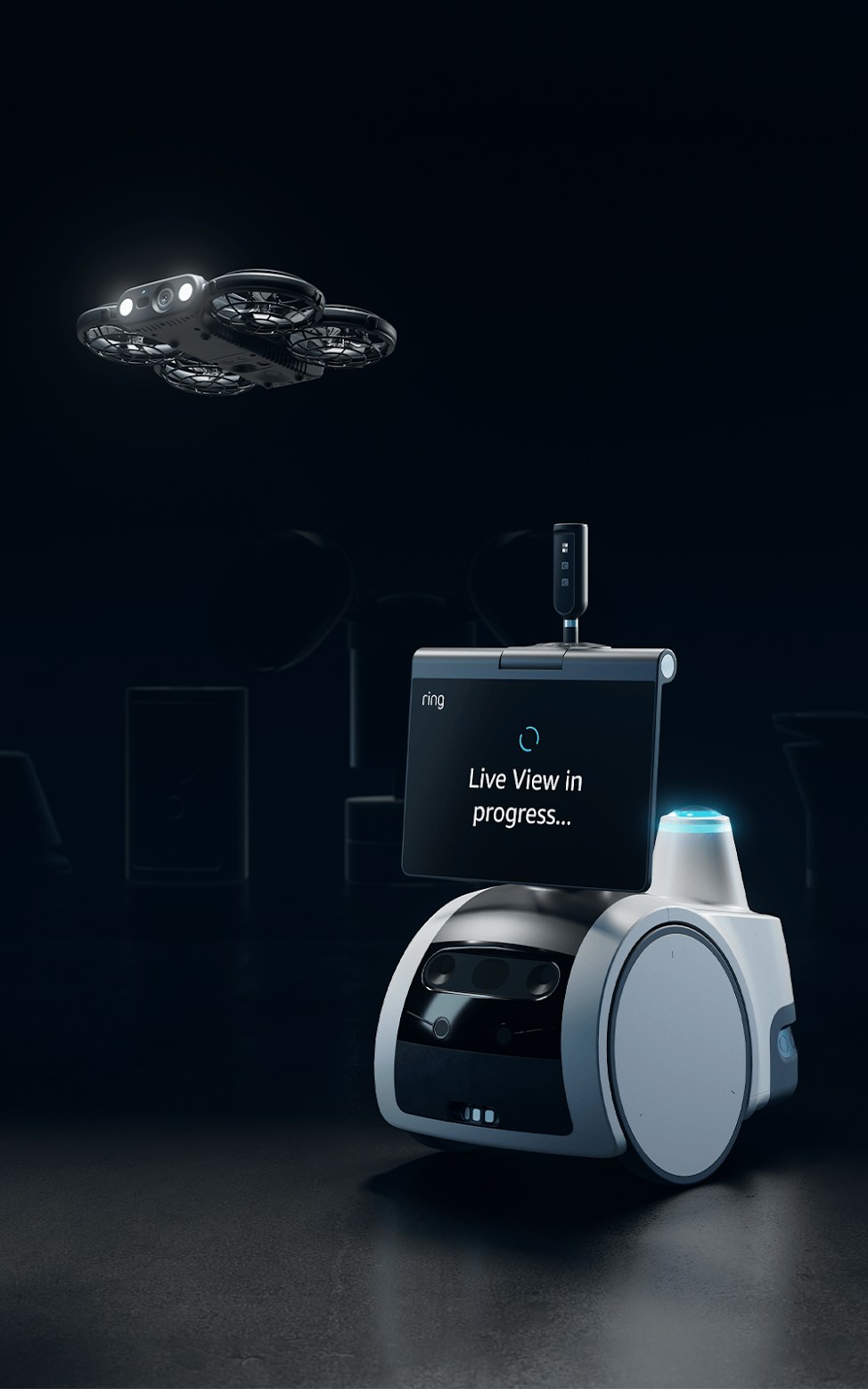
Ring announced Ring Robotics on Tuesday: a drone that patrols your home while you're out, and a wheeled robot that patrols your business after close. Both run on a proprietary AI system called AI Pilot, which Ring says uses "specialized vision models, sensors, and cloud processing to see, think, and navigate autonomously" — and builds a detailed map of your home or office by exploring it.
The home device, Ring Drone Cam, is a flying indoor security camera that shoots 2K video and carries LED lights for low-light patrols. It docks when idle, can be steered through Amazon's Alexa Home Map, and can fly set routes on a schedule — or be dispatched when another Ring device trips. If the backdoor alarm goes off, the drone flies to the back door. It launches January 27 for $270.
The business device, Ring Rover Cam, streams continuous 4K to the Ring app, with a periscope camera to see over obstacles, two-way audio to talk to whoever it finds, and automatic recording on human detection. It goes on sale December 16 for $1,000. Ring's pitch, in its own words: "Together, it's like having a guard on patrol who never clocks out."
The ghost here is Astro. Amazon launched its first home robot in 2021, repositioned it as a business security guard, then killed that version seven months later. Ring says Astro customer feedback inspired the Rover Cam — a polite way of saying the first attempt taught Amazon a security robot has to be a security robot, not a domestic helper with a side gig.
The harder question is one Ring has never really answered. Its doorbells turned millions of front porches into a surveillance network police routinely tap into, a practice the Electronic Frontier Foundation has long flagged. A drone that maps the inside of your house is a doorbell with wings — and it records to the cloud. Ring says both devices use its Throw Away the Key Encryption, its "strongest default encryption yet," but hasn't said whether local storage is an option.
That's the bet: a machine roaming your home unattended is a comfort, not a concern — and the company behind the doorbell network can be trusted with the floor plan. The drone arrives in January. The arguments will arrive considerably sooner.
— via TechCrunch