The Mac has spent years being the computer you don't buy for games. An open-source project called nxnative just made that argument harder to defend — and Nintendo is already trying to make it go away.
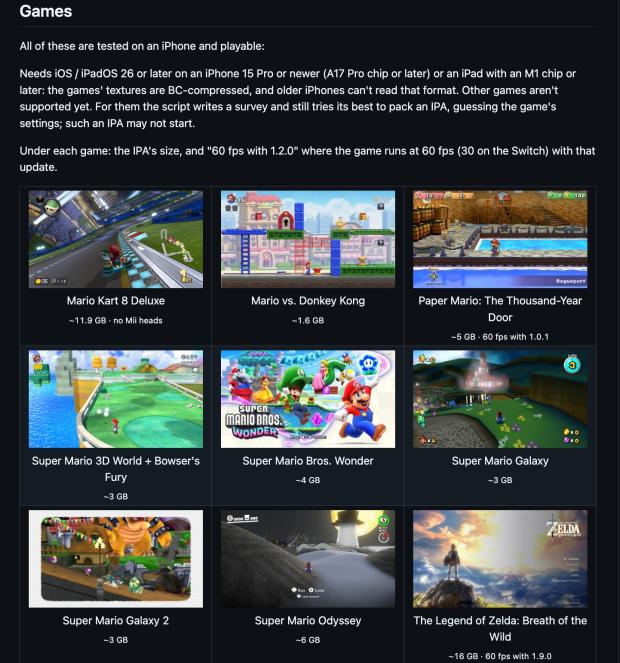
According to TweakTown, nxnative turns Nintendo Switch games into native Apple Silicon apps, with 61 titles listed as playable on iPhones and iPads. YouTuber Andrew Tsai has now demonstrated the same pipeline on Apple Silicon Macs: Monster Hunter Rise runs at a locked 60 frames per second on a base, fanless M1 MacBook Air with 8 GB of RAM.
This is not emulation. The Switch's Tegra chip and Apple's M-series chips share the ARM64 instruction set, so Switch code runs directly on Apple hardware. Nxnative handles the platform plumbing and translates the Switch's graphics calls to Apple's Metal API, skipping the double translation through Vulkan that made Switch emulation on Macs slow and glitchy. The same trick powers MacNativeGames, which got Tears of the Kingdom running at 90 fps on an M4 Air earlier this month.
The catch list is real. You supply your own legally dumped game files and decryption keys from a modded Switch, then build the app yourself with Xcode tools. And not everything works: Dragon Quest XI S and Final Fantasy Resonance run with minor flickering, Dark Souls Remastered has occasional vertex glitches, and Doom Eternal failed to boot entirely.
Then there is Nintendo, which has aggressively targeted demo videos of these native ports with DMCA takedowns, including one of Tsai's own videos earlier this week. The projects survive on a clean-room defense: they distribute no Nintendo code, game files, keys, or pre-compiled shaders, only the tooling. That is the same legal grey area emulators have occupied for years — but the repositories staying up is not the same as them being safe.
The direction of travel is what matters. A static recompilation of Tears of the Kingdom for native Windows x86-64 PCs is due next week, which could transform Android handhelds too. Nobody is going to build a Mac app from a modded Switch — but nxnative proves the hardware was never the bottleneck. An eight-year-old fanless laptop runs a modern Switch exclusive at full frame rate. The bottleneck was always the software pipeline, and the community just built one in a fortnight.
What to watch: whether Nintendo escalates from striking videos to targeting the repositories, whether the Windows port lands next week, and whether the compatibility list grows past 61.
— via tweaktown