In under four months, a small Anthropic team solved a structure forty years of biology hadn't — then did something rarer than the science: it published the AI's mistakes.
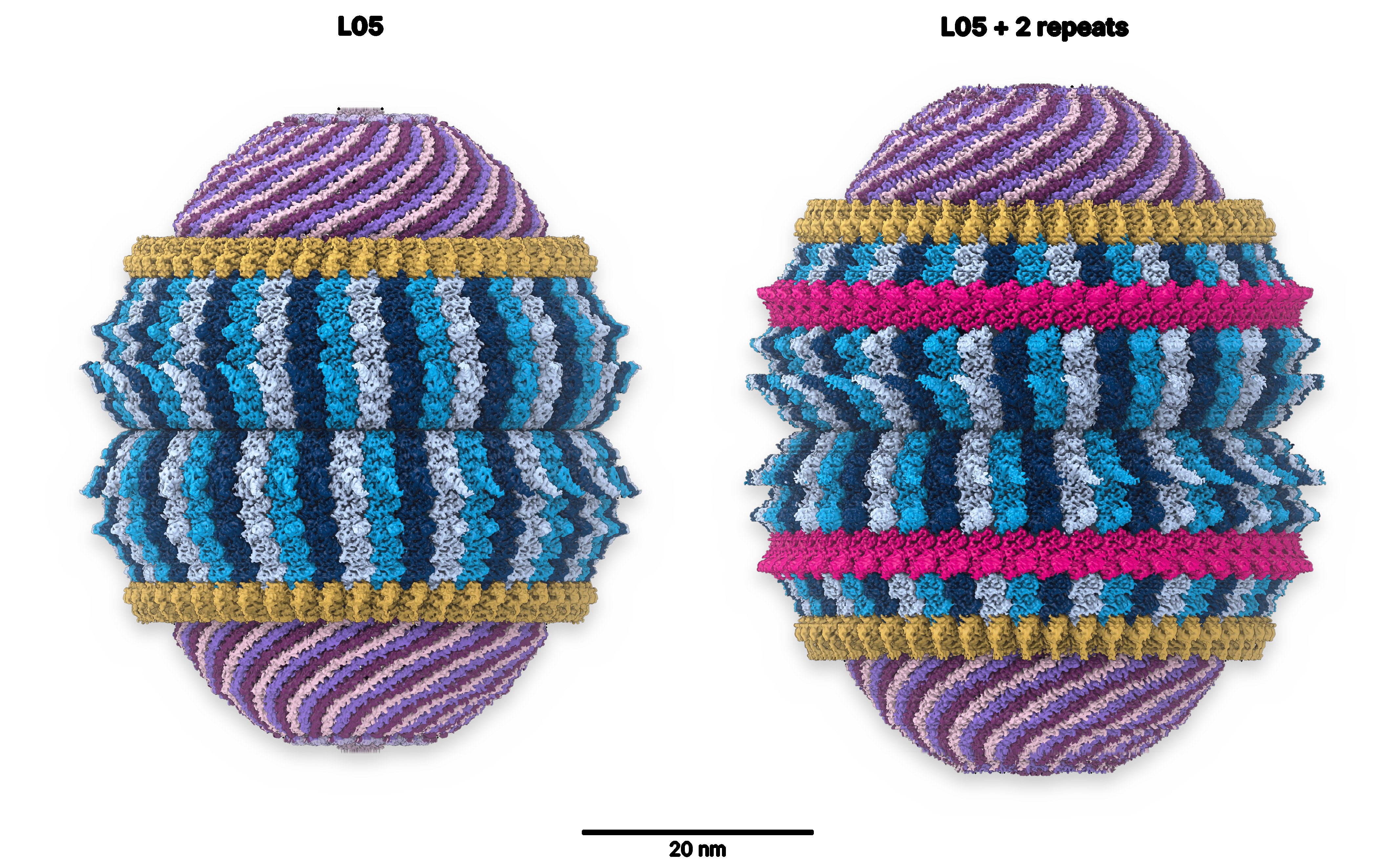
Vault particles are hollow protein barrels among the largest structures in our cells, discovered in 1986 by Leonard Rome and Nancy Kedersha — and their function is still unknown after decades of work. Anthropic's biology research team now reports the first 3D structure of a vault from prokaryotic life, built from 96 copies of a single protein from a bacteriophage, a virus that infects bacteria. The particle, called L05, weighs about 9.5 megadaltons and encloses roughly 25% more volume than the 78-copy human vault despite being shorter and wider, Anthropic says.
Claude was involved at nearly every step. It searched about 15 billion predicted proteins for vault relatives, turned chosen sequences into DNA designs, and ran the cryo-EM processing that produced the structure. Purification that conventionally takes three days took 90 minutes; a first model was ready in 34 hours, work Anthropic estimates would otherwise have taken weeks. The team even engineered a bigger vault: duplicating two wall segments yielded about 20% more enclosed volume, a step toward size-tunable nanocapsules for drug delivery.
The failure log is the part that matters most for AI moving into the lab. One Claude-written protocol called for an additive that blocked DNA from entering cells, costing two weeks. Early in the microscopy processing, it skipped a standard step and produced a map blended with its mirror image — until researchers told it: "Please let's do normal things unless they don't work." Anthropic shared its lab notes with Claude's trainers, and newer models made fewer such errors as the project went on.
Caveats: it's a preprint, not yet peer reviewed, and the vaults exist so far only in engineered E. coli. Each copy also holds a pocket with an unidentified small molecule resembling coenzyme A. Rome, who advised the project, put it plainly: "Figuring out the function of vaults is still enormously challenging. I am pleased that Anthropic has so much good data. Now, other people will be working on this problem."
The result is useful science. The precedent may be bigger: an AI lab treating its model's errors as findings worth publishing, not footnotes worth hiding. If AI is going to do real bench science, that candor is the part everyone else needs to copy.
— via Anthropic