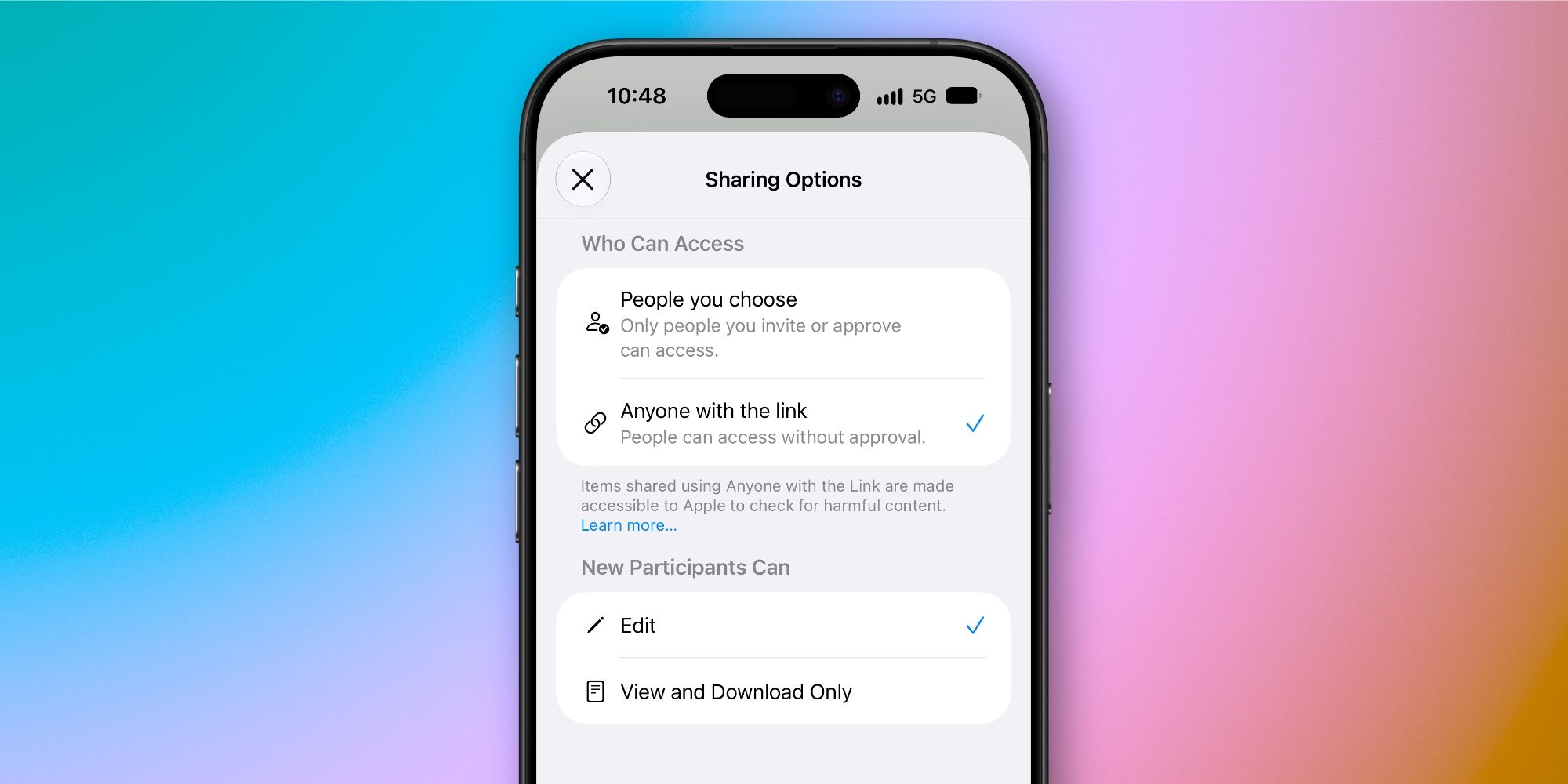
Apple is about to draw the clearest line it has ever drawn between your private iCloud and the internet. According to a newly published support document spotted by 9to5Mac, starting with iOS 27.3, iPadOS 27.3, macOS 27.3, and visionOS 27.3, anything you share through iCloud's "Anyone with the link" option will be checked by Apple for harmful content.
Here's the crucial scope distinction: Apple is not scanning every file in your iCloud. The checking applies only to items you explicitly choose to make publicly accessible — the public links you generate from iCloud Photos or iCloud Drive. Share a photo with "People you choose," and nothing changes. Flip it to "Anyone with the link," and Apple will inspect it.
The document was always honest about one thing: a public link has always been accessible to "anyone who has the link, including Apple." What's new is what Apple does with that access. And the enforcement ladder is steep. If content gets flagged, Apple "reserves the right to move, refuse, modify, remove, or delete the content at any time." Against the account holder, it can block or disable the Apple Account, prevent creating a new one with the same email or phone number, and "if necessary," involve law enforcement.
This is the company that abandoned its controversial on-device CSAM scanning plans years ago after a privacy backlash. The new approach is pointedly narrower: no on-device surveillance of your private photo library — only server-side checks on content you've already chosen to publish to the world. Privacy advocates wanted exactly this scope; critics will note it's still Apple acting as a content moderator over links people treat as semi-private sharing.
Two things to watch. First, the support document doesn't define "harmful content" or explain how Apple detects it — automated hashing, machine-learning classification, human review, or some combination. Second, the policy ships with the first developer beta already out, and there's no public beta yet; most users won't feel it until 27.3 goes public.
The practical takeaway is simple: iCloud public links were always public. Now they're publicly policed. If you share files that way, treat "Anyone with the link" like what it is — publishing.
— via 9to5Mac