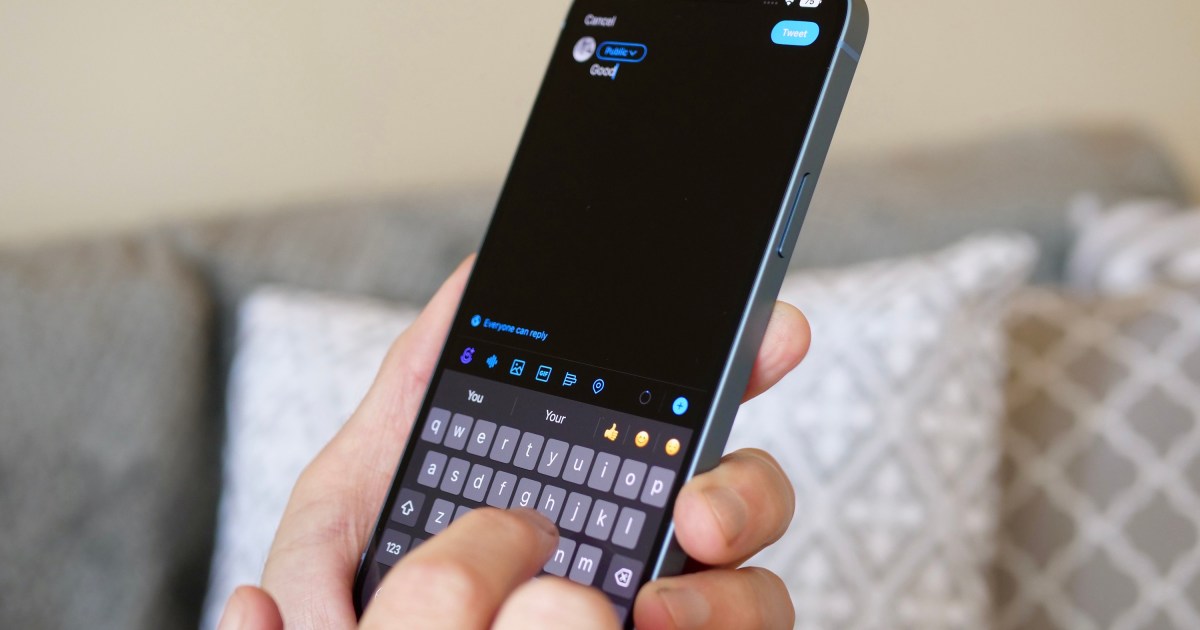
An independent researcher has found an undisclosed, multilingual "gray list" buried in iOS that the iPhone keyboard won't autocomplete or swipe-type, according to Reuters. It's not a ban — you can still type anything letter by letter. But the keyboard will never help you say it, and swipe-typing may change what you meant.
Most of the list is what you'd expect: vulgarity, drugs, sex, violence. Then it drifts into territory that has nothing to do with politeness. "Dictator Trump" and "sleepy Joe" are on it, along with "Tibetan independence" and "United Ireland." Other languages have their own entries — in Hindi, digs at Prime Minister Narendra Modi and opposition leader Rahul Gandhi; in French, "immigration too high." Kauffman puts the count at roughly 100,000 entries, not counting Chinese characters.
The inconsistencies are the tell. "Read smut" swipe-types fine; "read gay smut" doesn't. Reuters tested the findings itself: trying to swipe "United Ireland" produced "United Iceland," and "Sleepy Joe" came out as "Sleepy hope."
Kauffman found the list in September, after noticing his swipe-typing would hitch on certain phrases. Using OpenAI's Codex and Anthropic's Claude Code, he hunted through iOS and found the compendium stored, in his words, "deep in the bowels" of the operating system. Matt Suiche, an engineer at security firm Tolmo, independently recovered the same list — a near-perfect match — and said it had been hiding in plain sight for years.
Apple declined to comment directly, telling Reuters only that its keyboard avoids suggestions that might be inappropriate or offensive, and that users can always override them. That sidesteps the real question: who decides what counts as inappropriate. David Greene, senior counsel at the Electronic Frontier Foundation, called the list "creepy" and said users should know about it and be able to customize it: "This is something that should not be secret."
Kauffman put it bluntly: "It's a very light-touch form of censorship. But at the scale that Apple is operating, it only takes a light touch to have a big impact." Hundreds of millions of iPhones run this keyboard. A nudge that small doesn't need to block a word to shape how people write — just make it slightly harder to reach, millions of times a day. It's apparently been there for years, unacknowledged. The question now is whether Apple publishes it, lets users edit it, or says nothing and lets the keyboard keep quietly deciding.
— via Reuters