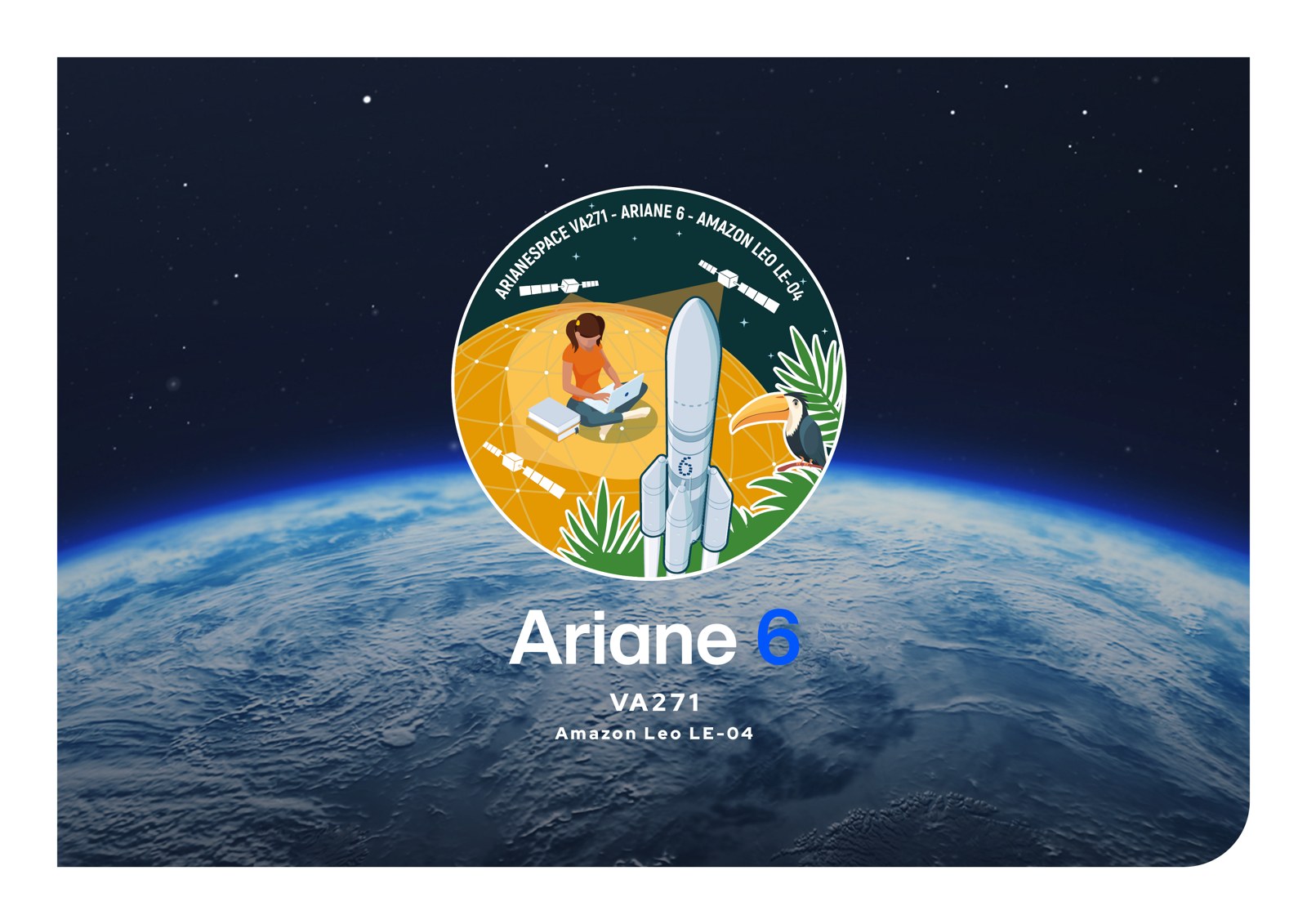
Update: Arianespace has confirmed the retry window for Tuesday, November 24: 5:45–6:14 a.m. ET — 24 minutes earlier than the 6:09–6:38 a.m. window stated in the original version of this article. This article has been corrected.
Amazon's comeback launch never got off the pad. Arianespace scrubbed Monday morning's Ariane 6 flight carrying 36 Amazon Leo satellites hours before liftoff, after a technical problem with the ground equipment at Europe's Spaceport in Kourou. Arianespace said the launch countdown was interrupted following "a technical event" on the ground systems used to prepare the launcher — and the countdown was stopped before the window even opened. The next attempt is set for Tuesday, November 24, in a new 29-minute window, 5:45–6:14 a.m. ET — 24 minutes earlier than the scrubbed Monday window.
This was supposed to be the first Leo launch since November 15, when a Vulcan rocket failed ten minutes into flight and took 40 Amazon satellites down with it — ULA's first outright mission failure in 20 years. The 36 satellites on VA271 would have been the first additions to the constellation since that loss, and a success would have brought Arianespace's Leo total to 136. Amazon has about 370 satellites in orbit and needs 578 before it can start service, under an FCC schedule that demands half of its planned 3,236-satellite constellation by July 2028.
The distinction in the scrub notice matters: this was a ground-equipment fault, not a rocket problem. That is worth saying plainly, because the flight was already running behind schedule after a turbopump issue that ESA described as transitory — a separate, unresolved-in-public problem neither ESA nor Arianespace has detailed a fix for. Two different faults, two different parts of the machine. Conflating them would make the rocket look worse than the evidence says, and would miss the real pattern: this program keeps tripping on the ground, not in the air.
The retry is the thing to watch now. If Tuesday's window holds, the satellites separate at roughly 465 kilometers and climb to their 630-kilometer operating altitude over the following days. If the ground issue turns out to be more than a one-day fix, the delay starts to bite: Vulcan is still grounded pending an FAA-accepted investigation into its own failure, with no return-to-flight date, so for now Ariane 6 is the only rocket carrying Amazon's recovery. ULA's preliminary finding pointed to inadequate fuel supply to the Vulcan's BE-4 engines — a vehicle problem, not an engine one — but preliminary is all it is, and the investigation is still running.
Eight days after losing 40 satellites, Amazon's answer was meant to be 36 more in orbit by breakfast. Instead, the answer is: try again tomorrow.
— via Space Launch Now