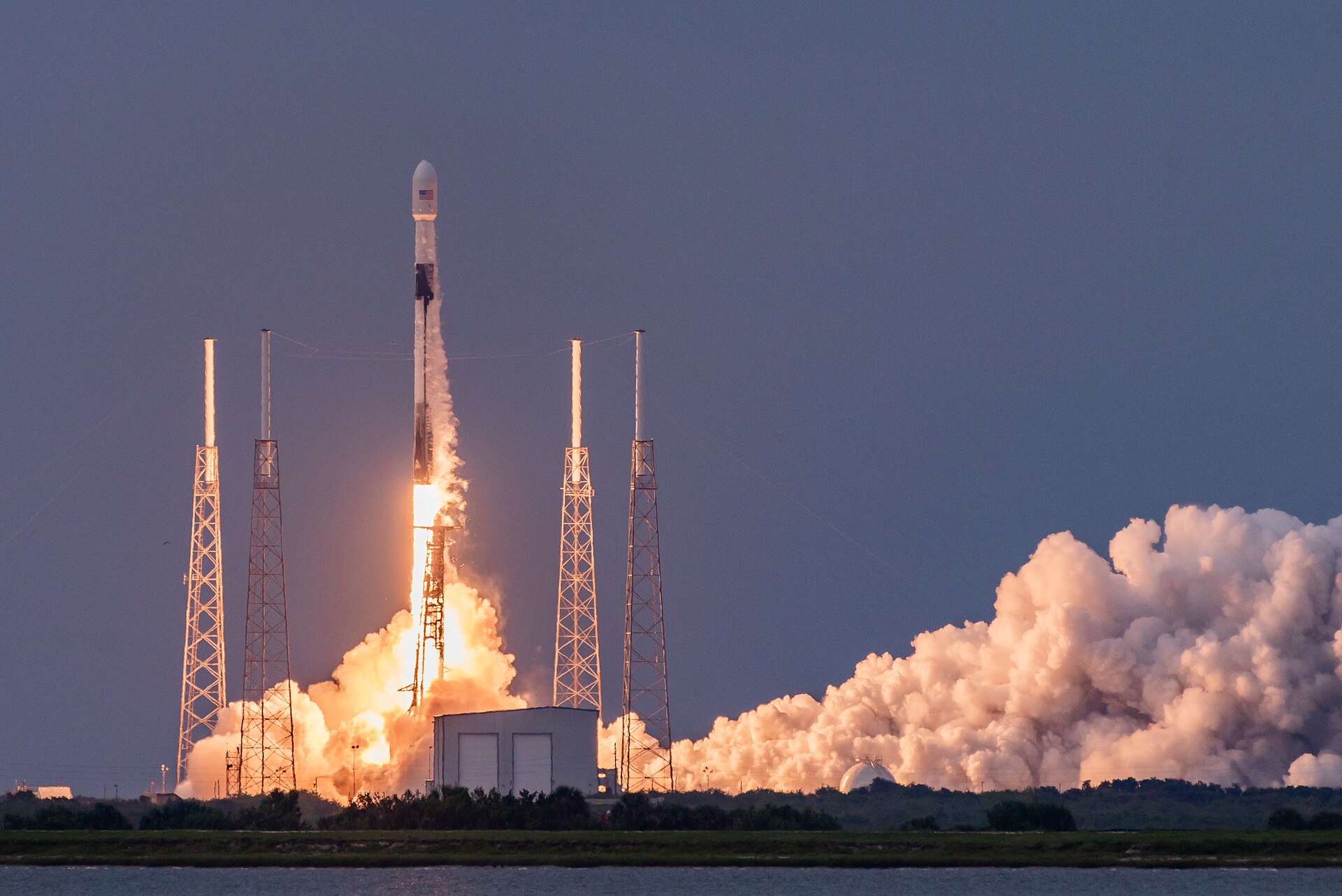
The Federal Communications Commission just gave SpaceX permission to build the strangest data center ever proposed: up to one million satellites, each carrying AI chips, in orbit. The conditional approval landed Wednesday, and it is a regulatory green light for a plan that still has to survive physics, economics, and a seven-year clock.
The objections were not subtle. Amazon, which is building its own Starlink competitor in Leo, told the FCC the application lacked basic details and called it "a lofty ambition rather than a real plan" — while also arguing it "risks real harm." Viasat and the American Astronomical Society raised orbital debris, congestion, radio interference, and the effect on astronomy. The FCC dismissed some of those concerns, including threats to scientific research, as outside its authority. Chair Brendan Carr called the decision one that "opens a bold new frontier for the computing infrastructure needed to power America's leadership and growth." Musk thanked him on X, calling it "a great asset to America and the world."
But an approval is not a data center. SpaceX's Starmind satellites would fly at 500 to 1,002 kilometers, talking to each other mostly by laser, with radio as a backup — the part the FCC actually authorized. The hard problems are unchanged: manufacturing and launching satellites cheaply enough, cooling processors with no air to cool them, and financing chips that are headed for orbit. That last one is not theoretical. When SpaceX raised $44 billion last week to rent Nvidia's Vera Rubin GPUs, lenders reportedly wanted a clause keeping the collateral on Earth — chips in orbit can't be repossessed.
The debris question is still open, too. The FCC has not approved SpaceX's plan for satellites operating above 600 kilometers, and the company has asked for a waiver of the rule requiring dead satellites to reenter within five years — it would rather park retired ones in other orbits, or even around the sun.
So the real number in this story isn't one million. It's seven: the years SpaceX has to get its first operational satellite up, with fourteen for the full constellation. Amazon's objection may have been self-interested, but its description — lofty ambition, not yet a plan — is now, effectively, the FCC's own timeline. SpaceX has until 2033 to turn a permission slip into a product.
— via TechCrunch