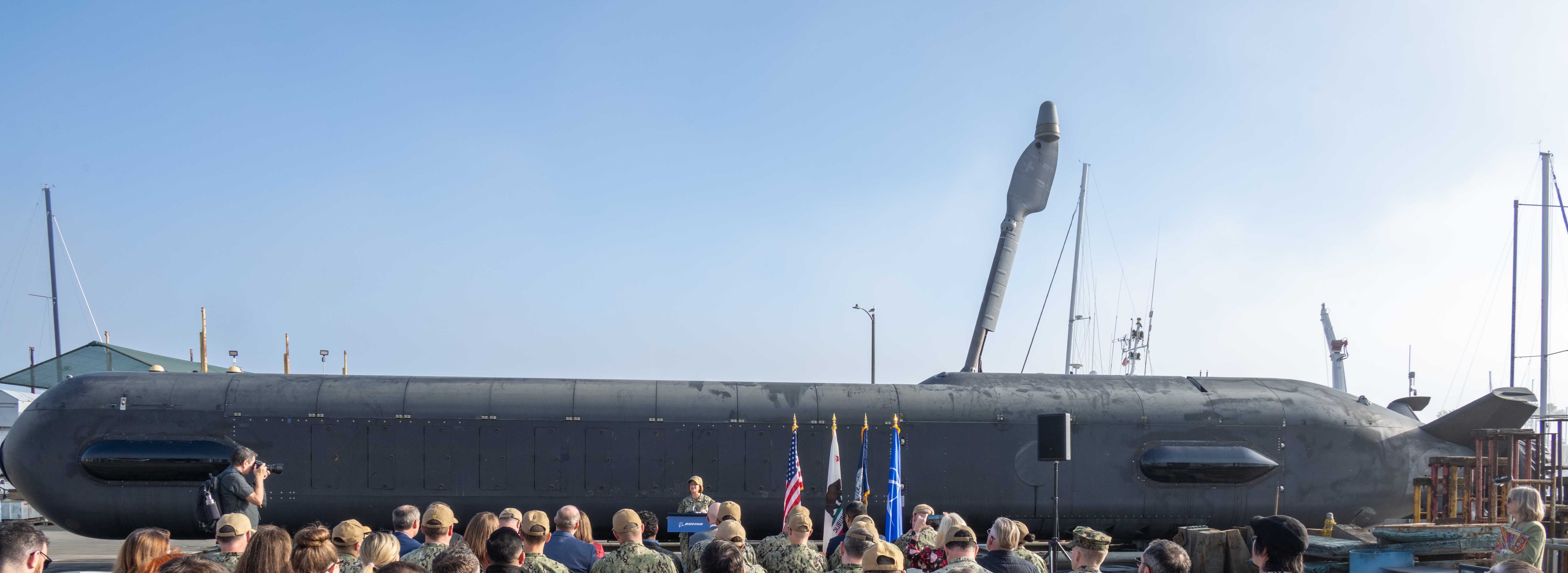
There is no freight network under the ocean, and Corridian thinks that is the point. The New England defense startup emerged from stealth on Tuesday with a $38 million seed round led by Point72 Ventures to build ultra-large autonomous undersea vehicles — uncrewed submarines designed to carry ISO-standard containerized payloads thousands of nautical miles, with no crew aboard.
The pitch, per co-founder and CEO Mike Guay, is "the stealth logistics layer for the undersea." Cheap, swarming one-way attack drones and long-range missiles have made the "surface and sky dangerous places to operate," Guay told Dealroom. "We have railroads to move over land. We have shipping to move on the surface. We have rockets into space. But undersea, nothing like that really exists."
The flagship vehicle will not be unveiled until 2027, and Corridian declined to share further specifications, including how it launches. But the containerized-payload design is the tell: this is logistics thinking applied to warfare. Swap the cargo, keep the hull. Guay was deliberately vague about what goes inside — "I'd say our platform carries whatever payloads our customers choose. It's a platform in the truest sense" — but the official capability list runs from payload and effects delivery to intelligence, surveillance, reconnaissance, and contested logistics. Read the subtext: sensors, supplies, or weapons.
The manufacturing choice matters as much as the design. With U.S. shipbuilding strained and priority warships behind schedule, Corridian is adopting what Guay calls "more of an aerospace manufacturing model," drawing on a supply chain independent of the Submarine Industrial Base. Translation: it will not fight the Navy's yards for welders and hull steel while Columbia and Virginia-class boats eat the capacity. Chris Morales, the Point72 Ventures partner and former naval officer backing the round, argues larger AUVs can deliver greater payload capacity and range at lower cost — and cites the founders' experience: Guay, president Greg Barrow, CTO Kyle Arace, and COO Mark Bodnar previously ran one of the largest undersea autonomy portfolios at General Dynamics.
The timing is not accidental. Corridian's round lands as uncrewed undersea systems cross from trials into funded production: Australia's Ghost Shark program runs to $1.7 billion, the U.S. Navy's Lionfish effort could reach 200 vehicles and more than $347 million in contract value, and Kongsberg won a $54 million U.S. defense extension for autonomous underwater vehicles in October.
Corridian is still pre-launch, with no vehicle fielded and no government customers secured. But the investor list — Balerion Space Ventures, Harpoon Ventures, DCVC, Marlinspike, and advisers including retired Adm. Lisa Franchetti — signals a conviction that the ocean floor is about to become a commercial corridor, not just a hiding place. The surface has container ships. The sky has cargo planes. The undersea is about to get its own fleet.
— via Dealroom