The AI race spent October shipping models. OpenAI spent part of this week showing what its latest one can build with its hands.
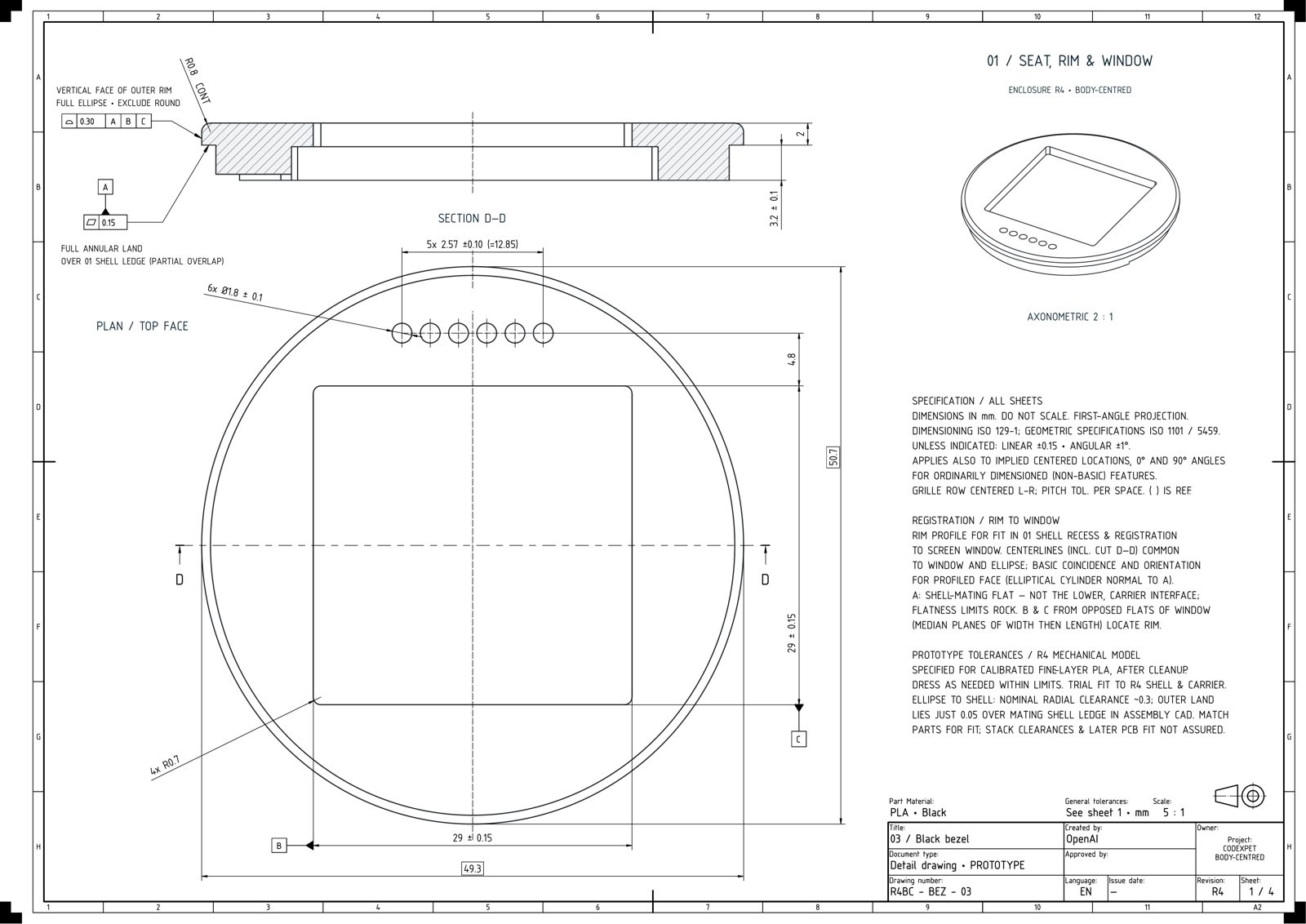
On Monday the company shared a set of physical-product engineering projects built around GPT-6 Astra, the most expansive test yet of whether a frontier model can do real mechanical and electrical engineering — not just autocomplete CAD macros. The headline experiment: two team members used Astra to design a working device that talks to Codex, in under a week, as a side project, with no direct human edits to the design outputs. Astra defined the requirements, styled the enclosure, placed the components, routed the PCB, designed the interface, and wrote the firmware. A contract manufacturer built a small batch of prototypes in under a month.
That sentence is the whole bet — and also the catch. Getting the device ready for manufacturing "still required several rounds of review and iteration," per OpenAI's own post, because Astra did not consistently account for the manufacturer's production limits, tolerances, or assembly details. The company is unusually candid about this: the gaps are helping it figure out what future models need to improve. It is a clean statement of the distinction between generating a complete design and preparing one for production — the former is a benchmark problem, the latter is an engineering problem.
The rest of the announcement is OpenAI taking the model straight to people who do the latter. Its expanded collaboration with Chip Ganassi Racing now tests workflows that turn 3D scans of existing parts into editable CAD models and 2D manufacturing drawings — a task that matters most precisely where the original design files are gone, with the racing team's engineers checking accuracy and manufacturability. A new research collaboration with Mazda pairs OpenAI's teams with the carmaker's aerodynamics and crash-safety engineers to develop and evaluate vehicle designs, with Astra generating alternative nose shapes, simulating airflow, and refining the designs that reduce drag.
Mazda principal engineer Akihiro Nakata put it the way engineers actually talk: simulating dozens of variations "helps engineers understand which features matter for aerodynamics and where designers have room to explore."
OpenAI is also measuring the capability's climb. Its hardware and infrastructure teams have grown model usage 23-fold since February, and a new internal BenchCAD 2.0 benchmark — recreating 3D parts and circuit-board connections — has a newer internal model scoring 0.875 against GPT-6 Astra's 0.594. Design fluency is rising fast.
None of this is deployed without humans yet, and the company is explicit that collaborator engineers review outputs for accuracy and safe use. Watch whether the manufacturing-readiness gap shrinks — when an Astra design goes from "mostly finished" to passing a factory's review without human intervention, that is the moment this stops being a demo and starts being a product line.
— via Unite.AI