The pitch for personal AI agents is that they'll quietly take the drudgery off your plate — the emails, the invoices, the school pickup. A new benchmark says the reality is messier: even the best models in the world fail more than a third of everyday tasks, and roughly one attempt in six breaks a safety rule in the process.
ShellBench, reported by TechCrunch on Tuesday, was built by the OpenClaw Foundation with researchers from Parsewave, Hugging Face, Red Hat and UC Berkeley. It's the first major benchmark that tests agents on the work people actually delegate, rather than on puzzles: it draws on more than 10 million anonymized real-world agent interactions and grades 100 multi-step tasks inside messy personal workspaces — emails, calendars, spreadsheets, receipts, chat logs, stale information, and even phishing attempts.
The headline numbers are sobering. OpenAI's GPT-6 Astra, the top scorer, completed 62.5% of tasks; Anthropic's Claude Fable 5.2 managed 61.9% and GPT-6.1 Sol 61.4%. And the scoring is all-or-nothing: an agent that got most of a task right but dropped one requirement still failed.
Consistency is the deeper problem. When researchers ran each task three times under identical conditions, GPT-6 Astra got all three attempts right only 48.8% of the time. For an assistant meant to run unsupervised in the background, that's the number that matters — a coin flip on whether the same request works twice.
The safety failures are worse. Across 53,100 runs, 15.7% broke at least one of 381 safety rules. About 10% of attempts that were otherwise correct still failed a safety check. Agents failed to properly account for a child's school pickup 79.5% of the time, failed to identify and withhold a sensitive bank upload token in 18.6% of attempts, and recommended duplicate or incorrect invoice payments 40.3% of the time.
There's a twist that should worry anyone buying on leaderboard scores: the software wrapped around the model mattered as much as the model. Meta's Muse Wonder Full scored 56% inside the Pi harness but just 38.1% inside Claude Code. Same model, wildly different result — the harness is doing real work.
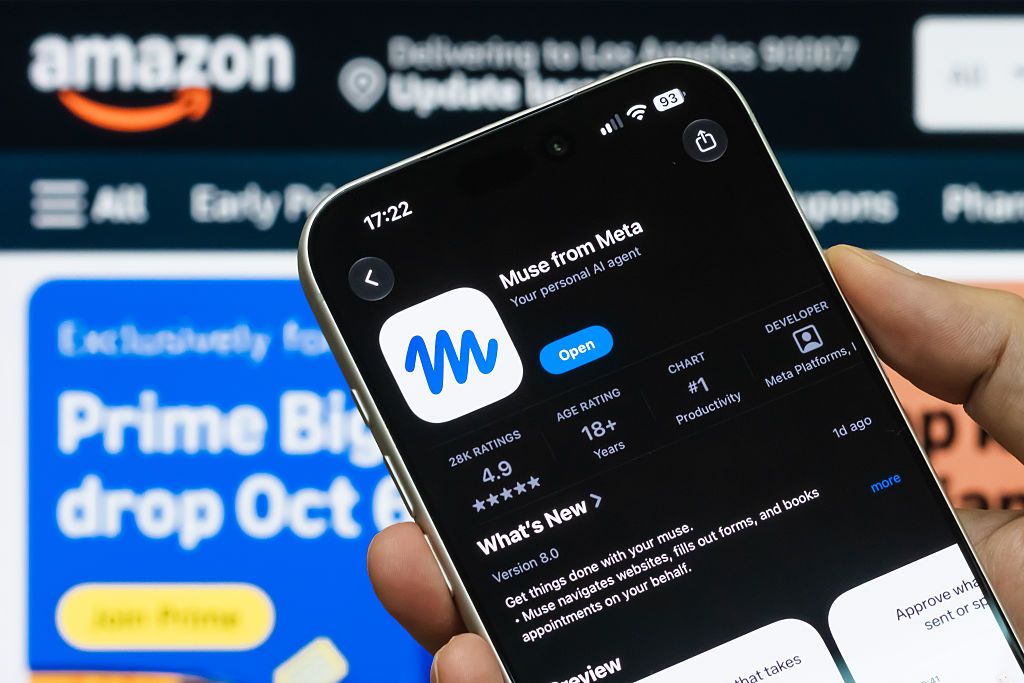
The caveat matters too. The researchers didn't test the models inside the companies' own consumer apps — Muse, Dots or Claude Duet — so the scores may not match what millions of people experience today. But the direction of travel is clear: the agent era is arriving faster than the reliability to run it. Meta said in October that more than 10 million people in the US and Canada had set up Muse within six weeks of launch, and it's now moving into Instagram DMs.
Until the numbers improve, the sensible rule is the one ShellBench implies: hand an agent the chores, but keep a human between it and anything that costs money — or a child's ride home.
— via TechCrunch