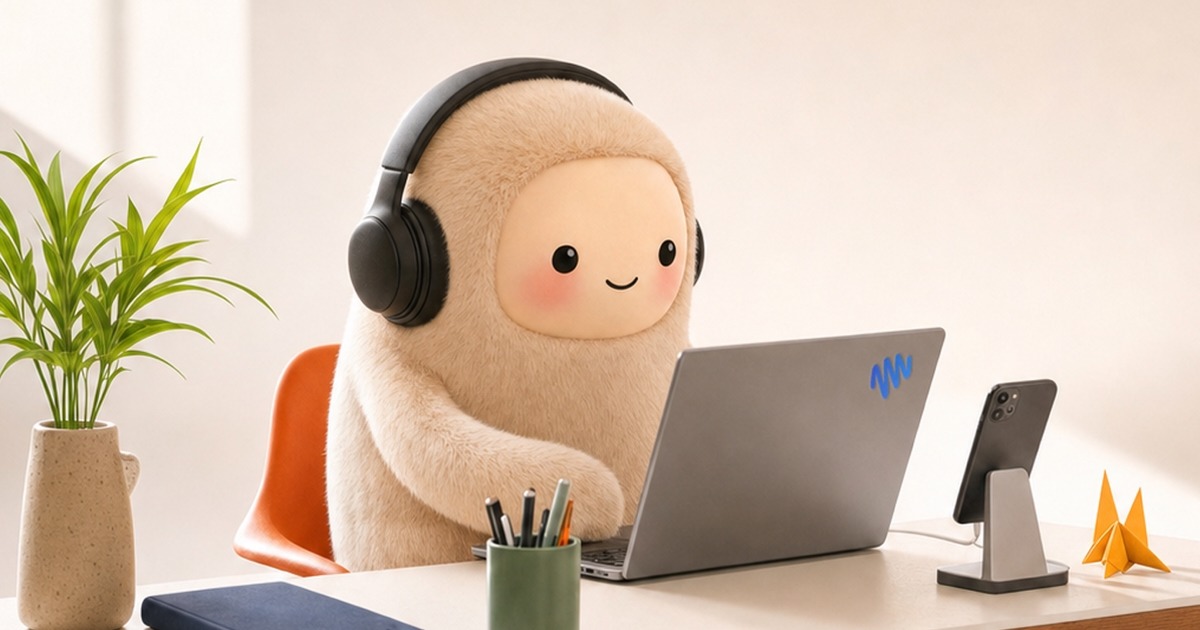
Meta's AI assistant just got a face — and the company wants you to talk to it like a person. Muse Voice, the feature that lets users call and video chat with Meta's consumer AI agent through a live animated avatar, is now available to everyone in the U.S., TechCrunch reported Thursday.
The feature was first shown at Meta's Connect developer conference in September, and it's built on two new models: Muse Realtime Avatar and Muse Realtime Voice. The default avatar is a cute animated character nicknamed Jolly, but users can customize it into something that looks more like a person, an animal, or another character entirely. As it speaks, Meta says the avatar uses "subtle expressions and gestures" that match the tone of the conversation. One honest caveat: Muse doesn't actually see you. It hears you and reacts to what you say.
Meta's chief AI officer, Alexandr Wang, announced the rollout in a blog post and on X, demoing his own Muse — a fluffy white dog. In the clip, Wang jokes that his habit of posting memes on X may have gotten him in trouble with his boss; his Muse suggests adding disclaimers to memes that could be misread as Meta endorsing something risqué.
The timing is the tell. The video-chat launch lands just before Meta's planned Tamagotchi-like wearable for Muse, due before year-end, where the same avatar will live on a small screen users can talk to. Real-time conversations are supported now on mobile, web, and Mac, and will later come to Meta's AI Glasses and the upcoming "Muse Charm" hardware.
This is Meta placing a deliberate bet on the companion model of AI — that people will talk to, and stick with, an assistant that has a face and a personality, not just a voice in a text box. OpenAI and Google both offer voice chat, but neither has put a customizable character at the center of the experience. Meta believes anthropomorphizing Muse will make consumers feel more connected to it, and that connection is the product: the more attached users are to their avatar, the harder the assistant is to replace.
The open question is whether the face helps or hurts. A charming avatar makes an AI feel trustworthy by design — and that trust is exactly what regulators and researchers keep warning about when assistants start handling tasks on users' behalf. Watch the wearable next: if Muse Charm sells, Meta will have proven the companion thesis in hardware, and every other lab will be shopping for a face of its own.
— via TechCrunch