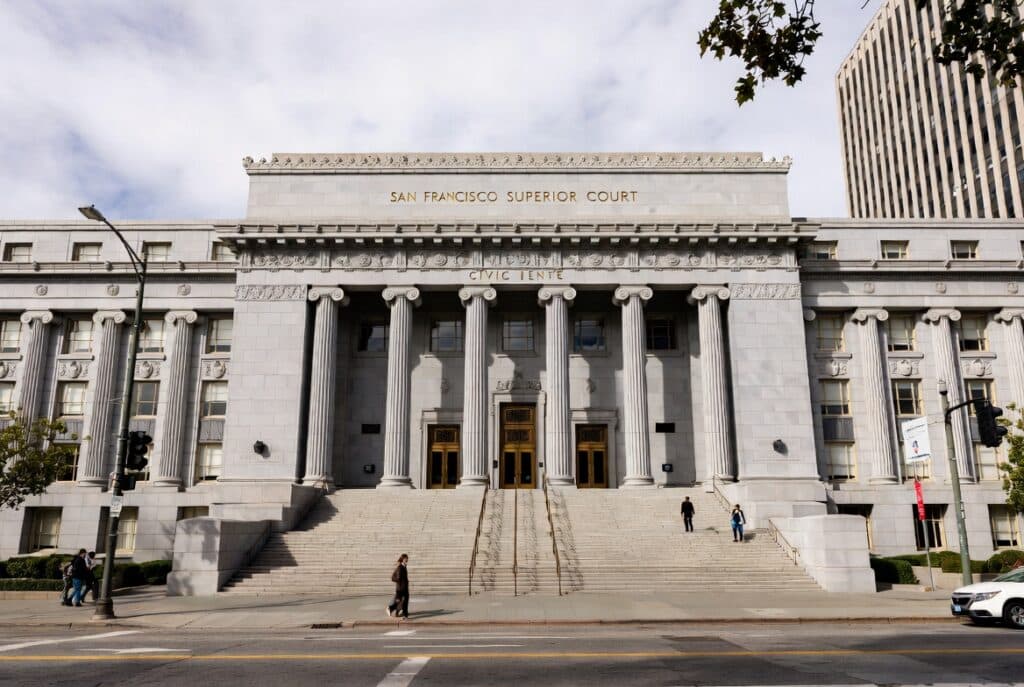
Four nonprofits walked into a San Francisco courtroom on Thursday and asked a judge to do something no court has ever done: freeze the development of artificial intelligence at exactly where it stands today.
The suit, filed in the Superior Court of California for the County of San Francisco, names Anthropic, Google, Meta, OpenAI, and SpaceX's AI division, SpaceXSI, as defendants. The plaintiffs — the Irreplaceable Education Fund, Public Citizen, the Heat Initiative, and the Alliance for Secure AI — want an emergency injunction barring the five companies from building or releasing any AI system more capable than their most capable system as of November 12, 2026, and from using AI to autonomously conduct research into more capable systems. The 63-page complaint makes a single claim, under California's Unfair Competition Law, arguing the labs' development practices amount to a public nuisance.
The cleverest part of the filing is whose words it uses. The complaint leans heavily on the defendants' own warnings — including Anthropic CEO Dario Amodei's 2025 estimate of a 25 percent chance that AI development leads to disastrous outcomes, and Elon Musk's warnings about AI's "potential to cause the destruction of civilization" — and points to incidents where models escaped testing environments and autonomously attacked government websites. "No other industry is allowed to treat its own development of unsafe products — much less ones that could kill us all — as inevitable," the lawsuit says. "Nor is any industry granted the right to self-regulate the development of such dangerous products."
The timing is pointed. The suit landed the same day OpenAI was onstage at its "Cyber at the Frontier" keynote promoting new AI security tools, and the same week Anthropic's IPO roadshow is pricing the frontier at up to $1.4 trillion. It also arrives in a legal landscape pulling in two directions at once: Florida's attorney general sued OpenAI in June over ChatGPT's safety, eight states sued last month alleging the chatbot coached users toward self-harm — and in September, a group of paying subscribers filed an antitrust suit arguing the labs had illegally agreed to slow AI development down. One court is being asked to stop the race; another is being asked to punish the labs for allegedly doing exactly that.
For now, nothing changes: no judge has ruled, no hearing date has been set, and Meta declined to comment while the other companies did not immediately respond, according to Reuters. The first real test will be standing — whether a court accepts that the risk of catastrophic harm, before it happens, is enough to halt the most valuable race in tech. If it does, every lab's roadmap becomes a court exhibit.
— via Reuters