South Korea's bid for AI independence doesn't involve escaping Nvidia. It involves plugging into it.
Nvidia, Korean chip startup Rebellions, and SK Telecom announced Monday in Seoul that Rebellions' next-generation R200 neural processing units will connect to Nvidia's platform through NVLink Fusion, built on Nvidia's MGX rack architecture and deployed in SK Telecom's AI data centers. The effort is backed by Korea's Ministry of Science and ICT, and the companies say the first R200 systems should be ready for deployment in 2028.
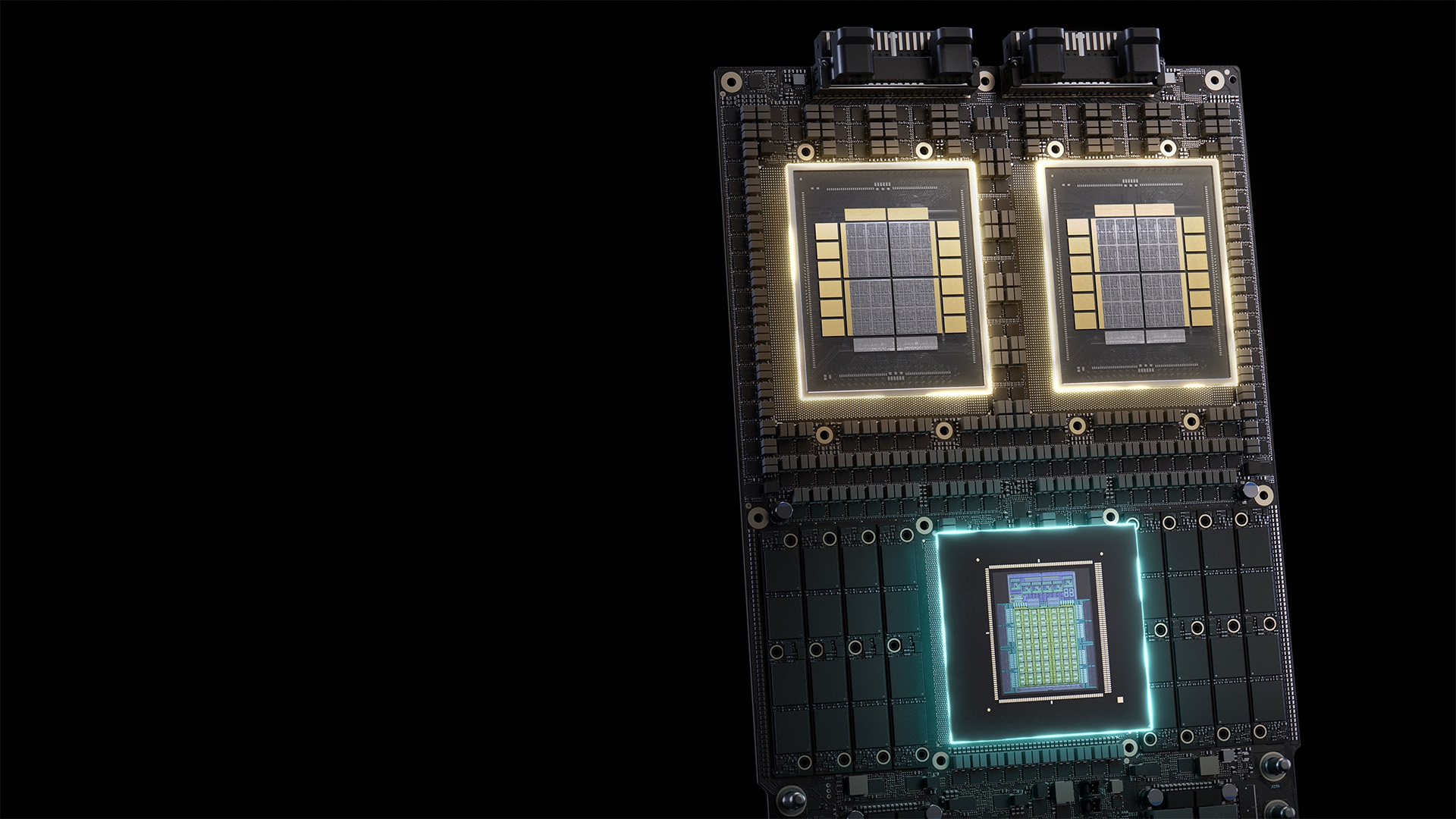
The technical pitch is a division of labor. Nvidia's GPUs would handle prefill — the compute-heavy step of processing a prompt — while Rebellions' NPUs handle decode, the token-by-token generation that follows. The R200 is designed, according to Nvidia, for low-latency, energy-efficient inference on frontier models, including multitrillion-parameter mixture-of-experts models. Because both chip types share MGX's rack design — footprint, power delivery, cooling — SK Telecom can mix them in the same data halls instead of building a separate facility for Korean silicon. Rebellions, in turn, gets access to MGX's established supply chain of server makers and component suppliers.
That is the deal's real story. NVLink Fusion, which Nvidia introduced at Computex in May 2025, is the company's answer to the custom-silicon threat: rather than letting rival accelerators build a parallel ecosystem, it lets them onto Nvidia's own scale-up fabric. Rebellions isn't trying to displace the incumbent; it's buying a seat on its interconnect. "Sovereign AI gives nations the power to turn their language, culture and expertise into intelligence," said Nvidia founder and CEO Jensen Huang in the announcement. "Together with MSIT, Rebellions and SK Telecom, we're building the computing foundation for Korea to produce its own intelligence and power its next industrial revolution."
SK Telecom plans to tie the systems to its proprietary foundation models, including A.X K2, and to public-facing services under the government's "AI for All" project. The ministry framed the collaboration as a beginning, not a one-off: it is supporting work between Nvidia and Korean NPU companies, starting with Rebellions — which suggests more domestic chipmakers may follow the same route onto Nvidia's platform.
The caveats are substantial. Neither company disclosed the R200's performance, memory, power draw, or process node, nor how many systems SK Telecom will deploy, where, or at what cost. The chip is still in development, and 2028 is a readiness target, not a shipping commitment. The announcement also landed as Nvidia's two-day AI Day Seoul opened at COEX without Huang in the room, days after the company's board opened an independent investigation into reports he had been targeted by a foreign intelligence effort.
Still, the pattern is now unmistakable. A week after Canada took a C$1.6 billion equity stake in Cohere, Korea is assembling the same sovereign stack — domestic silicon, domestic models, domestic data centers — with one difference: Seoul is building it inside Nvidia's rack. The question to watch is whether that turns out to be sovereignty, or just a Korean-branded wing of the same factory.
— via NVIDIA Newsroom