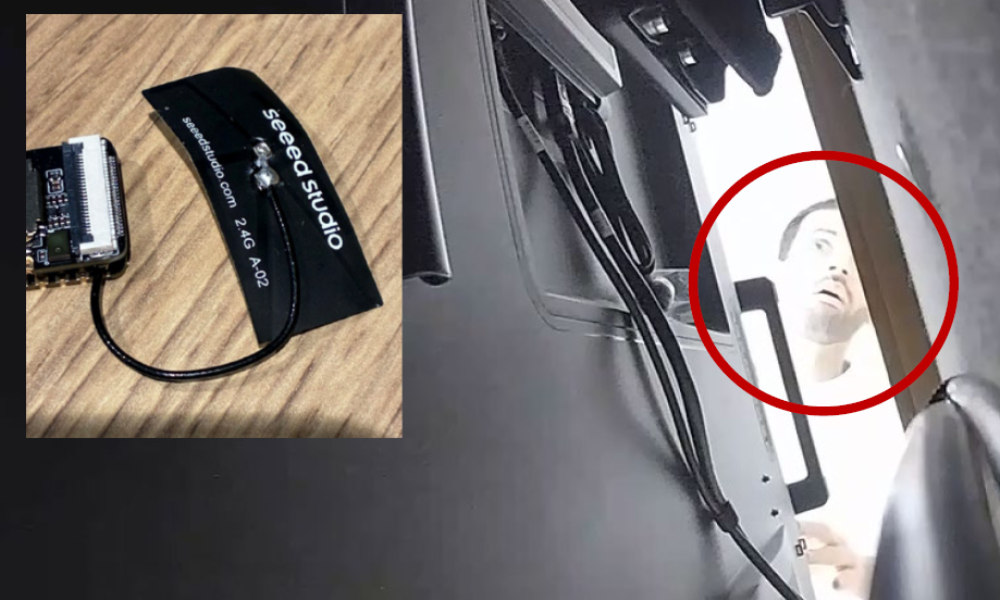
The strangest case in AI this month just stopped being strange and started being geopolitical. Federal prosecutors said Sunday that Abdulrahman Alfozan — the former OpenAI engineer charged with planting a recording device in an executive conference room — was in "frequent communications via WhatsApp with a member of the Saudi Royal Family" throughout 2025 and 2026, most recently on Oct. 5, four days before his arrest, Reuters reported.
The royal wasn't identified, and the filing doesn't say how the two knew each other. But the recruitment pitch is on the record. Prosecutors wrote that the royal told Alfozan an artificial intelligence initiative was being launched in Saudi Arabia and wanted him to join — and that in May 2026 the royal wrote, "Saudi needs you more then [sic] the US!" Alfozan replied "100," signaling agreement. "The individual repeatedly tried to recruit the defendant and asked when he planned to leave OpenAI," the filing says. He said he wouldn't go until his OpenAI stock vested.
Crucially, the filing stops short of accusing the royal of directing the bugging. The case prosecutors are actually making is about flight risk, and it's the details of that argument that turned this into an international incident: after Alfozan's Oct. 9 arrest scuttled the family's planned Oct. 12 one-way trip to Saudi Arabia, Saudi government officials — and then a member of the Saudi military — arranged separate flights for his wife Lujain Alassaf and their three-month-old son. The wife and baby flew business class from San Francisco to Doha on Oct. 10 on a ticket paid for by the Saudi military member.
Prosecutors say that support, plus Saudi Arabia's lack of an extradition treaty with the U.S., makes Alfozan a flight risk: "He has the connections needed not only to flee, but to build a new life in Saudi Arabia." His lawyer countered that "nationality is not evidence of flight," and asked for home detention with GPS monitoring.
The stakes argument is blunt: prosecutors wrote that "Defendant's conduct could pose a danger to the national security of the United States," noting that around the time Alfozan allegedly installed the device on Sept. 28, "OpenAI executives met with government officials in that very room."
Zoom out and this is the AI talent war's new front. The labs are spending billions poaching researchers from each other; now prosecutors are describing a state-linked effort to recruit a single engineer with access to the room where OpenAI's roadmap gets discussed. It's a reminder that the most valuable thing in AI isn't always the weights — it's the conversations. Alfozan appears in U.S. District Court in San Francisco on Monday morning, where a judge will decide whether he stays in custody.
— via Reuters