OpenAI took the stage Thursday at its Cyber at the Frontier keynote with a pitch that inverts the usual AI-security story: the hard part isn't finding vulnerabilities anymore. It's fixing them.
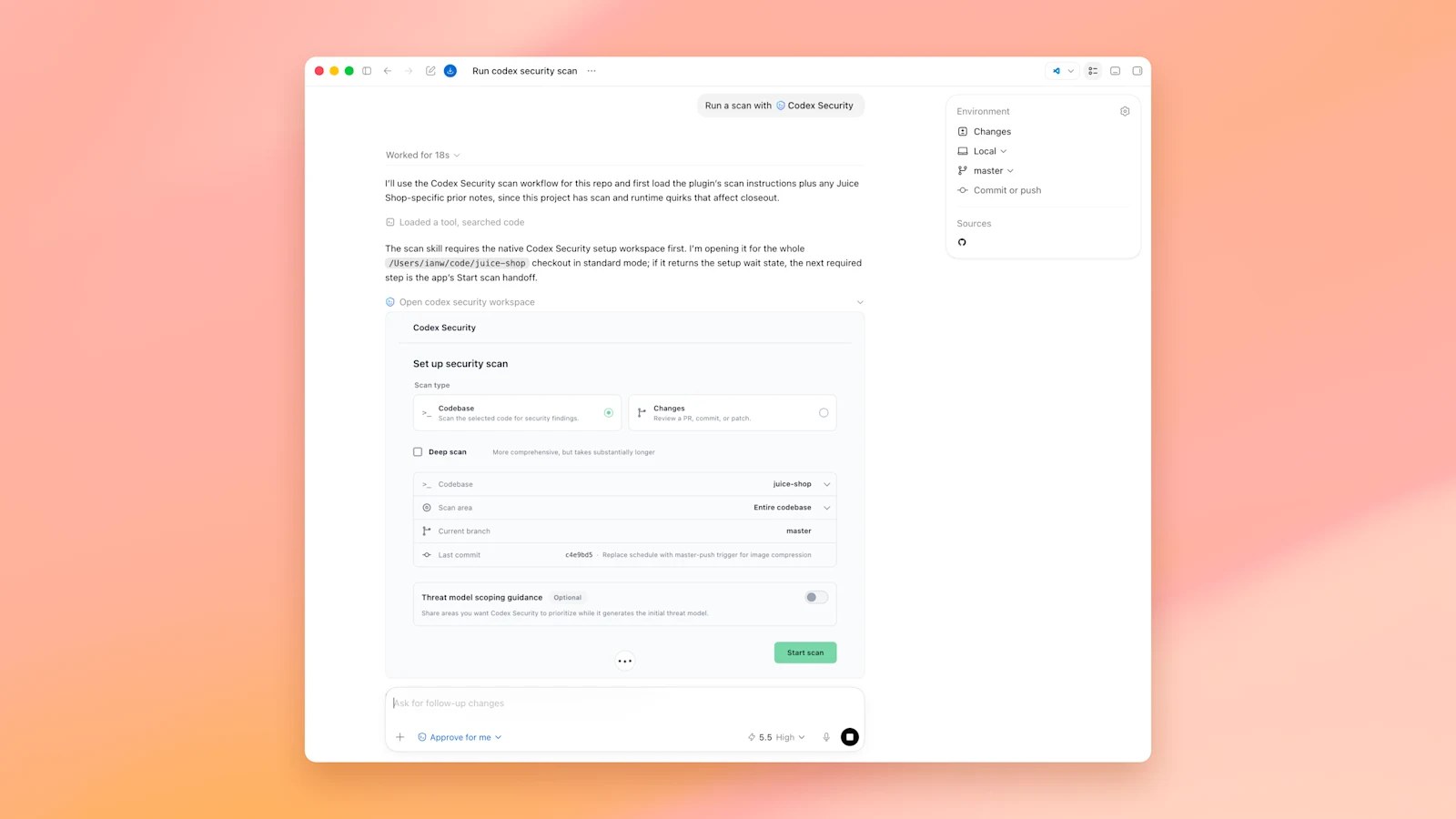
The package OpenAI laid out — first detailed in a Daybreak blog post on Monday and presented live at the keynote — has four pieces. There's an update to the Codex Security plugin that turns the coding agent into a defensive workflow: deep scans, threat models, validation evidence, and codebase-specific patches for human review. There's the full release of GPT-5.5-Cyber, OpenAI's most capable and most permissive cyber model, to verified defenders. There's a Daybreak Cyber Partner Program that puts GPT-5.5 with Trusted Access for Cyber inside products from Cisco, CrowdStrike, Palo Alto Networks, Cloudflare, and dozens of other security vendors. And there's Patch the Planet, an initiative with Trail of Bits, HackerOne, and Calif to fund expert researchers to land fixes in widely used open-source projects — more than 30 have signed on, including cURL, Go, Python, Sigstore, and pyca/cryptography.
The numbers OpenAI is leaning on are striking. Since Codex Security launched in research preview in March, it has scanned over 30 million commits across more than 30,000 codebases; human reviewers have marked more than 70,000 findings as fixed, and over 500,000 more have been automatically determined to be fixed. The updated GPT-5.5-Cyber reached 85.6% on CyberGym, OpenAI's benchmark for reproducing known vulnerabilities, against 81.8% for GPT-5.5 — and 39.5% on ExploitGym, which tests turning vulnerabilities into working exploits, versus 25.95% for the base model.
That last number is the one to sit with. OpenAI is quite deliberately handing defenders a model that is better at building exploits — and arguing the only safe answer is to give defenders the same capability, faster, with governance attached. GPT-5.5-Cyber stays behind a verification wall: trusted defenders only, with stronger monitoring, scoped controls, and review. OpenAI says it has been in ongoing dialogue with the U.S. government about the approach, including pre-deployment testing with the Center for AI Standards and Innovation.
The Patch the Planet piece is the most interesting precisely because it's the least about models. Open-source maintainers are drowning in AI-generated vulnerability reports — OpenAI's own cyber lead put it bluntly, saying maintainers are "stuck reviewing slop CVEs" — while most of the projects the internet runs on have fewer than ten developers doing 90% of the work. The initiative's answer is funded humans: expert researchers who validate and deduplicate reports before they ever reach a maintainer, plus ChatGPT Pro, Codex Security access, and API credits for the projects. An initial five-day sprint surfaced hundreds of issues and merged dozens of patches.
This is also a race, and OpenAI isn't running it alone. Hours before the keynote, Anthropic said its own AI ported Claude onto AMD chips in three days — the same capability story, told as a chip story. Last week OpenAI gave its GPT-6 Cyber model its highest warning label while shipping it to researchers. The labs are now competing openly on who can weaponize vulnerability discovery for defense fastest, and both are discovering the same thing: discovery was the demo. Patching at machine speed, across thirty thousand codebases and a volunteer open-source ecosystem that was already exhausted, is the actual product.
Watch whether Patch the Planet scales past its first sprint — and whether the verified-defender wall around GPT-5.5-Cyber ever comes down. OpenAI's bet is that the window for defenders is narrow and closing. The keynote's real message is that it's now racing itself to patch the planet before attackers finish reading the same research.
— via OpenAI