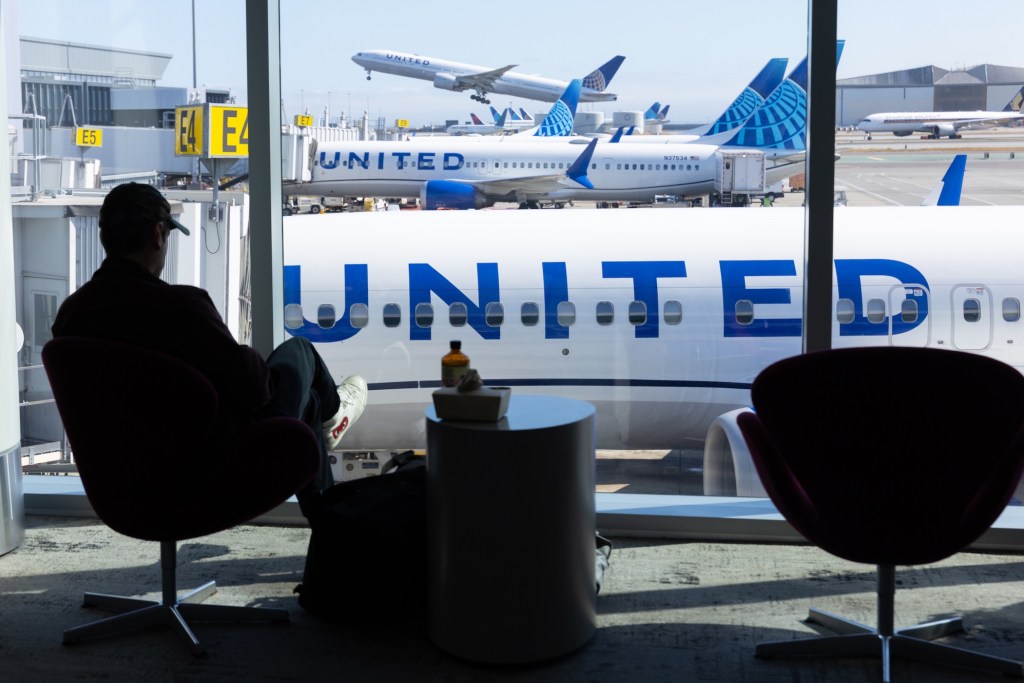
Your AI assistant can find you a flight on United. It just can't buy the ticket anymore.
United Airlines announced Wednesday that it is restricting unauthorized third-party AI agents from booking flights and managing reservations on passengers' behalf, TechCrunch reported. The ban covers United's own website and app as well as bookings made indirectly through travel agencies and aggregators — and the airline has written it into its Contract of Carriage, the document that actually governs your ticket.
The new language is blunt. Rule 6.J.6 adds "the use of AI Agents to make, modify or service a Ticket, and/or to purchase any service or product" to United's list of prohibited ticketing practices, and a separate clause, Rule 5.H, gives the airline the right to cancel reservations made or managed by an AI agent without notice, Simple Flying reported. Bookings completed before November 11 won't be canceled on that basis — but anything after that is fair game.
United's stated reasons are twofold, and both are real. The first is security: "sharing account credentials with personal, third-party, AI assistants can expose sensitive information, and actions taken by these tools may result in unintended purchases, account changes, or use of MileagePlus miles," the airline warned. The second is regulatory: federal rules require a human to complete check-in and acknowledge that their bags contain no banned substances — a declaration an agent can't legally make for you.
The move makes United the first major U.S. carrier to formally draw the line, but it's the third big company in a week to do it. eBay shut the door on AI shopping agents on Tuesday, Amazon blocked agents from its site in September, and Bank of America warned customers last week not to share banking passwords with their AI assistants. The agent economy keeps colliding with the same wall: nobody has figured out who is liable when software acting on your behalf does something you didn't mean.
Not every airline agrees on the answer. JetBlue president Marty St. George told the Skift Commerce Summit that if customers prefer booking through AI tools, airlines should "figure out how to meet them where they are," AI News reported — though JetBlue hasn't actually authorized any agent either. Southwest went the other way entirely, launching a ChatGPT plugin in October built with OpenAI and AWS that lets travelers search flights through the chatbot before finishing the booking on Southwest's own site.
That split is the story. United, eBay, and Amazon are treating unauthorized agents as a security and liability problem to be walled off; JetBlue and Southwest are treating them as a distribution channel to be negotiated with. Agents can still display United's flight options and prices, and aggregators like Kayak, Hopper, and Google Flights keep working — the ban is on the transaction, not the search.
United says it will keep evaluating how personal AI assistants interact with its services, and that no third-party agent is authorized today. Watch whether Delta and American follow — if they do, the agent-booking experiment is effectively over for U.S. air travel until someone builds an authorized path. If they don't, United just handed its rivals a feature: the airline that lets your assistant do the booking.
— via TechCrunch