Tenstorrent, the AI computing company run by legendary chip architect Jim Keller, has closed a $1.5 billion Series E at a $6.2 billion post-money valuation, making it the largest funding round announced in tech today and more than doubling its valuation from its December 2024 round, according to Tech Startups.
The round was led by Trace Capital and Innovation X, with a roster of new and existing backers that reads like a who's who of AI-infrastructure money: ARK Invest, Fidelity, Morgan Stanley, T. Rowe Price, SanDisk, Cadence Ventures, Tether Investments, Eclipse, Protagonist, and XTX Markets, among others.
What's striking isn't just the size — it's the path here. Bloomberg reported in May that Tenstorrent had held takeover discussions with Intel and Qualcomm. Keller told Bloomberg the company decided to pursue funding instead of a sale, and per today's reports, a May demonstration of its Galaxy servers running DeepSeek models at high performance was the turning point that convinced investors the independent route was worth backing.
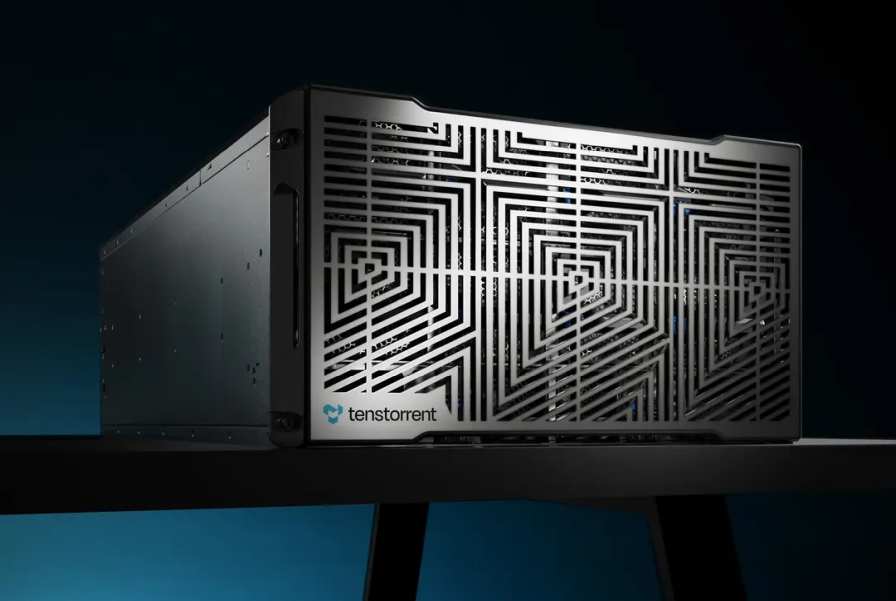
The pitch is Nvidia's moat made explicit and then inverted. Nvidia sells the fastest chips; Tenstorrent sells one architecture at every size — "from a single card or workstation to racks, superclusters, and custom IP," as the company's announcement puts it — built on the open RISC-V instruction set with an open-source software stack, plus licensable AI and CPU IP. Samsung and LG already license its TT-Ascalon RISC-V CPU and Tensix AI cores.
"We built one architecture and sell it at every size," Keller said in the announcement. "The future of compute is open, scalable, and owned by the people building on it."
That "owned by the people building on it" line is doing the heavy lifting. It's aimed squarely at sovereign-compute buyers and large enterprises that don't want their AI infrastructure rented from a closed ecosystem forever — the same demand story driving Japan's reported $21 billion GlobalFoundries fab play and ASML's order book stretching into 2030.
The fresh capital goes to deploying Galaxy servers at scale, serving open-weight models across LLMs and video generation, and expanding the IP-licensing business.
The honest risk: $1.5 billion raises the commercial bar enormously. Keller has the résumé — he architected Apple's A4/A5, AMD's Zen, and Tesla's Full Self-Driving chip — and open compute has the narrative. Now Tenstorrent has to convert both into server shipments and on-prem deployments that compete with an incumbent shipping hundreds of billions in accelerators a year. That is, as ever in semiconductors, the hard part.
— via Tech Startups