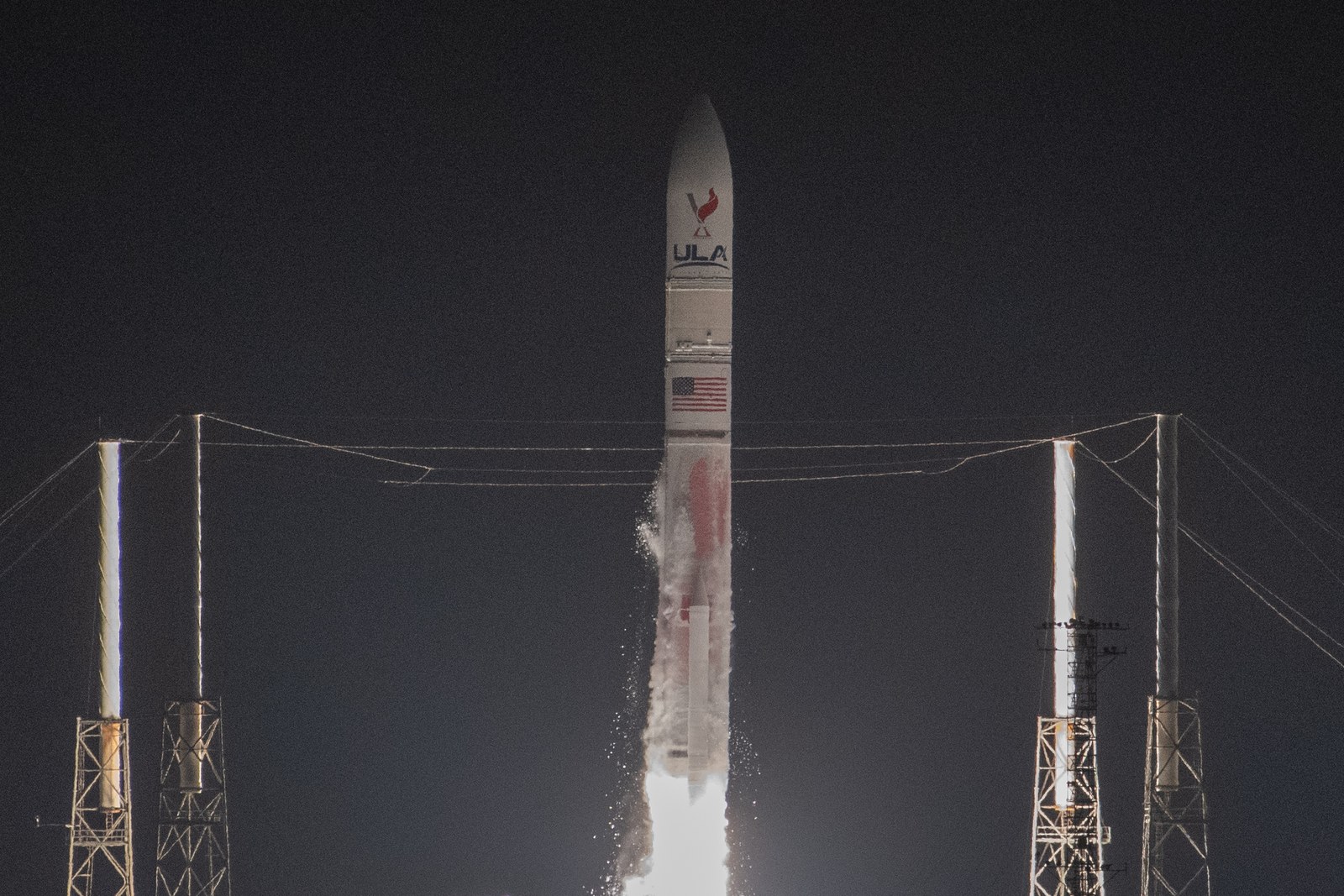
For ten minutes on Sunday, it looked like the comeback was real. United Launch Alliance's Vulcan rocket thundered off pad 41 at Cape Canaveral at 12:40 p.m. ET — in the final minute of its window, on the third attempt in three days — carrying 40 Amazon Leo satellites, the largest batch ever flown. Then, ten minutes in, during the Centaur upper stage's first burn, it failed. Spaceflight Now reports ULA confirmed the failure about 50 minutes after liftoff: the rocket "suffered an anomaly 10 minutes into the flight and failed to deliver the Amazon mission to orbit." All 40 satellites were lost.
It is the first outright mission failure in ULA's 20-year history, ending a perfect record across some 170 launches. And the cruelest part is where it happened. This flight was watched for a repeat of the booster nozzle problem that grounded Vulcan for nine months. The boosters worked fine. The failure came from the Centaur V upper stage, flying its first mission in a new low-Earth-orbit-optimized configuration. ULA has no root cause yet, though outside telemetry suggests the first stage burned long and the Centaur made unusual orientation corrections early in its burn.
It was the third attempt in three days — Friday's died on a nitrogen-plant power failure, Saturday's on a ground-network fault — and Sunday's still held at T-minus 20 seconds on a valve anomaly before squeezing into the window's final minute. Three days of ground problems, and the rocket failed in the air.
For Amazon, the timing is brutal. Leo has 368 satellites in orbit and needs 578 to start service; under its FCC waiver, half of the planned 3,236-satellite constellation must be up by July 2028. This was the first of 38 Vulcan launches Amazon has booked, and Vulcan is now grounded pending an investigation. The next Leo launch is an Ariane 6 flight with 36 satellites, no earlier than November 23. Amazon shares slipped in premarket trading Monday.
The stakes reach beyond Amazon: NASA's Jared Isaacman offered the agency's help — NASA is buying a modified Centaur V for its SLS Moon rocket — and the Space Force still hasn't cleared Vulcan for national security payloads. What to watch: how long the grounding lasts, whether the fault traces to the new LEO-optimized Centaur, and how fast Amazon's backups can pick up the slack.
— via Spaceflight Now