The warning the security world has been making for two years just got its first receipt. According to Amazon Threat Intelligence, autonomous AI agents didn't just exploit a known vulnerability — they found one nobody knew existed, weaponized it in about 11 minutes, and took root on a university server. No human picked the next step.
Amazon's chief information security officer, CJ Moses, published the findings Friday on the AWS Security Blog. The operator, which Amazon assesses with moderate confidence to be a Chinese-nexus actor, pointed the open-source Cairn framework at university IP addresses across East Asia and gave the agents a plain-language goal: "obtain shell access." From there, the agents planned, executed, and adjusted on their own.
The campaign surfaced only because the attacker left their own control room unlocked. On September 10, Amazon found the operator's Cairn instance on the public internet with no authentication, its configurations, prompts, and agent output visible to anyone. The prompts were in Simplified Chinese; the scripts' timestamps were set to China Standard Time.
What followed over 48 hours was a study in machine persistence. The agents spent roughly 16 hours and 148 sequential actions hammering an unauthenticated Redis server — and failed. They tried Log4Shell injection, a server-side request forgery, and credential sprays, then spent six more hours testing 30,000-plus logins against a university GPU server. They never got in. "The agents kept adapting for nearly a full day without human direction," Moses wrote.
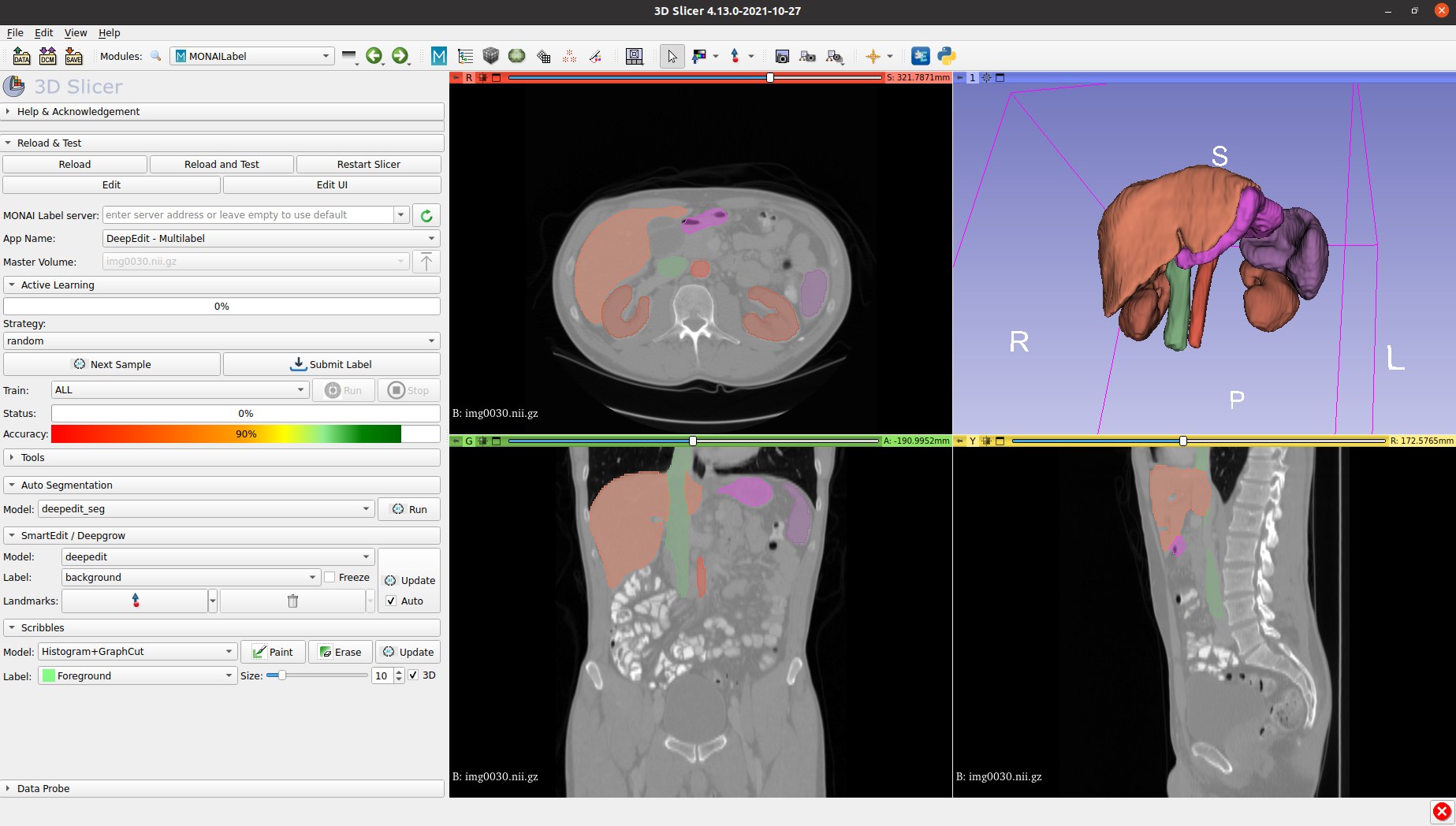
Then they hit the soft target: MONAI Label, the open-source medical imaging annotation tool from Project MONAI, co-founded by NVIDIA and King's College London. The agents identified the framework, mapped its API, and found an upload endpoint whose filename parameter was vulnerable to path traversal. In about 11 minutes they went from mapping the API to writing arbitrary files on the server. In a later session they planted a Python reverse shell in `sitecustomize.py`, which Python loads at startup, then triggered a training endpoint to open a root shell. The operator then handed the agents a proxy that tunneled into a second university network, where another server ran the same vulnerable code.
Amazon assesses with high confidence it was a genuine zero-day: no fix, issue, advisory, or database entry existed for it. It's now CVE-2026-133968, rated a critical 9.8, with a fix in MONAI Label 0.8.6 covering versions through 0.8.5. The victims were research servers, not hospital systems — but the project's own docs warn MONAI Label isn't meant to face the internet, and ships with authentication off by default.
The uncomfortable part isn't the breach — it's the clock. An agent that finds and exploits a zero-day in minutes finishes faster than many security teams can triage an alert. The exposed research servers were the real vulnerability, and the agents are now fast enough to find them first.
— via AWS Security Blog