For the past week, AMD has been the market's answer to Nvidia's China crisis: the chipmaker without the scandal, the safer way to ride the AI buildout. On Thursday, that trade took a hit.
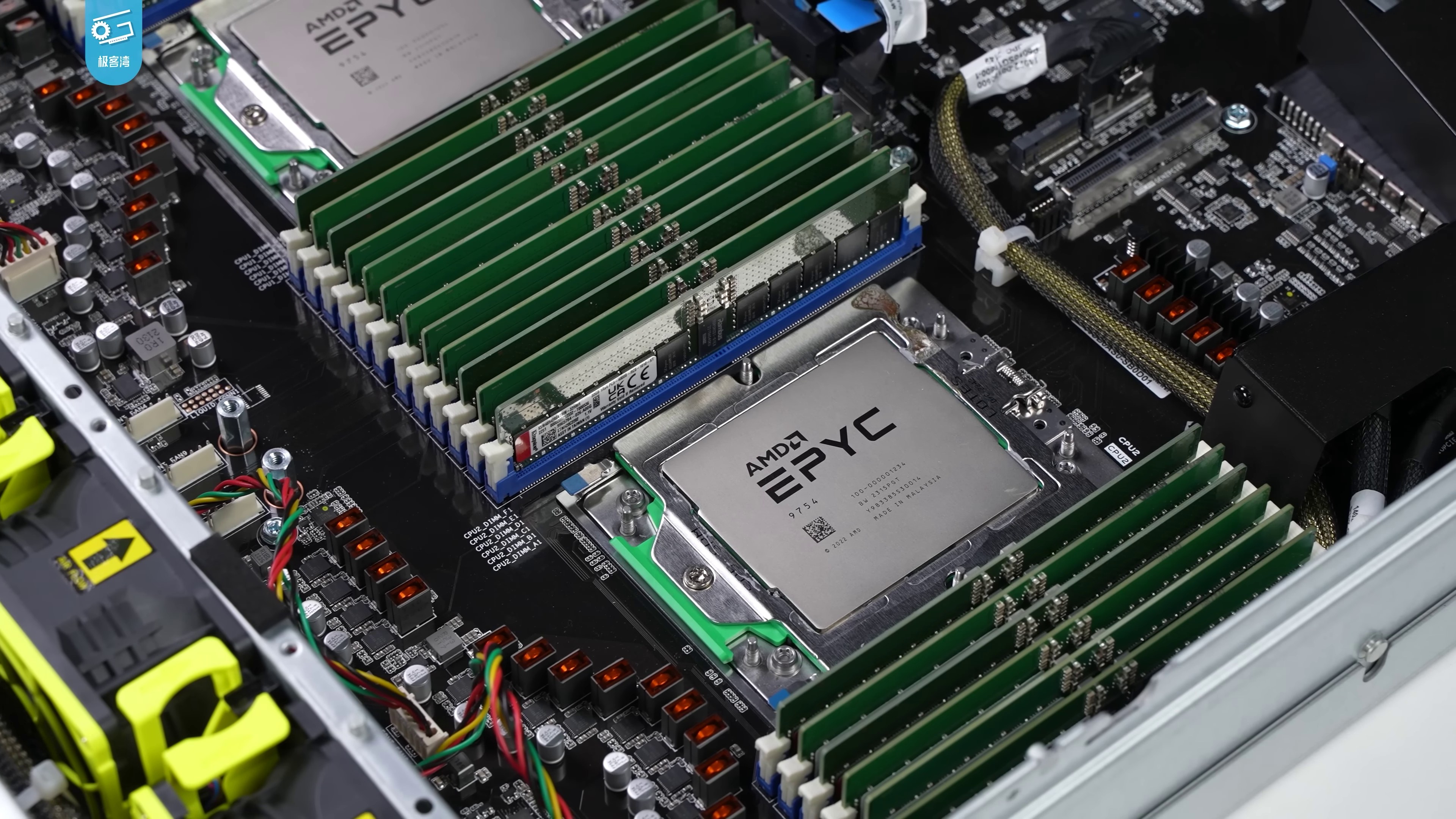
Hunterbrook Media published an investigation, titled "AMD Has Its Own China Problem," alleging that AMD's firmware keeps turning up in servers made by IEIT Systems, a Chinese company the Commerce Department added to its Entity List in March 2025. Since the blacklisting, Hunterbrook says, IEIT has built at least six newer versions of AMD's startup firmware into its own updates, most recently one posted October 19 for AMD's Turin EPYC platform. The same firmware, 99.94% identical, appears on the sites of three companies Hunterbrook ties to IEIT — Maginfra in China, Kaytus in Singapore, and Aivres in California — suggesting the blacklisted company's servers are being sold under other names.
The report is careful about what it does not prove. Hunterbrook says it doesn't know how IEIT obtained the code, or whether AMD or anyone else held a license to supply it, and that its findings don't establish that AMD violated export controls. AMD, which did not answer Hunterbrook's questions before publication, told Reuters the claims "misrepresent AMD's business practices and relationships" and that it "complies with applicable US export control laws and regulations." One important caveat the market priced in anyway: Hunterbrook's affiliated fund disclosed it is short AMD.
The timing is what made the report land. It arrived the same day a new Commerce rule took effect requiring licenses for advanced chips shipped to Singapore, Malaysia, Indonesia, Thailand, and Brazil — and AMD billed $4.28 billion to Singapore alone last fiscal year, plus $7.75 billion, or 22.4% of revenue, to China and Hong Kong. A separate rule that would extend Entity List restrictions to companies at least 50% owned by blacklisted entities is suspended until January 10, 2027. If it takes effect, Kaytus and Aivres could fall under it too.
AMD's stock fell as much as 11.2% intraday before closing down roughly 8%, erasing part of a run that had lifted shares about 45% in five sessions through November 12, when Jensen Huang's resignation made AMD the consensus winner of Nvidia's troubles. A second Hunterbrook-owned publication, The Bear Cave, published a separate report the same day alleging circular financing in AMD's customer deals — a claim the company has not publicly addressed.
What to watch: whether Commerce or Congress picks up the firmware thread, as it did with Nvidia's China sales; whether the January affiliates-rule deadline holds; and whether AMD discloses any licenses covering IEIT. The pitch that AMD was the clean alternative to Nvidia just got its first real stress test.
— via Hunterbrook Media