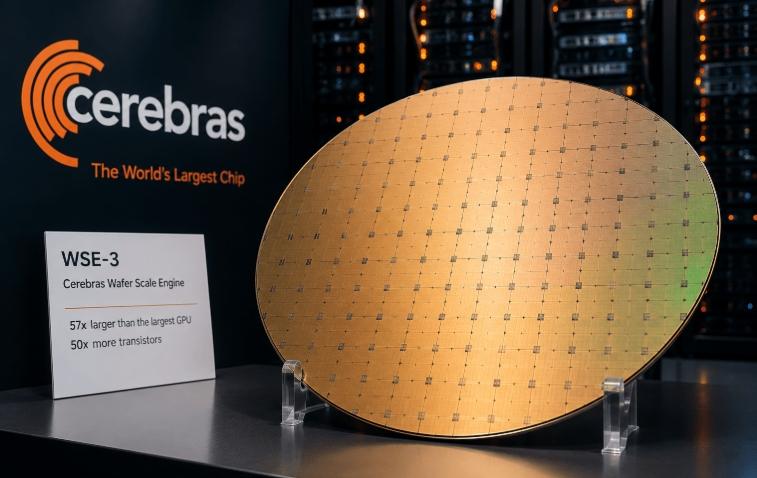
Cerebras Systems just landed Microsoft as a customer, and the same earnings call explained why its biggest deal is late: not because of chips, but because there is nowhere to plug them in.
The AI chipmaker said Thursday it signed "an important cloud deal with a top three hyperscaler," and chief executive Andrew Feldman told CNBC the customer is Microsoft, which signed in October. Revenue from the deal should start showing up in the first quarter of 2027. Microsoft joins Amazon Web Services and Oracle on Cerebras' customer list, giving the wafer-scale challenger the full set of cloud giants it needs to be taken seriously as a Nvidia alternative — at least for inference.
The numbers backed it up. Third-quarter core revenue rose 70% to a record $230.9 million, beating the $214.7 million analysts expected, according to WebProNews. Cloud and other services brought in $144.9 million — about 63% of the total — while hardware revenue slipped to $86 million. Cerebras raised its full-year outlook to $940–960 million and guided fourth-quarter core revenue to $310–330 million, both above estimates. Shares jumped about 17% in extended trading and closed Friday up 11%.
But the same call carried the week's real story. Cerebras is behind on deliveries to OpenAI under a 750-megawatt take-or-pay deal worth more than $20 billion — and Feldman blamed industry-wide shortages of land and electricity, not chip manufacturing. Service credits for undelivered capacity began accruing on October 1, per the company's quarterly report, and Feldman said Cerebras lacked the capacity to support a broad rollout of OpenAI's Ultrafast tier. The company has 700 megawatts of data center capacity under contract for delivery by the end of 2027, including new sites in Norway and Finland, against $26.1 billion in remaining performance obligations.
The power bottleneck is the thread running through the whole week: SoftBank just wrote off $3.7 billion on gas turbines it reserved for AI data centers, and Anthropic bought its own power plant. The industry spent two years fighting over who has the best silicon. The fight now is over who can get a building, a grid connection, and a turbine in time.
Feldman still sees an opening in Nvidia's long GPU lead times — "long lead times in GPUs and more expense creates opportunity for us," he told CNBC — and Cerebras expects to triple revenue in 2027, with its next-generation CS-5 system targeted for early summer. What to watch is whether the company can convert a $26 billion backlog into delivered megawatts faster than its customers' patience runs out.
— via WebProNews