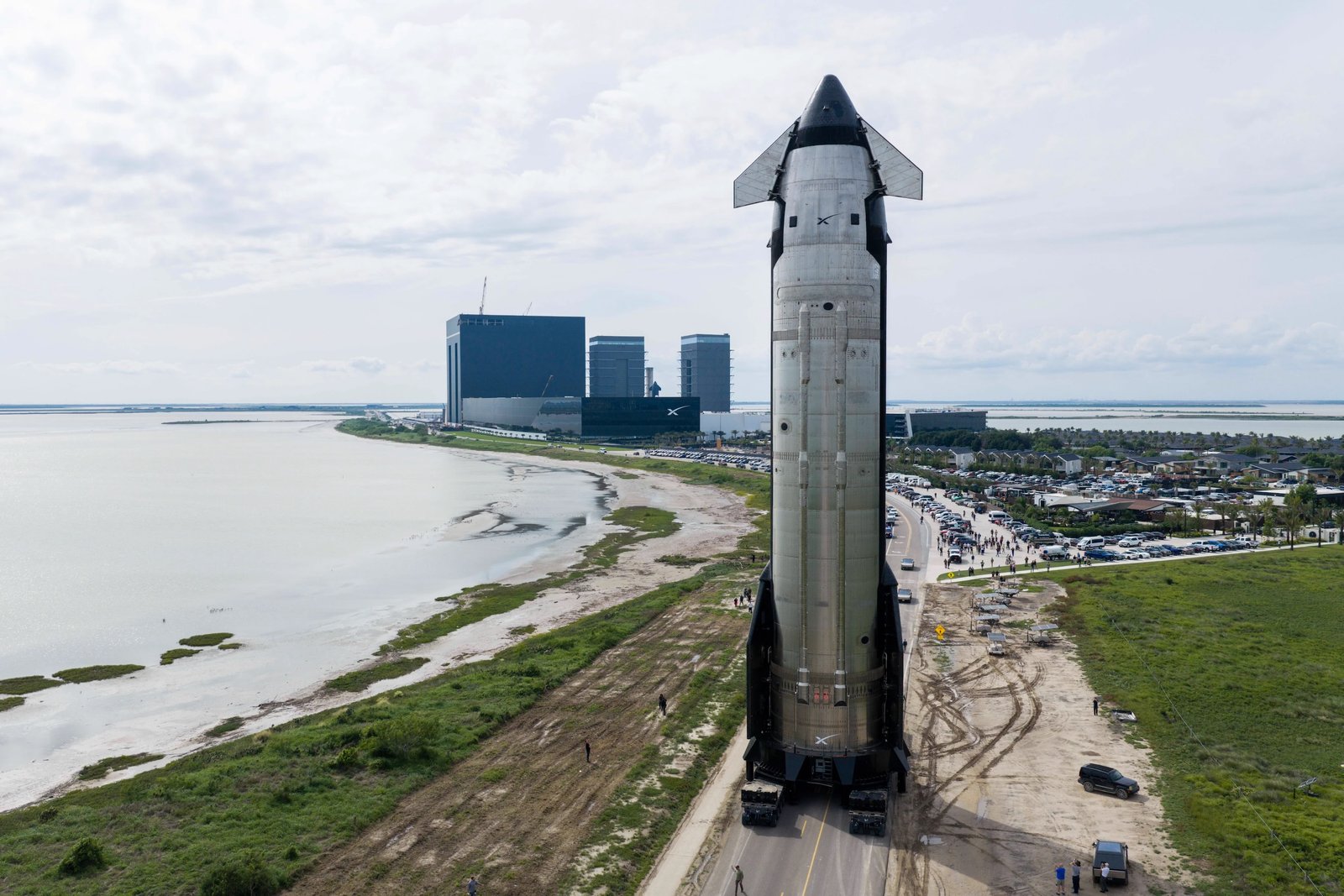
The last piece of paperwork landed with hours to spare. The Federal Aviation Administration issued the launch licence for Starship Flight 15 on Friday afternoon, according to Scientific American, clearing SpaceX to attempt something no orbital rocket has ever done: catch both of its stages in a single flight. The 75-minute window opens at 5:45 p.m. ET from Starbase, Texas.
That is a genuine change of fortune from this morning. Reuters reported that as of Friday morning SpaceX still hadn't received the licence, and the FAA didn't respond to a request for comment. By the afternoon, the watch was over.
The licence was the only thing standing between the plan and the pad. Booster 22 will try to fly back to the launch tower's mechanical arms about six minutes after liftoff — a catch SpaceX has already pulled off with the booster. The hard part comes roughly 22 hours later: Ship 42 will deploy 26 next-generation Starlink V3 satellites, circle Earth about 14 times, then attempt the first-ever catch of an upper stage, expected around 4:15 p.m. EST on Saturday.
If both recoveries succeed, SpaceX will have demonstrated a fully reusable orbital rocket — the capability the entire Starship program is built around. Starship is central to SpaceX's plan to loft Starlink satellites in far larger batches than the Falcon 9 can manage, and to its ambitions for orbital data centers. Musk has projected roughly one launch a week by the first half of 2027, a cadence that is impossible if either stage has to be rebuilt after every flight.
The stakes reach past SpaceX: a modified Starship is NASA's planned moon lander for Artemis, which aims to return U.S. astronauts to the lunar surface before the end of 2028. Before that, Starship still has to prove in-space refueling — a round trip to the moon needs more fuel than one Starship can carry — and tonight's flight is the step that makes the rest of the schedule plausible.
Friday was supposed to be a two-rocket day, but ULA scrubbed Vulcan this morning, pushing Amazon's Leo satellites to Saturday. The evening belongs entirely to SpaceX — and now the paperwork does, too. Watch the booster catch just after 5:50 p.m. ET tonight, and the ship's homecoming Saturday afternoon. If both stages come home, the next question isn't whether Starship can fly again. It's how fast.
— via Scientific American