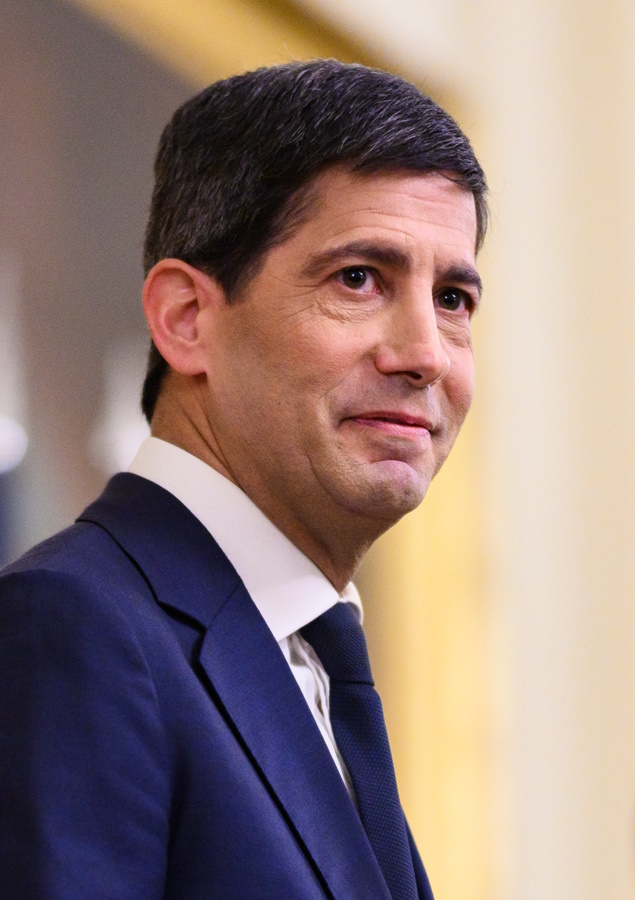
The Federal Reserve's chair just put the AI boom on a two-way fork, in public, on the record. Kevin Warsh opened the Fed's Productivity and Jobs Task Force conference in San Francisco on Monday by calling artificial intelligence "super intelligence" — President Trump's preferred term — and said the technology could prove distinct from earlier ones as a force to "supercharge idea generation." Then he laid out the two ways it ends.
In the good version, Reuters reports, AI leads "to an increase in productivity and economic gains that are shared broadly across labor and the owners of capital. In that event, real GDP growth rises persistently above its long-run average, and the US stays close to full employment." In the bad version, the risks — higher unemployment and the use of AI by "bad actors" — could be "highly disruptive and economically costly," and the economy slows if the investment returns the boom is priced on prove disappointing.
Warsh, who has argued that AI-driven productivity could let the economy grow faster without generating more inflation, was careful to claim neither side. "Our role in all this is neither advocacy nor opposition," he said. "Our responsibility is to recognize that the widespread adoption of this technology will have significant impact on the economy, with important implications for monetary policy down the road. The big questions are about magnitude, scope, and timing." And: "Our job is to prepare for whatever comes next."
The setting matters as much as the words. This was the first major public event of one of the five task forces Warsh set up after taking office in May, and its findings go to the rate-setting committee by year-end. He spent the day moderating panels with Stripe co-founder Patrick Collison, Palo Alto Networks chief Nikesh Arora and Affirm chief Max Levchin, closing with venture capitalist Marc Andreessen and former Commerce Secretary Gina Raimondo — the Fed chair effectively running a Silicon Valley listening tour from the central bank's chair.
The timing is no accident either. The Fed's own Financial Stability Report, released Friday, found 87% of market contacts now name AI a major risk to the financial system, up from 50% in the spring and 30% a year ago. Markets are fully priced for a quarter-point rate hike on December 8–9, and the week ahead stacks Nvidia's first post-Huang earnings on Tuesday against Anthropic's expected IPO pricing on Wednesday. Warsh offered no guidance on rates — he has said he doesn't believe in forward guidance absent a crisis — but he has now told the market, in his own voice, what the Fed is actually watching: not whether AI works, but whether the money pouring into it ever comes back.
— via Reuters