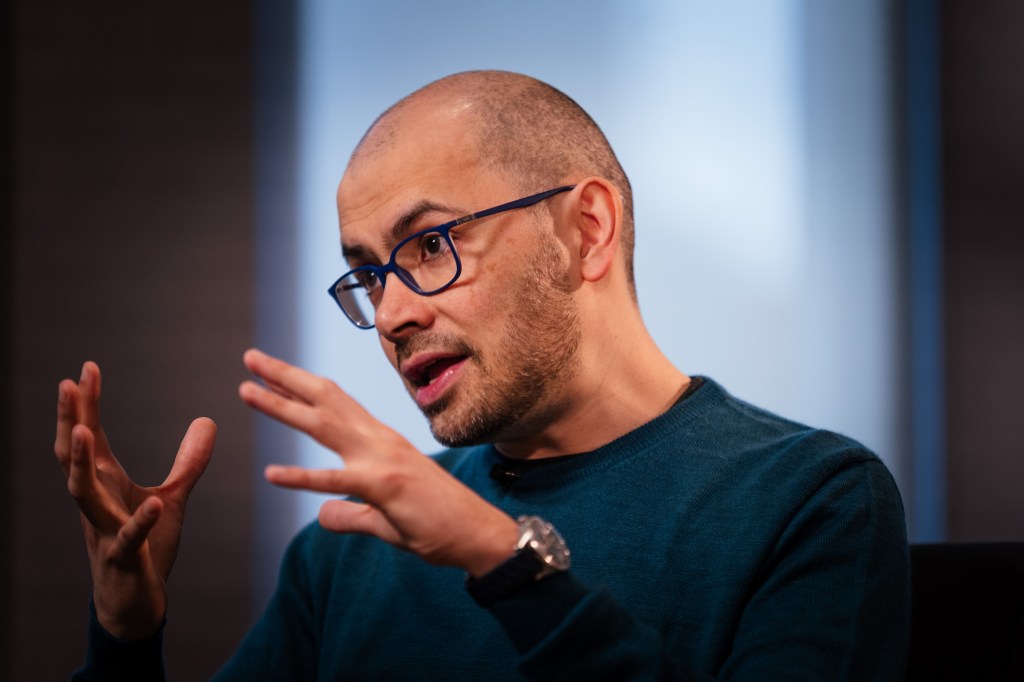
Demis Hassabis just raised the biggest bet yet that AI can design real medicine. His drug-discovery company, Isomorphic Labs, has closed a $5 billion Series C, according to TechCrunch — money earmarked not for more demos, but for taking the lab's own drug candidates into clinical trials.
The round was co-led by Greenoaks and Sequoia Capital, with Andreessen Horowitz joining as a new investor and every existing backer — Alphabet's GV and CapitalG, Thrive Capital, MGX, Temasek, and the U.K. Sovereign AI Fund — piling back in. It follows a $2.1 billion Series B just six months ago, in May, and it is Isomorphic's first fundraise since Hassabis stepped down as DeepMind's chief executive to focus on drug discovery full time.
Isomorphic builds an AI drug-design engine that runs simulation models across chemistry to design molecules from scratch, building on DeepMind's AlphaFold — the protein-folding breakthrough that won Hassabis and John Jumper the Nobel Prize in chemistry. The company says its program has produced "positive preclinical results" in oncology and immunology, and it already has deals with Eli Lilly, Novartis, and Johnson & Johnson. It did not disclose its new valuation; Bloomberg reported earlier this month that the lab was seeking a raise at around a $50 billion valuation.
The size of the check is the story. Drug discovery is where AI's grandest promises go to be tested — designing a molecule on a computer is the easy part; getting one through human trials is where most candidates die, expensively. A $5 billion war chest buys Isomorphic the runway to fail in public, in the clinic, and keep going. It also buys time: unlike the pharma giants it partners with, Isomorphic doesn't have a marketed drug funding the next experiment.
Watch what comes next: which candidates enter trials first, and whether the oncology and immunology programs that produced those preclinical results hold up once patients are involved. If they do, the drug industry's timeline — a decade and billions per drug — starts to look negotiable. If they don't, $5 billion buys a very expensive lesson in how far simulation gets you.
— via TechCrunch