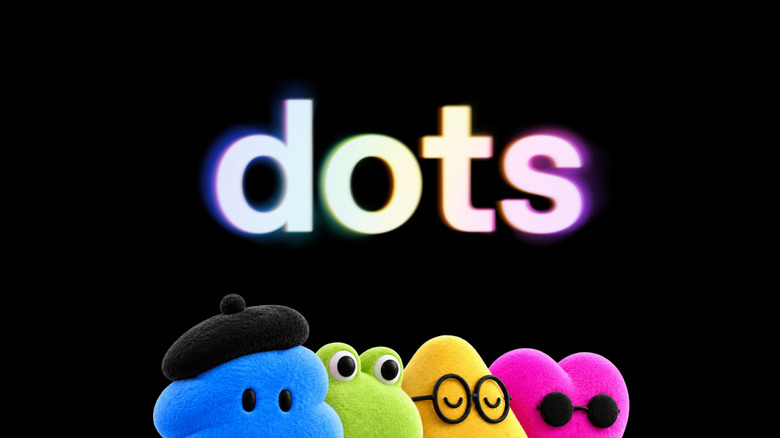
OpenAI is done waiting for you to open its app. On Wednesday the company began rolling out texting for Dot, its proactive personal AI agent, letting users hand it tasks over plain text messages — and letting the agent text them first with updates.
The preview is limited to US ChatGPT Pro subscribers for now, Engadget reports. Setup runs through the Dot's profile inside ChatGPT — tap "Texting," then reach the agent over iMessage on iPhone or RCS on Android. You can send text, photos, and voice notes, and Dot keeps its memory and plugins across channels, so a conversation started in the app carries straight into the Messages thread.
By popular request, you can now text your dot.
>
Give it a task to take off your plate or something to keep an eye on, using text, photos, or even voice notes. It will text you proactively with relevant updates.
>
— ChatGPT (@ChatGPT), October 28, 2026
The move is OpenAI's answer to the obvious flaw in the agent pitch: a proactive assistant that lives in an app you have to open defeats its own purpose. An agent watching for flight price drops or tracking a work thread makes far more sense as a text thread than as one more push notification. Riding on the default Messages app also gets Dot onto surfaces OpenAI could never build for — including, in principle, the Apple Watch — without writing a line of OS code.
It also draws a sharp architectural line against the competition. Anthropic launched Claude Duet last week as a standalone app you must deliberately join a waitlist for; OpenAI is embedding its agent in infrastructure you already use. One treats the agent as a destination, the other as a contact.
The trade-offs are worth stating plainly. OpenAI routes the texts through a third-party provider called Linq, and Techstrong reports the conversations are not end-to-end encrypted — "you're the only one who can text your dot" is a policy promise, not cryptography. OpenAI says enabling the feature grants Dot no access to your other conversations, but that, too, is a company statement rather than something independently verified. And Dots remain a Pro-tier feature — Plus subscribers don't get them at all.
The deeper play is distribution. Every assistant that lives in Messages trains users to treat texting as the default interface for AI — on the device, on the watch, over voice. Whoever owns that thread owns the next OS layer.
— via Engadget