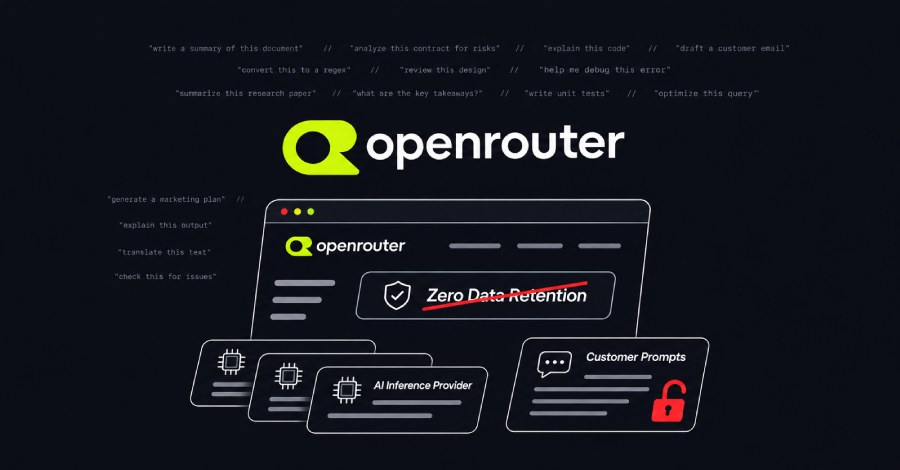
OpenRouter, the AI gateway routing customers' requests to third-party providers, cut three providers from its platform today and stripped 125 endpoints of Zero Data Retention eligibility — after researchers showed customer prompts, including ones marked never to be stored, had been copied for months.
The trigger was canary research from security firm Dragos, which hid unique fake secrets in about two million prompts from July to November. Three hosting providers turned out to be breached, the earliest since mid-July, and none knew until told, according to The Hacker News.
The largest breach was brazen. A couple hundred planted AWS keys were each sent in exactly one request during a few short windows in late October — and every request in those windows was stolen, even ones rejected before a model ran, meaning the attacker copied traffic on arrival. The thief used the keys within hours, driving tens of thousands of AWS calls. "A privacy flag doesn't help when the attacker is already inside," wrote HD Moore, Dragos's chief research officer.
The second finding needed no break-in: sellers on an inference marketplace listed models at the lowest prices, enabled request logging and collected what flowed through. An unnamed Chinese AI lab fetched the secret links from more than half of the seeded prompts sent to its models — including about two-thirds of those marked no data collection or Zero Data Retention.
Phala says an attacker took control of an inference server; DeepSeek V4 Flash requests routed through OpenRouter from October 21 to November 8 should be treated as exposed — rotate every secret. Together AI says June–July prompt samples were downloaded after an AI coding agent committed a credential to its public GitHub repository. Novita says a routing issue sent some MiniMax requests to MiniMax's official API between May 28 and November 11. Neither Dragos nor OpenRouter has named the three breached providers or the three removed, or said whether they are the same three.
OpenRouter says the findings showed no breach of OpenRouter itself, and it has notified all potentially affected customers; it will run the checks continuously. The lesson is what a privacy setting can actually promise: Zero Data Retention binds the first hop, and says nothing about who is already inside the company behind it. Moore's advice: pick your upstream providers yourself, avoid reseller marketplaces, and self-host if a prompt truly can't be read by anyone else.
— via The Hacker News