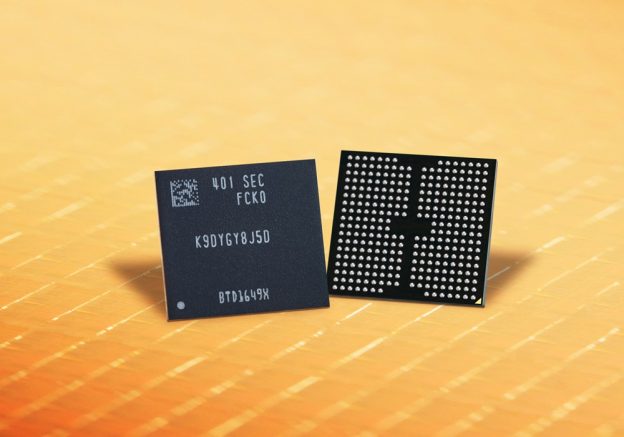
The memory shortage has a new answer, and it comes with a one-year wait. Samsung plans to raise production of its ninth-generation V-NAND flash fivefold at its second fab in Xi'an, China, from about 10,000 wafers a month to roughly 50,000, according to Seoul Economic Daily, citing industry sources. The expansion, corroborated by TrendForce, is aimed squarely at the enterprise solid-state drives going into AI data centers.
The chip in question, V9, is Samsung's most advanced NAND: 286 layers, about 50% denser than its predecessor and a third faster on input/output, up to 3.2 gigabits per second. It is already shipping inside Samsung's PM1763 enterprise SSD, which entered mass production in July. Yields have reportedly climbed into the low 90% range, up from the low 80s on the previous generation — the kind of improvement that turns a scarce chip into a profitable one.
NAND demand for enterprise SSDs is projected to jump 55% next year after surging 84% this year, according to TrendForce, with enterprise drives climbing to 57% of all NAND demand. Samsung already leads that market with a 35.1% revenue share, ahead of SK hynix at 21.1% and Micron at 17.1%. A fivefold output increase is a move to make that lead permanent.
But the timeline is the story. Equipment for the new electroplating line is not due until around February, and the conversion — all added capacity dedicated to V9, plus 20% to 30% of the fab's older V6 lines switched over — is not targeted for completion until November 2027. For the next year, the shortage that has server makers raising prices and warning about margins stays the same shortage. Dell reports after the close tonight, and the memory bill is the first thing investors will ask about.
There is also a geography question over the plan. The new capacity sits in Xi'an, China, and Samsung has said the upgrade complies with U.S. export regulations and involves no new facilities — a mix shift inside an existing fab, not a bigger footprint. SK hynix is making a parallel move, reportedly upgrading its Dalian plant from 192-layer NAND to at least 240 layers, as both Korean memory makers race China's Yangtze Memory Technologies. The AI storage boom is now a fab-conversion race, and the winner is whoever's lines are running when the demand peaks.
— via TrendForce