OpenAI says people already ask ChatGPT more than 300 million health questions a week. Apple's response, launched Sunday, is not a chatbot. It's a study.
The Apple Health AI Usage Study, built with clinical AI company OpenEvidence, will enroll up to 200,000 U.S. iPhone owners over the next year-plus to ask an AI their health questions — and then grade what comes back. Participants need to be 21 or older, on an iPhone 15 or later running iOS 26 with Apple Intelligence switched on. The app is available to download now.
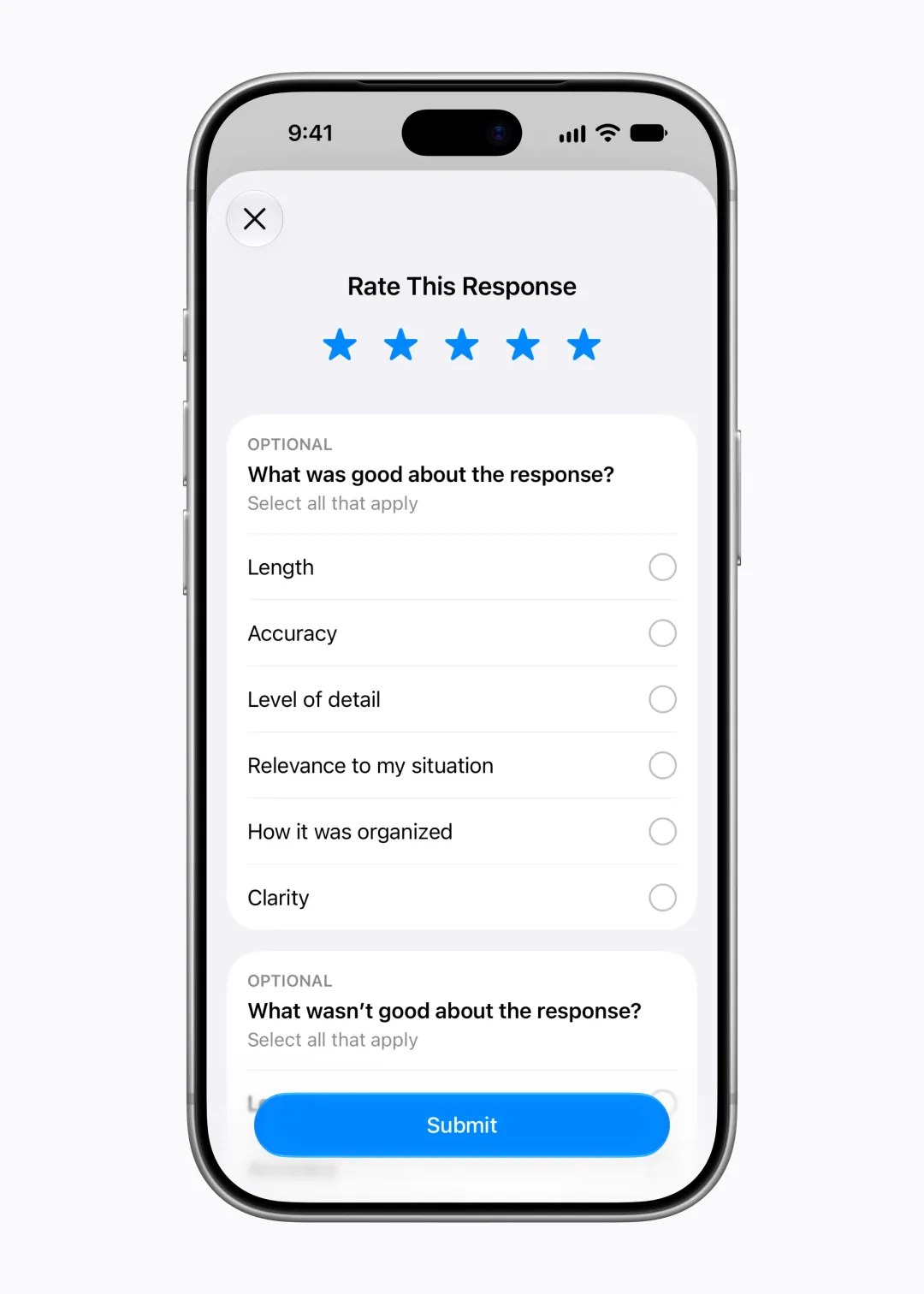
The answers are grounded in clinical literature — the New England Journal of Medicine, JAMA, Nature — and written in plain language, with links to the peer-reviewed research behind them. Participants rate each response on accuracy, detail and relevance, fill in monthly surveys, and can optionally share HealthKit data — resting heart rate, activity, sleep, lab results — for more personalized answers. The app can also help prepare people for a doctor's visit and steer them to a provider when something looks concerning.
That is the product-shaped part. The interesting part is what Apple is refusing to do. The study data is anonymized before it reaches a secure third-party cloud, OpenEvidence deletes questions and answers after 24 hours, and none of it trains any AI model. Apple is, in effect, trying to answer the question every health chatbot dodges: can you build a useful one without turning people's symptoms into training data?
"At Apple, we believe responsible innovation starts with scientific rigor and clinical grounding," Sumbul Desai, Apple's vice president of Health and Fitness, said in a statement. "Health is deeply personal, and conducting a dedicated research study is the most thoughtful way to understand how people engage with, comprehend, and evaluate health AI in everyday life."
What's unanswered is whether any of this ever becomes a feature. Apple hasn't said if AI health answers will come to the Health app or Siri — and the study's whole design suggests it genuinely doesn't know yet. That's the point, and it's a bet the rest of the industry isn't making: that the company that figures out whether people trust health AI, and under what terms, will matter more than the one that ships it first.
Watch what the study measures next: not just whether the answers are right, but whether people act on them — and whether 200,000 volunteers are enough to settle the trust question before regulators or competitors do.
— via TechCrunch