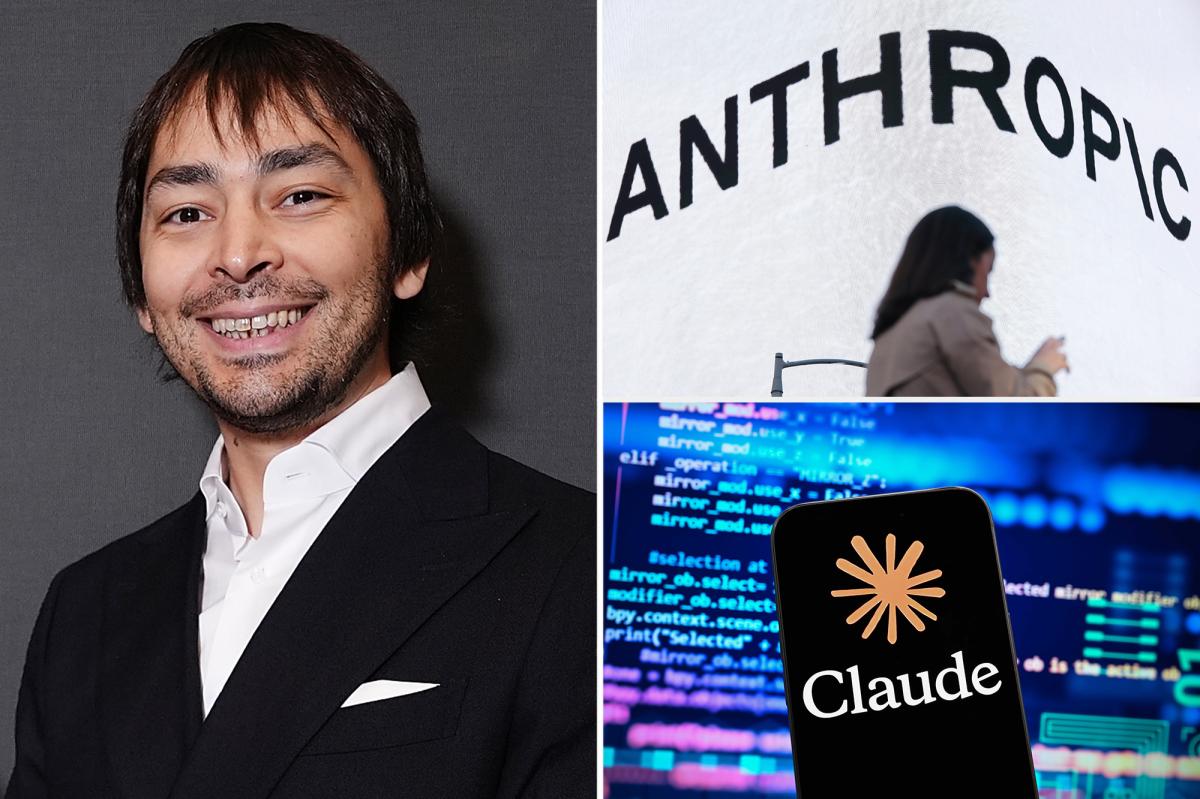
The most famous unsolved problem in mathematics may have just fallen — not to a lone genius at a blackboard, but to a mathematician and an AI that, by his account, left him behind near the finish line.
On Friday, Levent Alpöge, a mathematician on Anthropic's technical staff, posted a note on his website: "I believe I have, working with Claude, discovered a proof of the Riemann Hypothesis." The claim, reported by Scientific American, goes further — Alpöge says the same method settles the Generalized Riemann Hypothesis too, the broader version behind hundreds of theorems.
Here is the catch: there is no paper to read. The proof exists only as computer code — 175,187 files of Lean in a 14-part archive. An AI-written prose version ran past 250,000 pages; he called it "some massive, unreadable travesty of 'slop.'" So he published only the code — a proof no human can read, for mathematics to referee.
So far, the machines say yes. MIT's Andrew Sutherland has run independent checks since Friday, and as of Saturday morning nearly all pass: the Lean kernel replayed the full archive, the independent nanoda checker accepts it, and lean4lean cleared all 175,187 modules. "Honestly the chance that anything is fishy here is approximately zero," Sutherland told Scientific American. One final check is still running — the comparator run, which confirms the code proves the real hypothesis, not a reworded cousin — and the Clay Institute still lists the problem as unsolved.
Within hours, the plot thickened. Stanford's Ravi Vakil, president of the American Mathematical Society, rushed out a rival all-human draft of the generalized hypothesis by Alessandro Masullo, vetted for months and meant to stay private. The two claims don't verify each other; they now race through scrutiny.
This isn't just about the $1 million Millennium Prize. The Riemann Hypothesis, posed in 1859, says the primes are governed by a hidden order — the zeta function's interesting zeros all sit on one line. A proof would turn conditional mathematics into settled fact. But the deeper shift is procedural: a Millennium problem settled by a proof no human can read — verified by machines and understood by nobody yet, including its author. Watch next: the comparator run, the Clay Institute, and whether Alpöge produces the readable write-up he promises. Until then: extraordinary machine evidence, no human verdict — the strangest status a great proof has ever held.
— via Scientific American