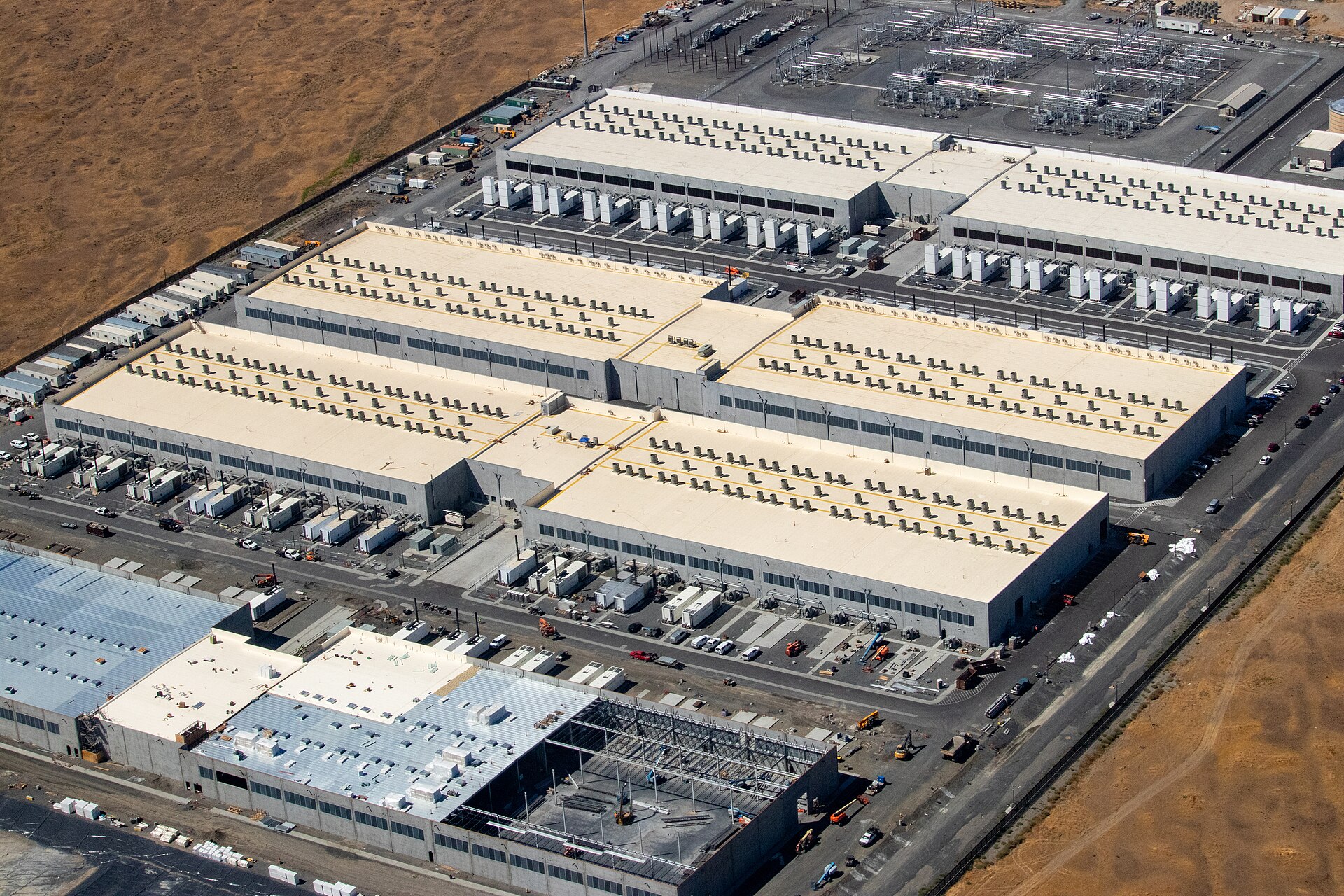
The AI boom's electricity bill finally has a number on it, and it looks like a country. America's 403 largest data centers emitted 25.7 million metric tons of carbon dioxide between May 2024 and April 2025 — roughly what Denmark emits in a year — according to a Harvard-led study published Monday in Nature Sustainability, as reported by Reuters.
The scale is the story. The facilities used an estimated 82 terawatt-hours of electricity over the year studied — about 1.8% of all U.S. electricity, enough to power nearly 7 million homes — and more than half of it came from fossil fuels: 38.2% natural gas and 15.2% coal, against 20.9% nuclear and 25.3% renewables. The carbon intensity of the power they drew, about 545 grams of CO2 per kilowatt-hour, ran roughly 48% above the U.S. grid average. The emissions total is two to three times the last peer-reviewed estimate, from 2018 — and the industry has only grown since.
What makes the study different is that it counts buildings, not press releases. Lead author Gianluca Guidi and colleagues at the Harvard T.H. Chan School of Public Health and the Harvard Data Science Initiative verified 403 hyperscale sites from satellite imagery, then used EPA grid data to attribute emissions facility by facility — because operators almost never disclose how much power a given data center actually draws. "Data centers are growing incredibly fast, driven largely by AI, and decisions about where to build them and how to power them are being made right now," Guidi said in Harvard's announcement. "But there's very little facility-level information about their environmental footprint."
And the headline number is almost certainly an undercount. The study period ended in April 2025, and as Guidi put it, "the data center boom hasn't slowed down since our study period ended in April 2025. New facilities have been built, existing campuses have expanded, and demand for AI computing continues to grow." Another 272 candidate sites were left out for lack of verifiable data, on-site generation like the gas turbines at xAI's Memphis campus falls outside the sample, and the researchers couldn't separate AI workloads from ordinary cloud computing.
The timing matters politically as much as environmentally. The study lands two weeks after the midterm elections, in which data-center critics running on construction moratoria and tougher regulation were among the biggest winners, and two weeks after Ohio voters banned new data centers outright. Four states — Virginia, Oregon, Ohio, and Iowa — account for more than half of the electricity use studied, and about a quarter of it sits on grids dirtier than the national average. Senior author Francesca Dominici's next step is the part the industry will like least: quantifying the health effects, since the fossil plants feeding these campuses also emit fine particulate matter, nitrogen oxides, and sulfur dioxide that fall on the people living downwind.
Watch the other side of the same equation tonight: Nvidia reports third-quarter earnings after the close, its first under interim CEO Colette Kress. Every new GPU it ships is demand for exactly the kind of power this study just measured.
— via Reuters