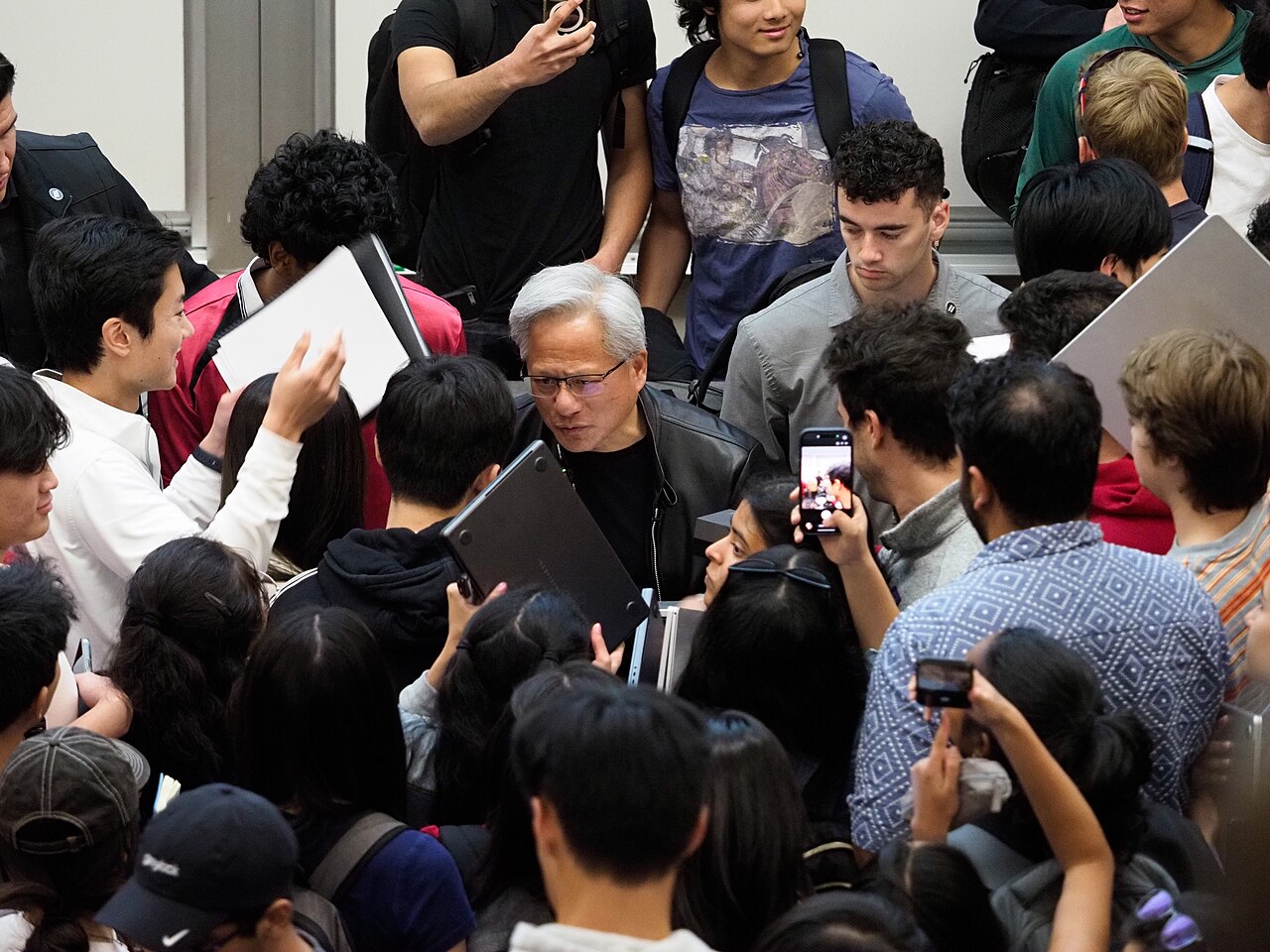
Jensen Huang's resignation was reported as a CEO scandal. The more consequential story is what walks out the door with him: the man who personally financed the AI boom. Huang, according to CNN, turned Nvidia from a chipmaker into what Seaport Research analyst Jay Goldberg calls "the central bank of AI" — the backer of last resort for the data centers, startups, and neoclouds that buy its chips.
In August, Huang committed $105 billion to an OpenAI data center, then gathered six Wall Street giants — Apollo, BlackRock, Blackstone, Brookfield, Goldman Sachs, and KKR — to treat Nvidia's AI infrastructure as an asset class to write debt against, aiming to mobilize more than $500 billion. It isn't finalized; Goldberg expects additional review — and possibly a collapse. Bloomberg has reported it has yet to close a single deal since August.
That is the circular part of the AI economy: Nvidia invests in the companies that buy its chips, then guarantees their revenue so lenders fund them cheaper. It holds a major stake in neocloud CoreWeave; when CoreWeave's bond yields spiked in October, the panic only calmed after Huang told Bloomberg he was "optimistic," and the stock rallied 6% that day. Nvidia is also expected to take a roughly $10 billion stake in Anthropic's IPO next week. Nvidia's own filings acknowledge the exposure: its commitments and guarantees "expose us to financial, counterparty and execution risks and may not provide anticipated benefits."
Interim CEO Colette Kress, Nvidia's CFO, is far more conservative by reputation — The Information has reported she repeatedly objected to deals Huang pushed. "Jensen's successor will not have the same latitude or deference to pursue circular deals," JonesTrading strategist Mike O'Rourke told CNN. Baird's Ted Mortonson put it more bluntly: "He was not only the chief technology architect … but he was also the capital allocator."
The boom doesn't stop on a resignation: demand is real — Anthropic's third-quarter revenue soared more than 1,000% year over year — and existing agreements don't evaporate. But as Rosenberg Research's David Rosenberg wrote, "the risk is less about chip demand than about the money." The weakest links are the borrowers who depend on Nvidia's support. The next test comes fast: Nvidia reports earnings Tuesday, its first under Kress, and Anthropic prices its IPO the day after — both will show whether the financing machine keeps running without the man who built it.
— via CNN