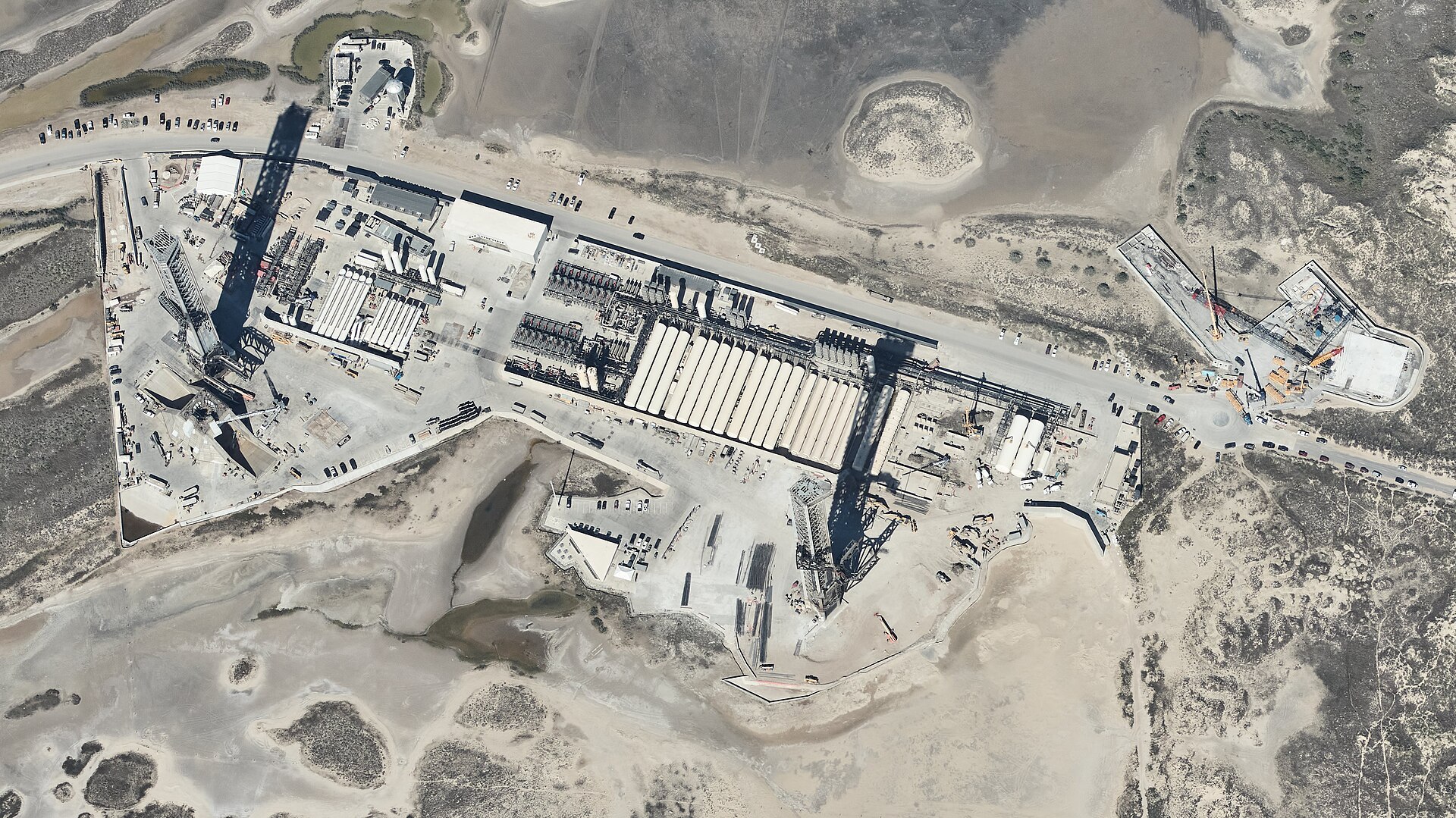
On the same day its Starship sat on the pad waiting for the FAA to sign a launch licence, SpaceX announced the number that says where the company is really headed. According to Reuters, SpaceX plans to invest more than $74 billion in two AI supercomputing campuses — over $24 billion at its Starbase site in South Texas and roughly $50 billion in Cochise County, Arizona.
The split tells you how SpaceX thinks about power. The Starbase campus, on about 444 acres near the Port of Brownsville, will generate its own electricity — a gas-fired plant, off the Texas grid — and SpaceX says it has already created more than 3,000 construction jobs there, with 500-plus permanent roles once it runs. The Arizona campus goes the other way: up to 6 gigawatts at full buildout, built with local electric cooperatives, dry-cooled with no planned industrial groundwater use, and pitched as a deal that could cut co-op members' power bills by up to 20%. It would bring about 5,500 construction jobs and 1,000 permanent ones.
Neither site is a done deal. The Arizona campus still needs county approval, and a petition with 2,400 signatures is asking officials to deny the permit ahead of a public hearing in December. In Texas, the Starbase City Commission votes December 9 on a property-tax abatement.
Here is the number that reframes the whole announcement: SpaceX's AI segment generated more than half of its third-quarter revenue, Reuters reported. The company that went public in June as a rocket business is now, by revenue, mostly an AI business — one that rents out GPUs, sells Grok to enterprises, and is building its own compute at a scale that rivals the hyperscalers.
That is also why the $74 billion deserves a skeptical read. SpaceX has not said which accelerators will fill the buildings, or when either campus comes online — and it is not clear how much of the figure is new money versus commitments already in motion. What is clear is the direction: the rockets still make the headlines, but the balance sheet now answers to AI. Watch December 9, when both the Texas abatement vote and the Arizona hearing land on the same day.
— via Reuters