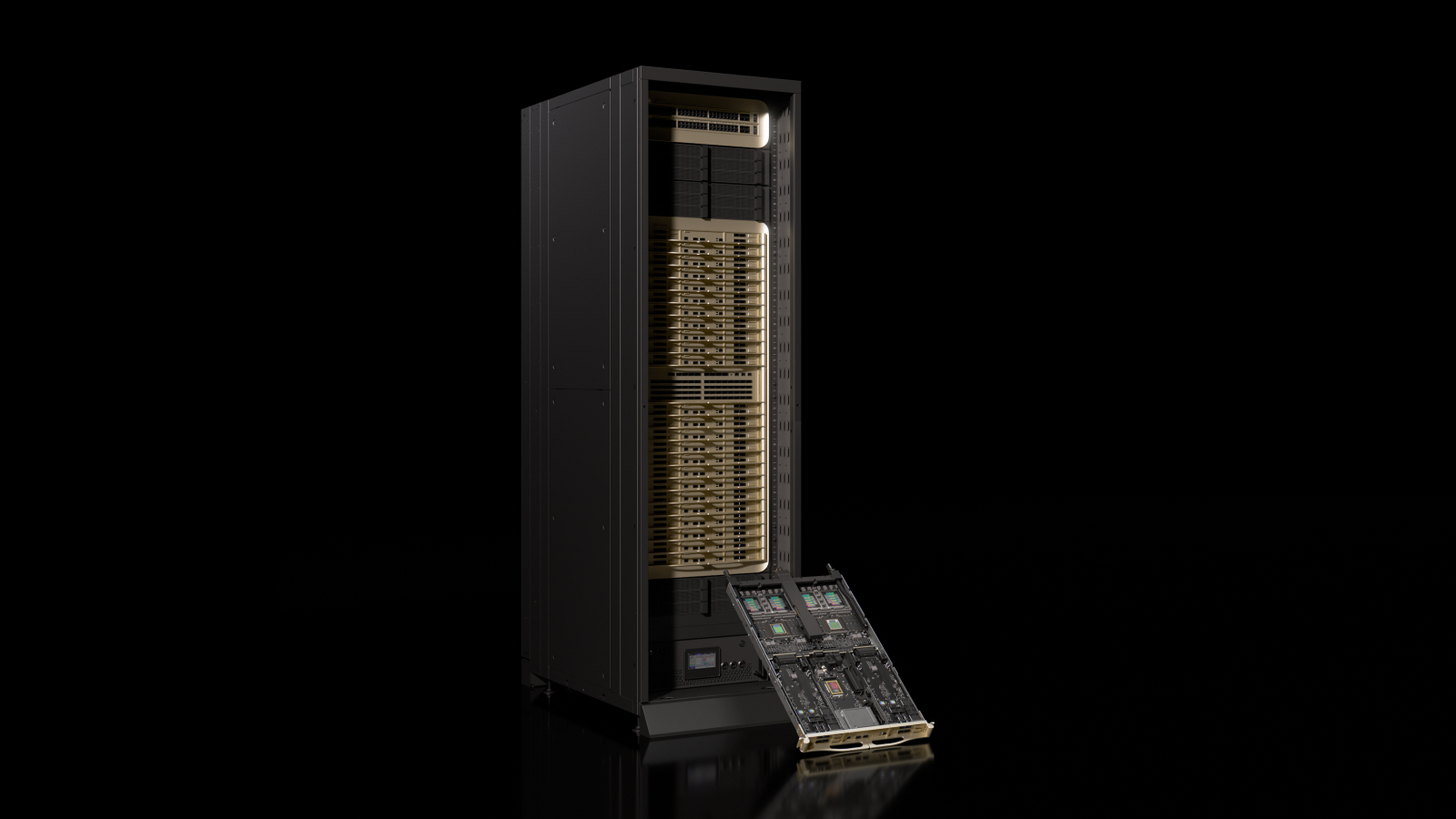
Nvidia has a new GPU, and it isn't for training AI models. At the SC26 supercomputing conference in Chicago on Monday, the company announced Rubin HPC, a chip in its Vera Rubin platform built to accelerate simulation and data processing for science, engineering, and analytics — with more than 50,000 CUDA cores on a single GPU, a record count by Nvidia's own description. It is expected to be available in 2028.
The split is the story. Rubin, the flagship announced for AI training and inference, gets the headlines; Rubin HPC is its sibling for the older, quieter half of supercomputing — the simulations that test whether an idea is worth building. Nvidia's pitch is that AI agents have made that half the bottleneck: agents can now generate candidate materials, molecules, and designs faster than humans can evaluate them, and each candidate needs a simulation to test it. "For agents tackling science and engineering, faster simulation means faster discovery," said Ian Buck, vice president of hyperscale and high-performance computing at Nvidia. "Rubin HPC accelerates the simulations agents use to test ideas and guide their next steps, helping scientists and engineers explore more possibilities and bring breakthroughs closer."
The design reflects that argument. Rather than simply adding more compute, Rubin HPC pairs the core count with a sparse data acceleration capability meant to keep those cores fed, plus seventh-generation NVLink for GPU-to-GPU links — a balance of data movement and arithmetic aimed at the recurring patterns of simulation work: sparse matrix operations, stencil computations, sorting, and reductions. Those patterns sit underneath climate models, engineering simulations, genomic analysis, and financial risk, and Nvidia's expanded CUDA-X libraries give agents pre-built implementations of the algorithms to run on them.
The timing is hard to miss. The announcement landed the day before Nvidia reports its first earnings since Jensen Huang resigned on November 12, with interim CEO Colette Kress facing investors and a board still hunting for a permanent successor. Nvidia also used SC26 to post Vera Rubin's first MLPerf results, claiming up to twice the per-GPU performance of its GB300 system — though the company notes those results are provisional, pending MLCommons verification. In a week when the company's leadership is the story, the roadmap is doing the talking.
That said, treat Rubin HPC as a marker, not a product. Nvidia published no memory capacity, power draw, price, or performance comparison against the standard Rubin GPU — just a core count and a 2028 date. For the labs and supercomputing centers that buy these systems, the announcement is a planning input, not a purchase order. What to watch: whether the full specifications, when they arrive, show a chip genuinely rebalanced for simulation — or a Rubin with a different label. The answer will tell you how seriously Nvidia believes the agent era's bottleneck has moved from training models to testing what they dream up.
— via NVIDIA Blog