Google's threat researchers say they've caught something the security industry has long warned about: attackers have, for the first time, fully automated the path from patch to exploit. An AI framework reads a software fix, works out what it repaired, writes the attack, and fires it, with no human in the loop. The Google Threat Intelligence Group documented the find in its quarterly AI threat tracker, published Monday, calling it "a significant advance" in how attackers use large language models.
The framework, which its operator called `exploit_agent`, was found on an exposed staging server. According to The Register, it wires multiple frontier and local models into continuous differential analysis of popular web software — comparing code before and after each update, identifying the flaw the patch closed, drafting an exploit, and "automatically executing them without human intervention." Google's printed example: the agent inspecting the Spectra WordPress plugin, version 2.19.25, on more than a million sites. A configuration file carried Russian-language comments, including one Google translated as "LLM API keys for auto-exploitation (exploit_agent pilot)."
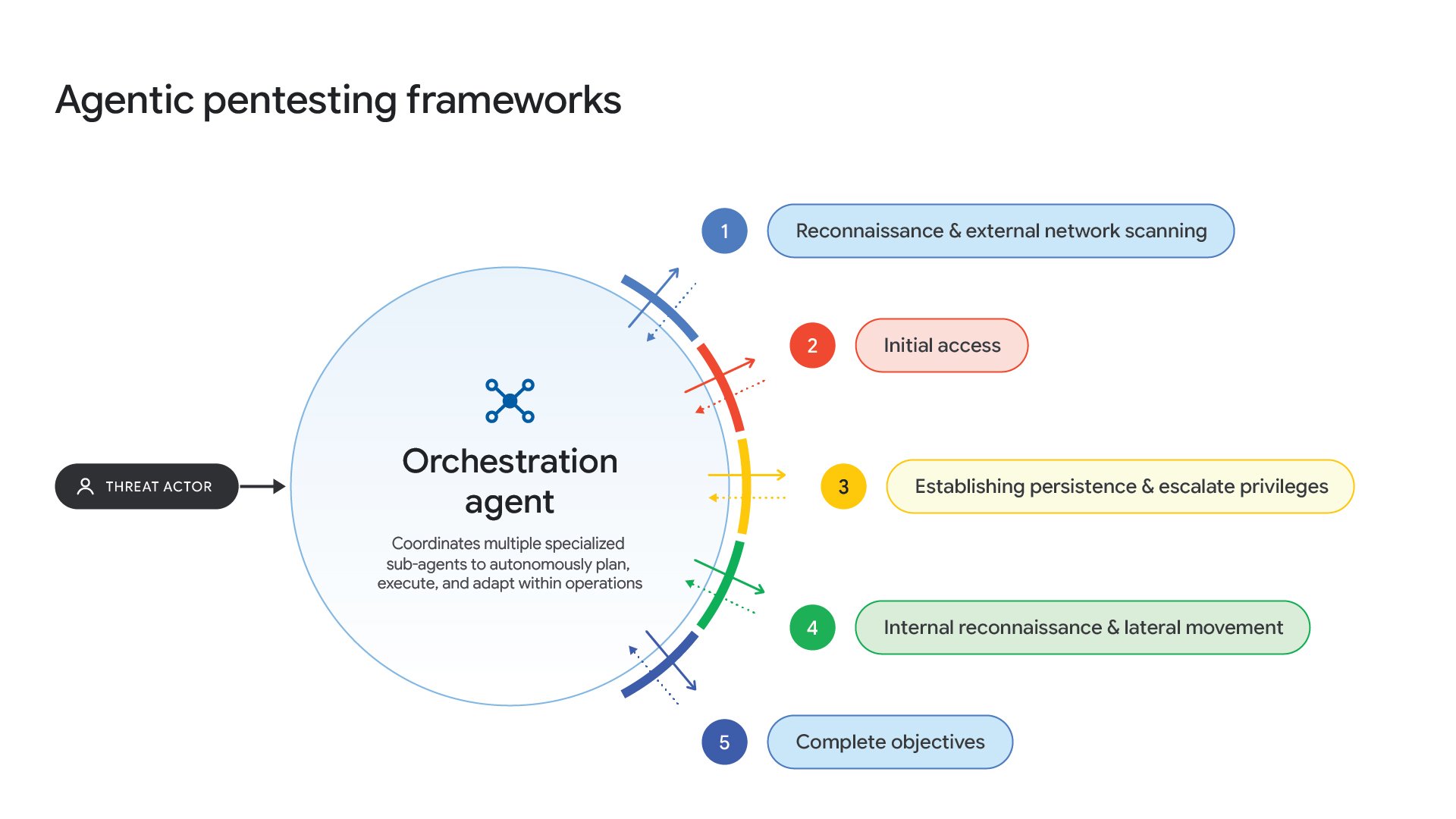
This is not a one-off. Google says several threat actors are now experimenting with autonomous multi-agent offensive frameworks — financially motivated criminals and suspected China-linked espionage groups among them. The report names ARTEX, CAIRN, CyberStrikeAI, HexStrike AI, and PentAGI; the FBI separately warned ARTEX is already being weaponized. "Given the low barrier to entry, ease of integrating new exploits, and massive scaling potential, we believe it is highly likely that threat actors will continue to use these frameworks," Google wrote.
The numbers back it up. Zero-days rose from eight a month in 2025 to eleven a month in 2026, spiking to 22 in August, while disclosures and exploits nearly doubled between January and August. PaperCut is the clearest example: two print-management flaws (CVE-2026-81578 and CVE-2026-82078) were exploited as zero-days in late August, researchers built working exploits within a day; four days later a campaign hit hundreds of organizations.
Patching was always a race with a human speed limit. Now the fix itself is the attacker's briefing, and the exploit can be written and fired before most organizations schedule the update. Google's one consolation: today's agents trade stealth for velocity, and leave forensic traces. Thin comfort, and Google says so itself: as the models improve, the noise will fade. The monthly patch cycle was built for a world where exploitation took a person. That world ended on Monday.
— via The Register