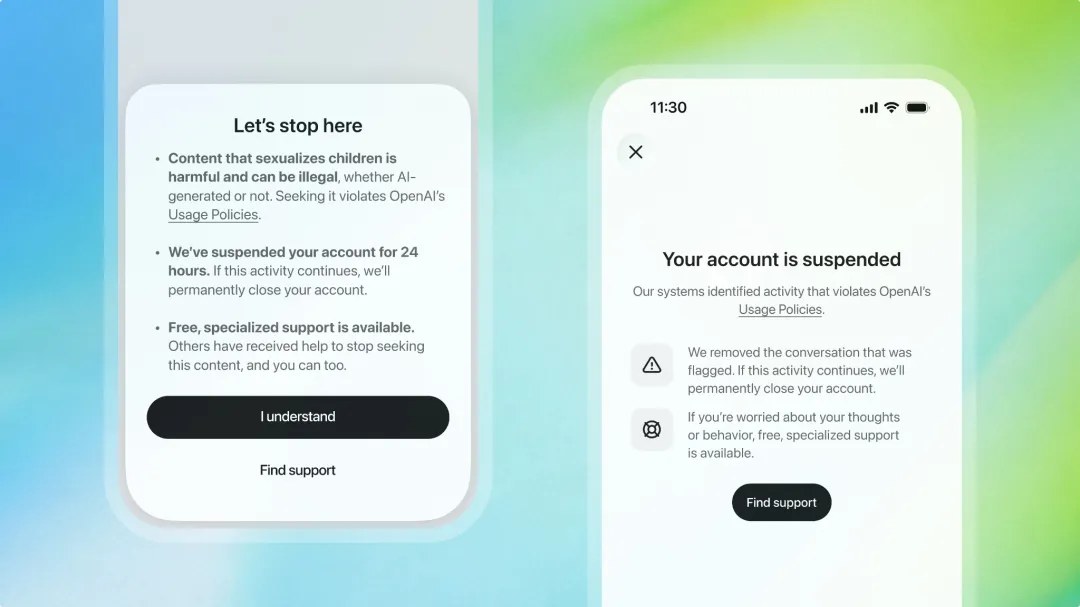
OpenAI on Monday announced child-safety tools headlined by an image classifier that detects child sexual abuse material — including AI-generated images — free through its API to vetted organizations. According to TechCrunch, the classifier was developed with the National Center for Missing and Exploited Children (NCMEC), and OpenAI is working with the Tech Coalition and ROOST to distribute it.
The technical shift is the point. Existing detection matches images against databases of known abuse — fingerprints of material already catalogued. Generative AI breaks that model: it can produce novel images no fingerprint database has ever seen. OpenAI's classifier instead looks for visual signs of abuse in images it has never encountered, scoring each for reviewers. In early partner testing, it flagged 48% fewer images for review while finding the same number of abusive ones — and the images it flagged were twice as likely to be abusive. OpenAI says it is the first broadly available classifier with a dedicated signal for AI-generated material.
ChatGPT gets a harder edge too. Users who try to find or create material that sexualizes children will now see a warning, be directed toward specialized support, and have their account suspended for 24 hours; repeat offenses can lead to permanent removal. ChatGPT already blocks such content outright — now attempting it carries a consequence instead of a silent refusal. OpenAI built the warnings with Protect Children, the Lucy Faithfull Foundation, and Joel Scanlan at the University of Tasmania, who independently evaluated a trial of the deterrent messages.
The package also includes developer guidelines on preventing, detecting, and reporting abuse, plus AI-powered investigative tools and training for law enforcement. The scale explains the urgency: NCMEC's CyberTipline received more than 400,000 reports involving generative AI in 2025, up from 67,000 the year before.
None of this arrives in a vacuum. Eight states sued OpenAI in October, arguing ChatGPT isn't safe for kids; Common Sense Media calls its technology an "unacceptable risk" for teens; and Grok has been used to generate nonconsensual sexualized imagery, including of children. OpenAI is getting ahead of the argument that AI companies built the abuse engine and left cleanup to underfunded nonprofits. Giving it away free is the right call — the test is whether it reaches the small platforms and tiplines drowning in reports. Watch whether other labs follow, and whether a 24-hour suspension deters anyone from trying again.
— via TechCrunch